When Washington and Tel Aviv struck Iran on February 28, 2026, the sharpest economic pain landed not in the Middle East but in Asia. Tokyo’s Nikkei 225 fell 11 percent. Seoul’s KOSPI posted its worst single-session drop in recorded history 12.06 percent in one day, surpassing even the shock of September 11. Circuit breakers were triggered on the Korea Exchange. Wall Street, meanwhile, barely flinched, the Dow fell 400 points, the S&P 500 dropped 0.7 percent, and recovered within days.
The divergence is not incidental. It is structural. And it implicates everyone: the United States, which launched a war that functionally became a siege of Asian energy supply. Japan and South Korea, whose governments spent fifty years knowing this moment was coming and chose inaction anyway and Asia as a whole, which has failed to build any collective architecture capable of responding when it finally arrived.
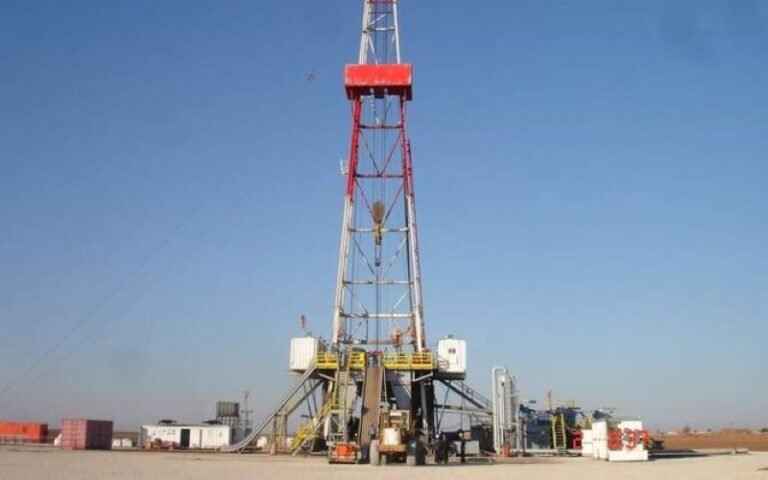
The arithmetic of Hormuz is not new. Roughly 84 percent of the oil and 83 percent of the LNG transiting the strait in 2024 was destined for Asian markets. The United States received approximately 2.5 percent. Japan received 10.9 percent, South Korea 12 percent. China, India, Japan, and South Korea together account for nearly 69 percent of the crude that normally transits Hormuz. This is not a global shock distributed evenly. It is an Asian shock with American origins.
The consequences were immediate. Brent crude surged past $110 per barrel within days — a rise of more than 50 percent. When Iran struck Qatar’s LNG facilities on March 2, QatarEnergy declared force majeure at Ras Laffan a facility responsible for roughly a fifth of global LNG supply. Asian spot LNG prices more than doubled overnight.
The IEA, created after the 1973 embargo to manage exactly this kind of disruption, has never faced a supply loss of this magnitude: 13 million barrels per day removed from the market simultaneously. The institution is being asked to do something it was never designed to do.
Read More: Oil Prices Rise as Supply Fears Persist Amid Iran War
The Ally That Profits
What makes this crisis politically distinct from previous oil shocks is where the economic benefit falls. Washington has known the Hormuz numbers for decades. When it chose to launch this war, it chose whether explicitly or by willful indifference to impose the primary economic cost on its allies rather than on itself. That is not a conspiracy theory.
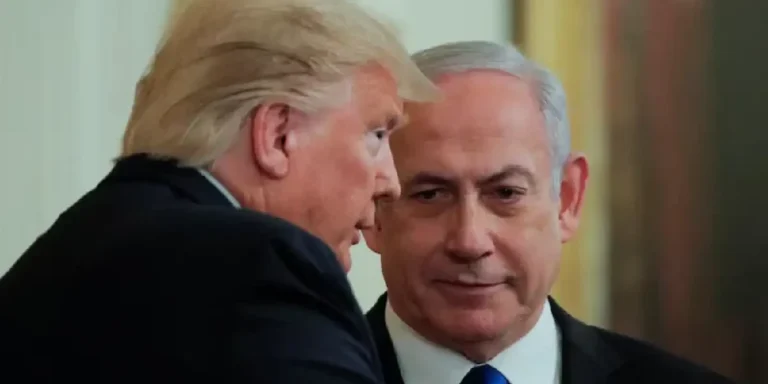
It is a structural outcome of the fact that America’s shale revolution has transformed it into a net energy exporter, meaning higher oil prices now benefit U.S. domestic producers. President Trump acknowledged this explicitly. The hegemon that manages the alliance is, on net, an economic beneficiary of the crisis it triggered. Its allies in Asia are not.
There is a further dimension to this asymmetry that has received insufficient attention. South Korea has raised concerns that THAAD systems are being redeployed from the Korean Peninsula to the Middle East to reducing Seoul’s missile defense shield against North Korea precisely when regional uncertainty is at its highest.
The costs of America’s war are not only economic. Tokyo and Seoul bear both the financial fallout and a degraded security posture, while Washington bears neither.
Japan’s Fifty-Year Deferral
Japan’s energy predicament in 2026 is not bad luck. It is a policy choice repeated across five decades. The 1973 oil shock nearly broke the Japanese economy and the lesson Tokyo drew was not to end fossil fuel dependency, but to stockpile more carefully and negotiate more assiduously with Gulf monarchies.
The result 95.1 percent of Japan’s crude oil imports still come from the Middle East as of January 2026, with 73.7 percent transported through Hormuz. As Japan reduced imports from Russia after 2022, that figure climbed further to roughly 96 percent.
The critique here is specific. Japan is an island nation with virtually no domestic hydrocarbons, and some level of energy import dependency is structurally unavoidable. The critique is that Japan’s chosen response to this dependency has been relationship management rather than structural transformation.
Read More: Japan Set to Release Oil from National Reserves This Week Amid Hormuz Crisis
As the East Asia Forum has noted, Japan has spent political capital shoring up ties with Saudi Arabia, the UAE, and Kuwait rather than building the domestic renewable capacity that could reduce that dependency at its root.
Even now, the instinct is tactical. Tokyo released 80 million barrels from emergency reserves on March 16 — the largest drawdown since the system was established. That covers roughly 45 days of consumption. Mika Ohbayashi of the Renewable Energy Institute has stated plainly that the Japanese government remains uninterested in renewable energy as a long-term solution.
Chen Yan of the Japan Enterprise Research Institute was more direct: the Takaichi government has yet to learn from the 1973 oil crisis. The Nikkei’s correction which JPMorgan estimates could tip Japan into stagflation if oil holds at $120–130 is the bill arriving for fifty years of deferral.
Seoul’s Compounded Exposure
South Korea’s crisis is compounded by a market structure that turned its greatest industrial strength into a catastrophic liability. Samsung Electronics and SK Hynix together represent nearly 50 percent of the KOSPI’s weighting, according to Morningstar. When the shock arrived, any sector-level disruption became, by definition, a systemic one.
The semiconductor problem runs deeper than equity prices. Chip fabrication depends on helium, of which Qatar supplies more than a third of global production. A war that disrupts Qatari LNG simultaneously disrupts Korean chip manufacturing which supply-chain linkage that almost no mainstream risk model had flagged as a geopolitical scenario.
More than $200 billion in combined value was erased from Samsung and SK Hynix alone. Total KOSPI capitalization losses exceeded $500 billion in four trading days.
There is a further layer. The KOSPI had surged more than 50 percent year-to-date before the sell-off began, driven in part by leveraged retail investors riding an AI and chip super cycle. When the shock hit, forced liquidation of leveraged positions compounded the selling pressure well beyond what fundamentals alone would have warranted.
The 100 trillion won ($68 billion) stabilization package Seoul deployed is substantial but as analyst Muyu Xu of Kpler noted, tapping reserves buys time. It does not increase total supply. It does not fix the underlying structure.
ASEAN’s Eloquent Silence
The crisis has also exposed how hollow Asia’s collective institutions remain when it matters most. ASEAN foreign ministers convened an emergency video call and issued a statement calling on “all parties to exercise maximum restraint”. This is the language the bloc has used for every crisis in its history. It has never once changed the outcome.
The gap between ASEAN’s economic exposure and its diplomatic leverage is difficult to overstate. The Philippines, Thailand, Malaysia, and Brunei rely on imports for 60 to 95 percent of their crude supply. The Philippines has imposed a four-day work week.
Thailand capped diesel prices. Vietnam is drawing from its fuel stabilization fund. These are wartime emergency measures, implemented by governments that played no part in starting the war and hold no meaningful leverage over ending it.
One dynamic has received almost no coverage in Western media. China has ordered state-owned companies to suspend fuel exports, effectively hoarding domestic supply at the expense of Southeast Asian economies that depend on Chinese diesel, gasoline, and jet fuel.
Asian economies hold minimal influence over the de-escalation dynamics that will determine how long this crisis lasts, as the Middle East Council on Global Affairs has observed. They are collectively the world’s largest energy import market. They have built no commensurate diplomatic architecture to match.
The Honest Reckoning
Some analysts argue the market correction is an overreaction that geopolitical shocks rarely produce prolonged equity declines. That argument holds when conflict is distant and supply disruption is temporary. The IEA has characterized this as the greatest global energy and food security challenge in history. This is not a tail risk that has been absorbed. It is a structural collapse of the architecture that has underwritten Asian prosperity for fifty years.
Asia’s vulnerability in 2026 is not bad luck. It is the cumulative product of three compounding failures. The United States launched a war with asymmetric costs, exploiting an alliance structure that grants it military and diplomatic agency while its partners absorb the economic fallout.
Japan and South Korea chose, repeatedly and deliberately, to manage energy dependency through relationship diplomacy rather than structural transformation. Strategy that worked in peacetime and has now catastrophically failed. And Asia as a whole has built no collective institution with the leverage, coordination capacity, or political will to respond to exactly the kind of crisis that has now arrived.
The market crashes in Tokyo and Seoul are not irrational. They are the financial system doing what it is designed to do: price in reality. The reality being priced in is fifty years of deferred choices, arriving all at once.
The question is not when markets will recover. It is whether the governments of Asia will, this time, actually change anything or whether they will wait for the next crisis to ask the same question.
*The views presented in this article are the author’s own and do not necessarily reflect the views of The Diplomatic Insight.

Boby Purba
Boby Purba is an undergraduate student of International Relations at Universitas Kristen Indonesia. His research interests focus on global governance, international political economy, and the structural dynamics of power within multilateral institutions. He writes on issues concerning the Global South, institutional reform, and democratic accountability in international politics.