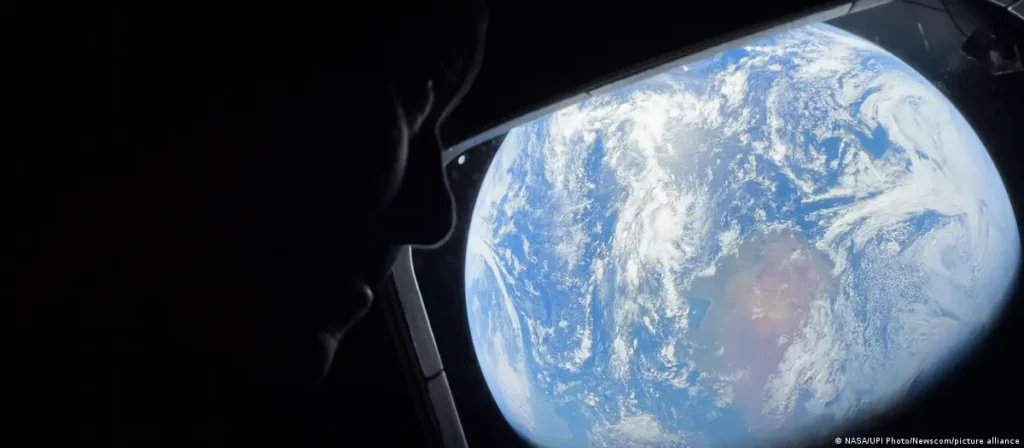
NASA’s Artemis II mission has made history, carrying astronauts farther from Earth than any human has ever travelled and marking a major milestone in the return to deep space exploration.
During a lunar flyby on Monday, the four-member crew aboard the Orion spacecraft reached a distance of roughly 252,700 miles (over 406,000 kilometers) from Earth, surpassing the previous record set by Apollo 13 astronauts in 1970.
The earlier record, about 248,655 miles, had stood unbroken for more than five decades. The Artemis II crew – Reid Wiseman, Victor Glover, Christina Koch and Jeremy Hansen, achieved the record during a carefully planned swing around the far side of the Moon, a trajectory that temporarily cut off communications with Earth.
This communications blackout, lasting about 40 minutes, echoed similar moments from the Apollo era and underscored both the risks and technical precision of deep-space travel.
The mission is the first crewed journey beyond low Earth orbit since 1972, signaling a renewed human presence in deep space.
Unlike the Apollo missions, Artemis II provided astronauts with rare views of the Moon’s far side, an area largely hidden from Earth, allowing them to observe craters and geological features in unprecedented detail.
Read More: NASA Launches First Crewed Lunar Mission in Over 50 Years
Beyond the record-breaking distance, the mission carried symbolic and scientific significance. Astronauts described emotional moments witnessing Earth from deep space and observing celestial events such as a solar eclipse.
They also proposed names for newly observed lunar features, reflecting both personal tributes and the mission’s exploratory spirit.
Artemis II is a key step in NASA’s broader Artemis program, which aims to return humans to the Moon later this decade and eventually establish a long-term presence there.
The mission serves as a test flight for the Orion spacecraft and Space Launch System, paving the way for future missions that could include landing astronauts near the Moon’s south pole.
As the spacecraft begins its journey back to Earth, the achievement stands as a powerful reminder of humanity’s expanding reach into the cosmos.