Since the 18th century Industrial Revolution, human minds have expedited to explore the myriads of techno-creativity, with each technological leap discovering pathways for further advancements. All these innovations confronted the human mind with one of the most contested ambiguity: Is this the limit or there exists an additional capacity?
For instance, the evolution of nuclear bombs pushed humanity on the brink of contemplating the benevolent aspirations of scientific progress that were originally motivated by collective human interests. It is imperative to state that every innovation possesses a paradox: peril engulfed within the progress. The evolution of Ai is therefore no different, rather it exaggerates the paradoxes due to its dynamic scope.
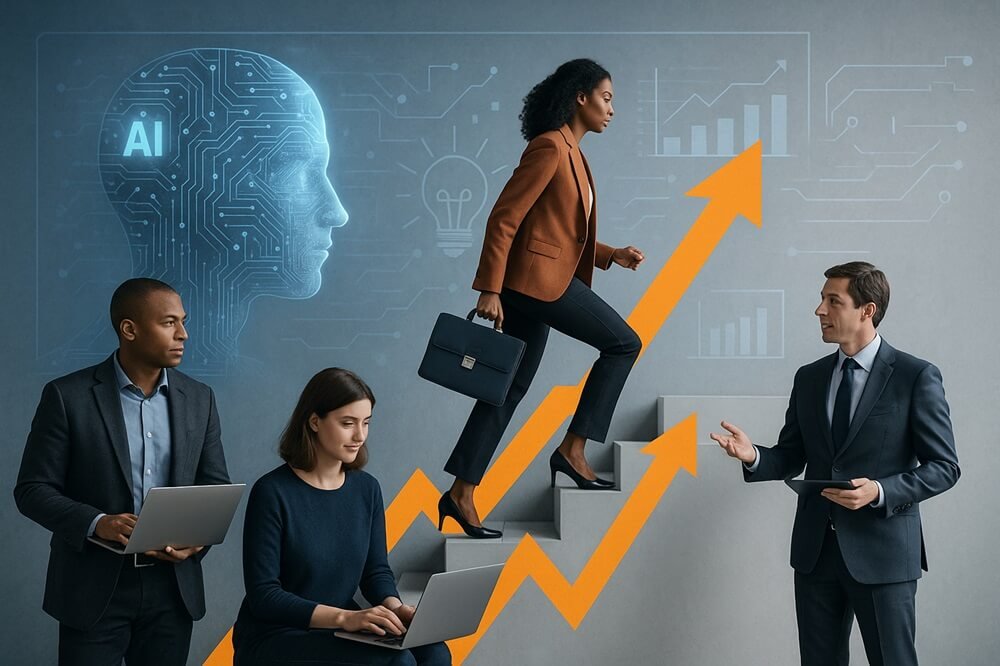
Today, AI has penetrated into every aspect of our lives, reimagining the conventional modalities. A pivotal dilemma that AI unveils is, its potential to re-determine the supposed rules of meritocracy: Is meritocracy in the age of AI a mere illusion or is undergoing through a dramatic change in creative-spaces and workplaces.
Happening in multiple cities across the world, the SilkRoad 4.0 Global Future Summit gathers the AI industry to explore how intelligent systems are redefining how value is created. If this is a conversation you are interested in, the Summit is all set for 14th April 2026.
“An insult to life itself”, Hayao Miyazaki once remarked on a suggestion regarding infusing AI-technology in his work. A sentiment that reflects the spirit of human-creation to which one has devoted his entire life to. Similarly, “Ai takes jobs away” “Ai art is soulless.” For its true that creative-spaces demands substantial time from all artists to express their creativity, perfect their skills but attributing AI for devaluing art is a potentially weak argument. It’s not the AI that’s taking the jobs away but capitalism. Capitalism defines the value of art, illustrating the worth of an art-piece with its monetary value rather than the skill.
The advent of photography also posed conventional art-forms into a critical break-point, threatening whether the value of art was about to be underscored or diminished. In fact, it never really happened. Human art has never been fully replaceable. Despite all technological innovations, the culture of visiting art galleries hasn’t been diminished, rather it has been more accessible due to virtual art galleries.
AI has neither underscored the skill of the artists nor the demand of artwork but in a truer sense of word, it has changed the way people interacted with arts, creating more art-spaces, making it accessible and faster to produce. “But Anyone would be able to create Art” Art was never meant to be exclusive, using pencil had always been accessible to everyone.
While the artists criticized AI-generated art work, another peculiar dilemma surfaced, suggesting that AI revoked the demand of original human experience. Hence, proving that If technology didn’t pose a threat to art, humans would have never imagined art as an experience. AI in creative spaces prove that what is genuine shall remain genuine, what is human shall remain human.
The challenge? The challenge is to institutionalize AI in a way that this unprecedented feat benefit all. Global Future Summit aligns decision-makers across 20+ locations and 8 time zones to translate high-impact themes into concrete cross-border initiatives.
In this sense, neither does AI diminishes meritocracy in creative-spaces nor does it presumes AI-generated art work as a mere illusion rather it reshapes its contours; consumer, producer and distributor, simultaneously raising concerns about plagiarism that had predated before AI
“It can not possibly be more than a few years before AI is better than humans at essentially everything.” – The Adolescence of Technology by Dario Amodie scales the threats of AI in a 20,000 word monologue.
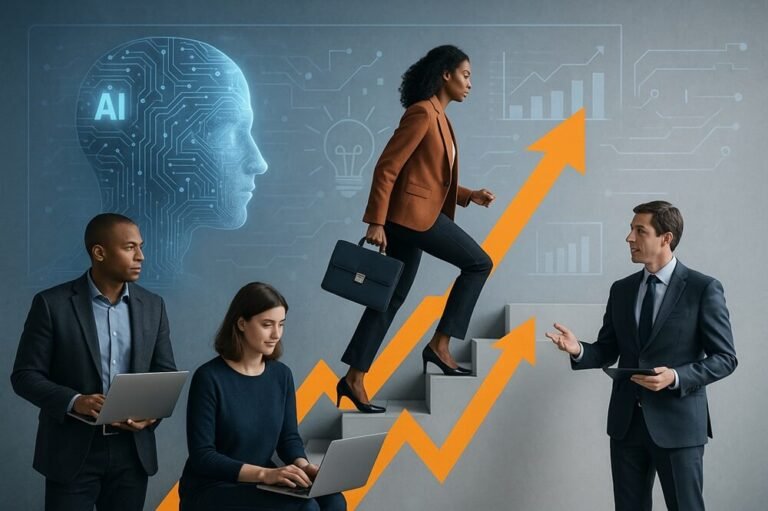
In work-places today, meritocracy refers to the supremacy of a certain class of people possessing better skills/methodologies, most importantly, the cognitive ability that differentiates humans among each other. Hence, it also resonates the cognitive adaptability to incorporate technological advancements in workspaces. With the advent of technology, the simpler tasks are supposedly being handled by AI while the complicated ones are to be left to humans creating a work-opportunity disparity within the work spaces. A potent reason for this is the increasing demand for efficiency and precision.
The reluctance of using AI for simpler tasks rather than using complicated tasks does not only reflect the mediocrity of human potential but also suggests that there is a lot yet to be explored by humans. Since AI is directly threatening to out-do human cognitive abilities, it draws an important question: Will humans be able to sustain the pace of technological advancements in the next 2 decades?” Historically, technological advancement has created immense threats related to jobs but it has also created new opportunities.
Pick your closest city, join locally, and connect globally via the shared program and live links. SilkRoad 4.0 Global Future Summit is accessible and is a platform for actors who want to put in place well-regulated AI systems in a cross-border context.
Thus, it re-conceptualizes the potential of meritocracy: that it’s no longer the person who reads a plethora of volumes or possesses the entire knowledge but someone who summarizes it and grabs the concept, prevails. Strangely, this could only sustain in the short-term as reading the instructions will only teach you how to operate the system but reading manuals, monologues and detailed textbooks will teach you how the system runs and how to dominate it through a pragmatic view.
This therefore, reinstates that AI doesn’t make meritocracy an illusion but refines the terms and conditions for it making it less about the access to information and more about effective use of it.

Established in December 2008, The Diplomatic Insight is Pakistan’s premier diplomacy and foreign affairs magazine, available in both digital and print formats.