There is a certain irony that has settled over the diplomatic quarters of Islamabad these days. It is the irony of the pariah suddenly finding himself indispensable; the irony of the nation long dismissed as a chaotic frontier state proving to be the only address capable of hosting a dialogue that could determine the fate of a region. As Pakistan prepares to facilitate talks between the United States and Iran this Friday, the architecture of power in West Asia is being quietly redrawn.
It is a slow, painstaking process, one that relies less on the bluster of press releases and more on the credibility of back-channels. For Pakistan, this moment is not an accident. It is the dividend of a recent precedent set when it successfully nudged Saudi Arabia and Iran away from the brink of open conflict.
That success, rooted in a distinctly Pakistani style of quiet, brotherly persuasion, sent a signal to the region: that no state, not even a wealthy Gulf nation like Qatar, can afford to ignore the stability of its neighbor.
However, if diplomacy is the art of the possible, it is also the art of the infuriating. There are those who watch such developments with a fury they can no longer hide. Across the eastern border, the response to Pakistan’s diplomatic ascent has been a descent into undiplomatic petulance. The prime minister of India, a man who not so long ago stood before the Israeli Knesset and offered the bizarre, almost Oedipal analogy that Israel was the father and India the mother, has found himself isolated.
The theatrical bombast that once played well on domestic television has curdled into a global shrug. His foreign minister, abandoning the last vestiges of diplomatic composure, recently dismissed Islamabad’s role in brokering a US-Iran ceasefire with the sneering epithet of “brokering (Dalal).” One is left to wonder what salutation he will conjure the next time he is obliged to share a dais with his Pakistani counterpart. Will it be “Your Excellency,” or will the bitterness win out, reducing the formalities to a muttered “O broker (Dalal)”?
Read More: Islamabad’s Moment: Why Only Pakistan Can Broker an End to Iran War
It is a revealing lapse. The humiliation India suffered in the spring of 2025 was not merely military; it was existential. It shattered the carefully curated illusion of an ascendant power, immune to the consequences of its own hubris. The global opprobrium now facing Narendra Modi is no secret, and the quiet distancing of world leaders from his company is a diplomatic “Death by a Thousand Cuts” and India cannot forget this Pakistani epigram.
The outbursts from India’s foreign minister are the sour-grapes lament of a fox who finds the fruit of regional relevance dangling forever out of reach. For the truth is, as Pakistan works alongside its friends to halt a widening conflict, India finds itself not at the table, not even in the waiting room, but outside in the cold, shouting epithets at the windows.
This, of course, is precisely the outcome that certain powers were desperate to prevent. Israel has long viewed any thaw between Washington and Tehran as an existential threat to its own strategic primacy. The pattern is familiar: an attack on a nuclear facility, an assassination on a roadside, a spark lit in Lebanon or Palestine just as diplomats begin to settle into their chairs.
Aware of this toxic history, Pakistan has employed its own back-channel communications to deliver a message to Tel Aviv that leaves little room for ambiguity. Any attempt to sabotage these talks, the message conveyed, will be met with the reality that the negotiations are taking place on Pakistani soil. It is a reality that has reportedly left both Israel and its increasingly close partner, India, wringing their hands in frustration.
If Jaishankar’s “broker (Dalal)” barb sounded less like statecraft and more like the talking points of a hostile intelligence briefing, it is perhaps because that is precisely what it was. However, such jibes do little to obscure the substantive achievement at hand. Pakistan has succeeded in persuading Iran to come to the table at a moment when restraint was the least fashionable option.
The United States, exhausted by a conflict that has stretched its resources and its moral authority, is desperate for a ceasefire. While Israel may view such a pause merely as an opportunity to regroup, the fact remains that the architecture of this negotiation rests in Islamabad.
Read More: US-Iran ‘Broader Talks’ Likely in Islamabad This Weekend: IAEA Chief
No assessment of this landscape would be honest without acknowledging the deeper currents beneath the surface. Reports indicate that China, acting through its iron brother Pakistan, provided intelligence assets that fundamentally altered the strategic calculus of the war.
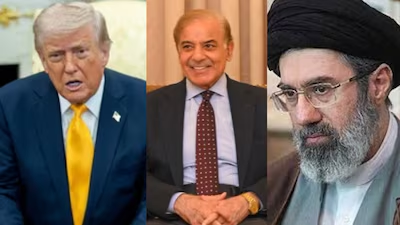
It was a quiet, decisive intervention that changed the trajectory of a conflict that began with a calculated horror: the massacre of 176 innocent schoolgirls, a move designed to inflict maximum emotional devastation and destabilize Iran from within. That gambit, orchestrated by the familiar alliance of Donald Trump and war-criminal Benjamin Netanyahu, was intended to break a nation and attempt failed.
The Iranian people, shaped by the ethos of Imam Hussain (AS), proved that their faith resides not in the slogans of the state but in the depths of their hearts and their deeds. Nowhere was this more powerfully illustrated than in the martyrdom of Ayatollah Ali Khamenei, who fell alongside members of his family.
In the aftermath, the world braced for a cycle of vengeance. But his son, Mojtaba Khamenei, did not call for rivers of blood. Instead, he pledged himself to the protection of the Iranian nation and the preservation of its sovereignty. It was a moment of profound maturity, a choice for continuity over chaos.
It is a lesson in restraint that would serve others well. As the talks commence on Friday, the contrast could not be starker. On one side stand the facilitators and the protagonists, exhausted by war but willing to talk. On the periphery stand the spoilers, nursing their humiliations and clutching their analogies about mothers and fathers, unable to digest a world that has moved on without them.
In the end, the broker, it seems, is not a pejorative. It is the only title that matters when the guns fall silent and the real work of peace begins.
*The views presented in this article are the author’s own and do not necessarily reflect the views of The Diplomatic Insight.
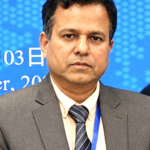
Ehtasham Anwar
Ehtasham Anwar is a senior journalist, writer, and analyst, who combines investigative rigor with insightful perspectives, producing content that informs, engages, and shapes public discourse. His expertise spans political commentary, diplomatic engagements, and in-depth analysis of geopolitical developments.