Dhaka (TDI): Ahead of Bangladesh’s upcoming national elections, a delegation from the Afghan Taliban visited Dhaka, meeting with local religious leaders and political figures to discuss regional issues and the role of Islamic parties in the country’s evolving political landscape.
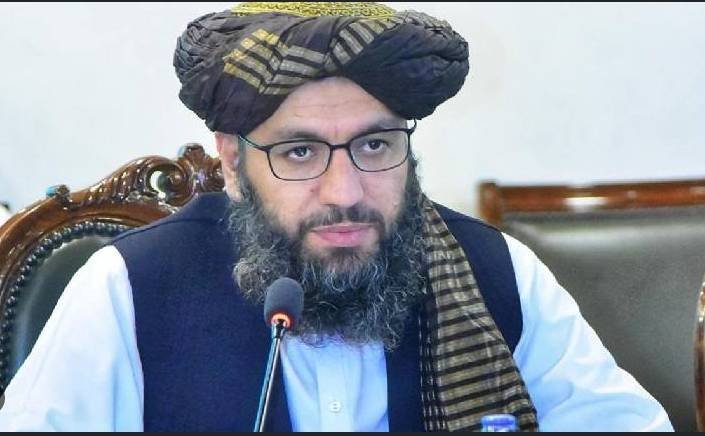
The visit, led by Noor Ahmad Noor, Director General at Afghanistan’s Ministry of Foreign Affairs, included meetings with key religious figures such as Mamunul Haque, leader of the Khelafat-i-Majlish party, and other Islamic scholars.
Haque described Noor’s visit to his seminary as a courtesy call, noting that he also met with leaders at other religious schools during his weeklong stay.
Read Also: Afghan Taliban Signal Willingness for Dialogue to Resolve Differences
The visit comes as Bangladesh, home to around 170 million people, predominantly Sunni Muslims, is preparing for its first election since the 2024 uprising that toppled the long-standing autocratic government of Sheikh Hasina.
The elections are widely seen as a pivotal moment for the nation’s political future.
The Taliban delegation held talks with leaders from Bangladesh’s Islamist groups, including representatives from Jamaat-e-Islami and Hefazat-e-Islam, both influential in the country’s religious and educational spheres.
Jamaat-e-Islami, the largest and most organized Islamist party in Bangladesh, is seeking to re-enter formal politics after years of bans and crackdowns under Hasina’s 15-year rule.
Her government had taken a hard line against Islamist movements, carrying out security operations that led to numerous deaths and arrests.
The Afghan Taliban’s connections with Bangladesh-based groups run deep, with historical ties to Harkat-ul-Jihad al-Islami, whose members fought in Afghanistan against Soviet forces.
Leaders of Hefazat-e-Islam, a coalition of Islamic schools and organizations, also visited Afghanistan in September, highlighting ongoing religious and ideological links.
The Taliban’s Dhaka visit is seen as part of its broader outreach to engage with regional partners and religious networks in South Asia, amid concerns over election security, extremism, and the potential influence of Islamic parties in the country’s political transition.
While the Afghan government continues to face international scrutiny, the visit underscores the Taliban’s interest in cultivating ties with like-minded groups abroad and positioning itself as a player in regional politics.

Minahil Khurshid holds a master’s degree in Peace and Conflict Studies from CIPS, NUST. She has a strong interest in current affairs, geopolitics, and policy analysis.