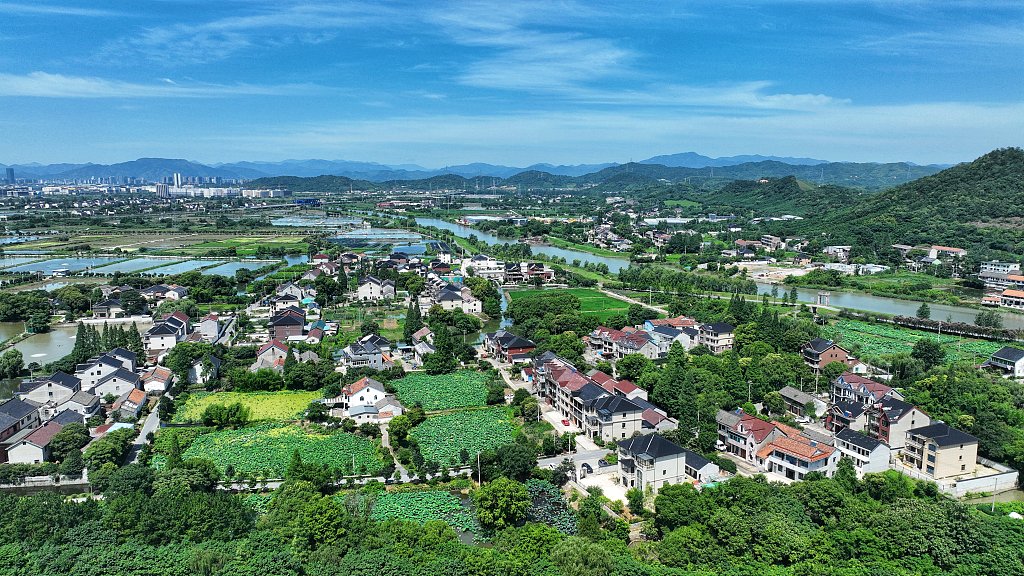
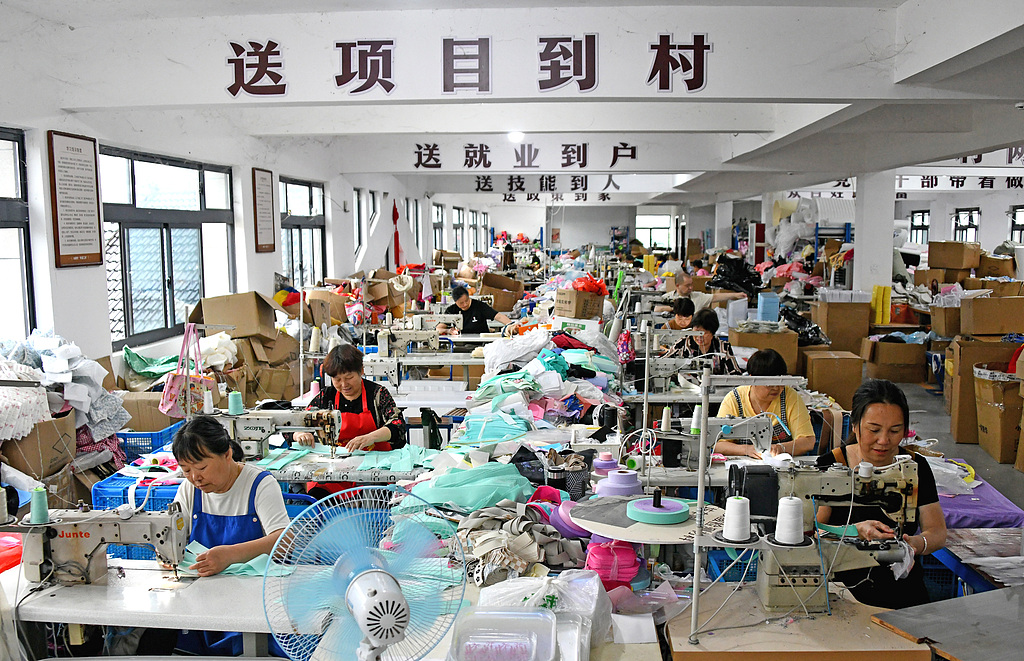
The Xiangxingu mushroom workshop in Qingyuan County, Lishui City is a typical example of the model in practice. Local entrepreneur Wu Xiaojun runs the workshop, where villagers package locally grown mushrooms and process online orders from customers across China often with the help of livestream sales promoting the products.
Workers have been spotted rushing to fill orders in a similar workshop in Xianju County, Taizhou City, as part of the same province-wide initiative.
The common prosperity workshops didn’t just appear out of thin air. They are the latest stage of a larger rural transformation that began more than 20 years ago with Zhejiang’s “Green Rural Revival Program.”
Read More: From Sightseeing to Living: A New Way of Experience China
In time the program’s focus widened beyond environmental improvement. With the improvement of living conditions in the countryside, the focus has shifted to building long-term economic growth capacity and the common prosperity workshops are a practical extension of this shif from environmental restoration to industrial development and income growth at the grassroots level.
Qingyuan’s own experience is an example of this transition. The county has built a forest mushroom cultivation industry combining environmental protection and agricultural production, and connecting the edible fungi industry with rural tourism to extend its economic value chain. In 2024, Qingyuan’s edible fungi industry had an output value of nearly 5.8 billion yuan (about $800 million).
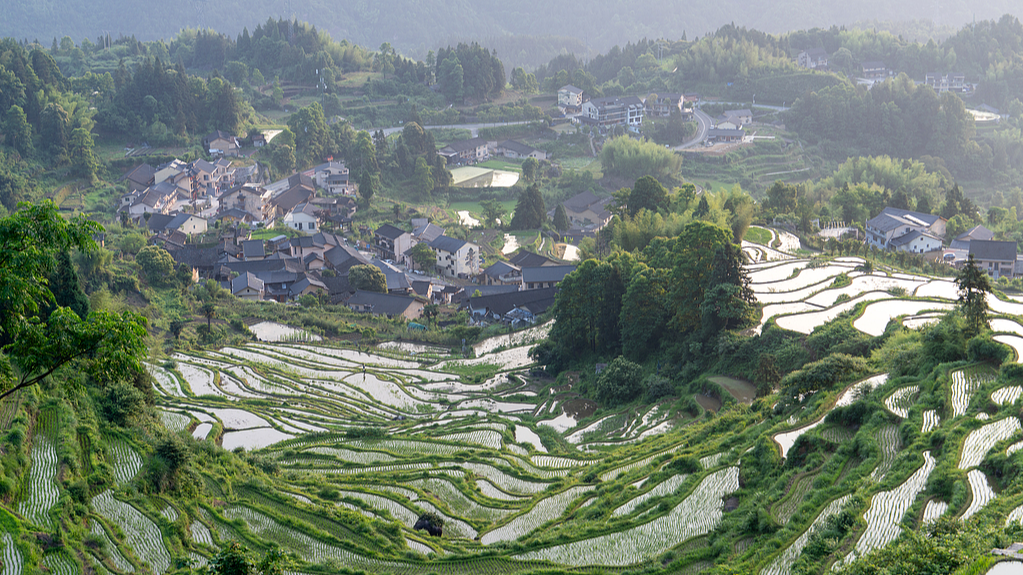
In 2024, the county had built 54 common prosperity workshops, creating more than 2,000 local jobs and increasing the monthly income of participating residents by an average of 1,800 yuan.
The Green Rural Revival Program’s wider impact can be seen across the whole of Zhejiang. The per capita disposable income of rural residents in the province exceeded 45,000 yuan in 2025, ranking first among the provincial-level regions in China for 41 consecutive years. At the same time the income disparity between urban and rural areas decreased from 2.43:1 in 2003 to 1.81:1 in 2025.
Zhejiang’s model for rural development has also drawn attention abroad. It is ahead of the United Nations’ 2030 Agenda for Sustainable Development in its model for improving living standards while protecting the environment, and its accomplishments were recognized with the UN’s Champions of the Earth Award in 2018.
Read More: China’s Ambitious Ecological Protection Plan Sets Targets for 2030
Leaders from Germany, Pakistan, Serbia and Laos have all made a stop in Zhejiang during their visit to China this year. On a special visit to villages in Zhejiang, Lao President Thongloun Sisoulith learned about the province’s practices in ecological conservation and rural revitalization.
Erik Solheim, a former executive director of UN Environment, has closely tracked China’s rural development and has repeatedly praised Zhejiang’s transformation, saying what he saw there provided a glimpse of the future for China and perhaps the world.
That story is still unfolding in Qingyuan, as orders for Wu’s mushrooms go out from her workshop to every corner of the country, a reflection of how economic growth and social equity can feed each other, not compete.

Tayyaba Afzal is an International Relations Graduate from Lahore College for Women University. Her research interests include Information Warfare, AI Governance and Digital Diplomacy. She can be reached at [email protected]