On World Malaria Day, the World Health Organization has issued a strong call for action to prevent a resurgence of malaria in Pakistan, warning that recent gains remain fragile even as global optimism grows that the disease can be eliminated within a generation.
Pakistan reported a 10% reduction in malaria incidence in 2025 compared to 2024, yet the country still recorded approximately 1.8 million cases.
The burden remains significantly higher than pre-2022 levels, when confirmed infections stood at 399,097. The surge, triggered largely by climate-driven floods in 2022, peaked at 2.7 million cases in 2023, underscoring how environmental shocks can rapidly reverse progress.
The WHO cautioned that ongoing challenges, including climate change, a global malaria funding gap of US$5.4 billion, and cuts to international health aid, are threatening fragile health systems.
ہمیں ملیریا جیسی بیماریوں سے بچاؤ کے ذریعے زندگیاں محفوظ بنانی چاہئے
اب ہم کر سکتے ہیں۔
اب ہمیں کرنا چاہیے#WMD2026 #NowWeCanNowWeMust #MalariaFree #ZeroMalaria pic.twitter.com/bPCi9l4cym— WHO Pakistan (@WHOPakistan) April 25, 2026
These disruptions have impacted disease surveillance, prevention campaigns, and treatment access, raising concerns that hard-won gains could quickly unravel.
Marking this year’s theme, “Driven to End Malaria: Now We Can. Now We Must,” the WHO and its partners launched a global campaign aimed at mobilizing resources and political commitment.
“With the tools and resources available today, we have a historic opportunity to deliver a malaria-free world,” the agency said, reaffirming its support for Pakistan in strengthening science-based interventions and health infrastructure.
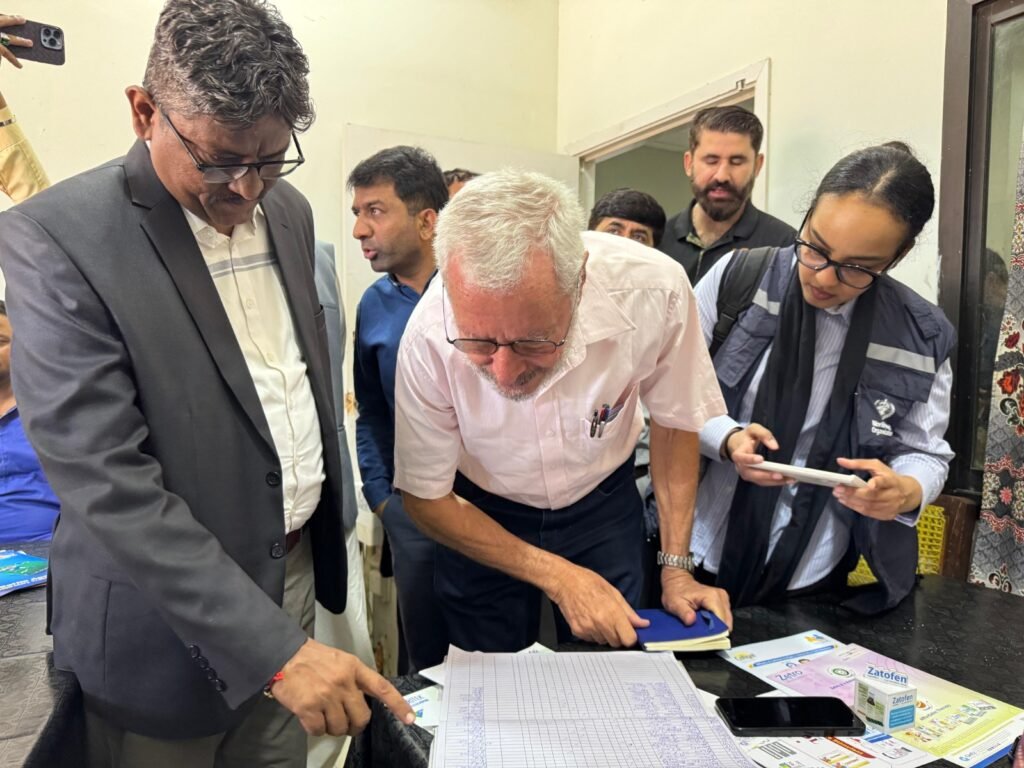
In April 2026, WHO supported a nationwide malaria program review across multiple provinces, focusing on improving prevention strategies, surveillance systems, outbreak preparedness, and case management.
The initiative aims to build a more resilient response at both federal and provincial levels. Pakistan has made notable strides in scaling up interventions.
Read More: Pakistan to Provide Free Childhood Cancer Medicines with WHO Support
In 2025 alone, nearly 16.9 million suspected cases were screened, with free treatment provided to most confirmed patients through collaboration between government agencies, WHO, civil society, and the private sector. Support from Global Fund to Fight AIDS, Tuberculosis and Malaria has been instrumental in sustaining these efforts.
Preventive measures have also expanded, including the distribution of approximately 12 million insecticide-treated bed nets between 2023 and 2025. Meanwhile, community-based case management is emerging as a promising strategy for reaching remote and underserved populations.
Malaria transmission in Pakistan remains concentrated in Balochistan, rural Sindh, and parts of Khyber Pakhtunkhwa. Globally, progress has been significant.
Since 2000, an estimated 2.3 billion malaria cases and 14 million deaths have been averted. Forty-seven countries are now malaria-free, with several more nearing elimination.
Advances in vaccines, treatments, and innovative technologies, including genetically modified mosquitoes, are fueling optimism that eradication is within reach.