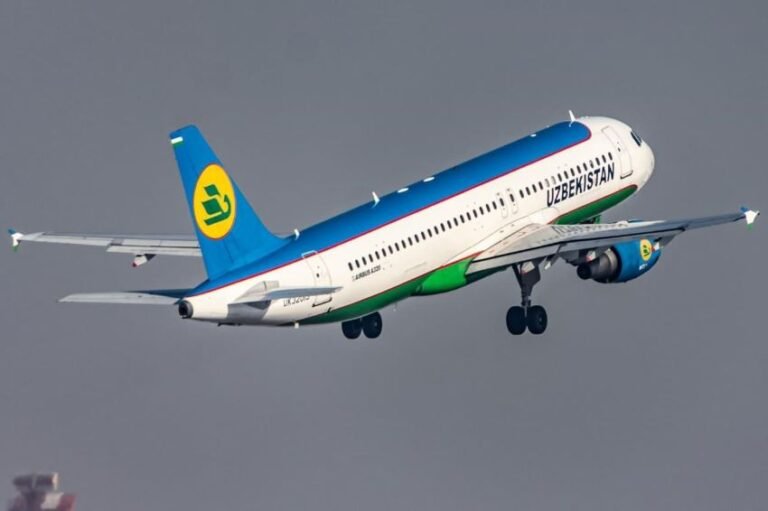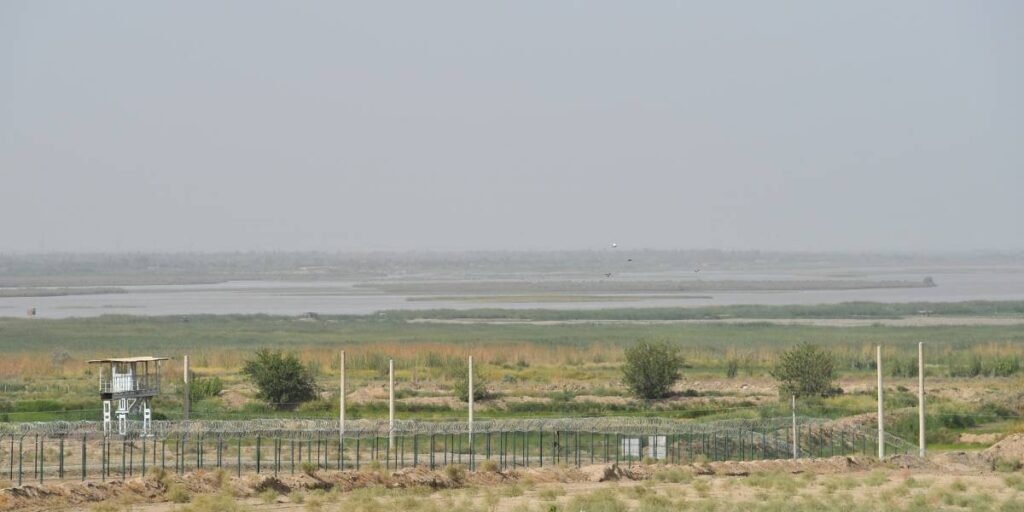
Tashkent (TDI): In a strategic move aimed at boosting the country’s export volumes, Uzbekistan has reopened its vital Termez–Hairatan border crossing with Afghanistan after a four-year closure.
The crossing, closed since the Taliban came to power in 2021, is now fully operational, allowing travelers and traders to move directly and safely between the two nations. Officials described the move as a major step in regional connectivity and economic cooperation.
People from both countries can now cross the border securely, although visa requirements remain in place. The reopening is regarded as a key measure to boost bilateral trade, especially given the steady increase in Uzbekistan’s exports to Afghanistan over recent years.
The reopening comes as Central Asian countries, including Uzbekistan, Kazakhstan, Kyrgyzstan, Tajikistan, and Turkmenistan, balance lingering security concerns over the Taliban with growing economic interests.
Previously, travelers had to take a long detour through Tajikistan to reach Mazar-e-Sharif, just 75 kilometers from Uzbekistan’s border.
According to the chamber, the restored crossing will “greatly facilitate the operations of exporting companies” and is expected to boost trade, which has steadily grown in recent years.
Read More: Pakistan to Reopen Torkham, Chaman Border Crossings for UN Aid to Afghanistan
The reopening also supports Uzbekistan’s goal of increasing trade with Afghanistan to $2.5 billion by 2026, driven by exports of electricity, construction materials, food supplies, and industrial goods.
Data from the Uzbekistan Statistics Committee shows that bilateral trade reached $1.3 billion from January to October this year, marking a 46.7% increase compared with the same period in 2023.
Uzbekistan and Afghanistan have been actively seeking to broaden their economic ties. In August last year, Uzbek Prime Minister Abdulla Aripov visited Kabul, where he met with Afghan officials to discuss ways to expand trade, enhance energy collaboration, and cooperate on major projects in copper, iron, oil, and gas.
During the visit, both sides projected that bilateral trade could reach $1 billion in 2024, with the potential to grow to $3 billion in the near term.
The reopening comes at a time when Afghanistan is seeking alternative trade routes following recurring tensions and border closures with Pakistan.
Disruptions at the Torkham and Chaman crossings have prompted the Taliban-led administration to diversify economic corridors with Central Asia and Iran, reducing dependence on a single route.

Minahil Khurshid
Minahil Khurshid is currently pursuing a Masters in Peace and Conflict Studies at the National University of Sciences and Technology (NUST). She has a keen interest in current affairs, public policy, and geopolitics.