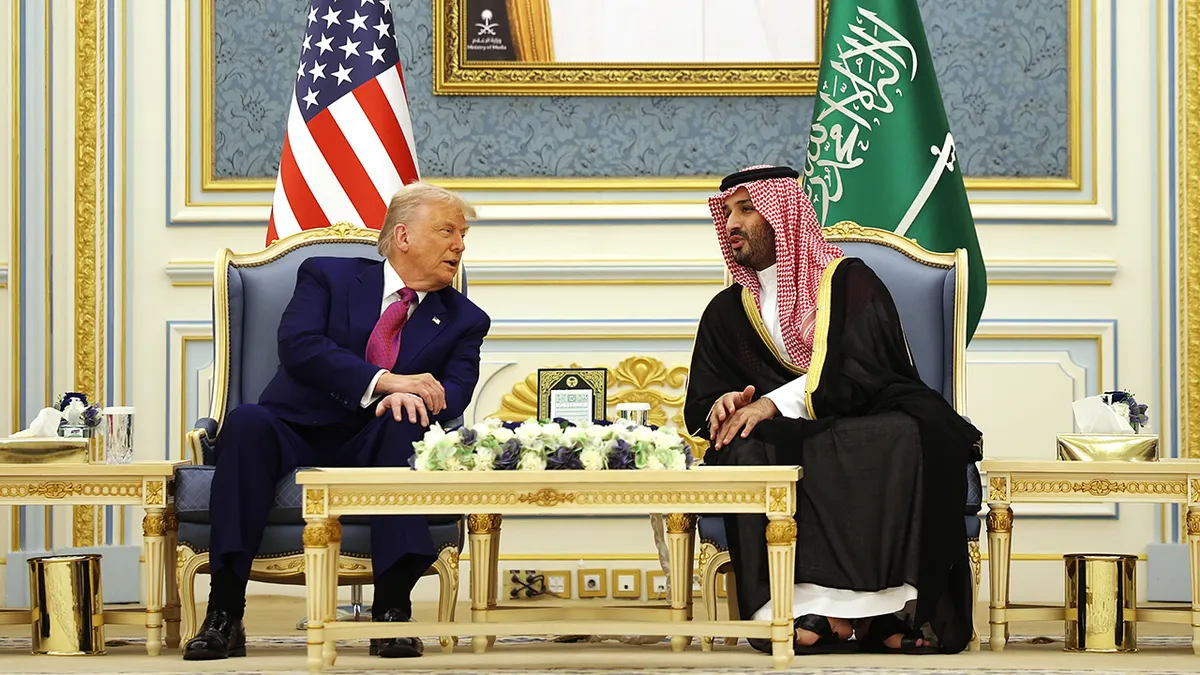
Washington (TDI): As the Saudi Crown Prince visits Washington first time in over seven years, President Donald Trump announced that the United States will proceed with selling F-35 fighter jets to the Kingdom.
The jets in question represent the cutting edge of American military technology. Trump’s declaration “we’ll be selling F-35s” came despite internal concerns about technological leakage, especially risks related to China’s growing influence in the Middle East.
Delivering the F-35s will be a complex and lengthy process, requiring years to ramp up production and train pilots, with potential oversight or delays from Congress or future administrations.
If the deal goes through, it will be the third large arms package Trump has agreed to with Saudi Arabia during his two terms. In May, the United States unveiled a $142 billion arms and security package that included air and missile defense, maritime assets, and other military equipment and support.
The President also said that a US-Saudi security agreement would be signed, though any more details were not disclosed. The Crown Prince’s two-day visit will also include a joint US-Saudi investment conference at the Kennedy Center.
Read More: MBS Upcoming Visit to US and What It Means for the Future of Abraham Accords
Riyadh is also expected to spend billions of dollars in the US artificial intelligence infrastructure and explore cooperation in civil nuclear energy. These initiatives highlight the depth of the US-Saudi partnership at a moment when regional dynamics are shifting.
US intelligence agencies previously linked Mohammed bin Salman to the 2018 killing of journalist Jamal Khashoggi, a scandal that had strained US–Saudi relations.
But now, Trump is reviving Middle-East diplomacy, including efforts to improve Saudi-Israeli relations through the Abraham Accords. For Riyadh, any normalization is dependent on actual progress toward Palestinian statehood, which Israel rejects.
The F-35 deal and the Crown Prince’s visit highlight a new chapter in US-Saudi relations, highlighting deepening military, economic, and strategic ties amid a complex and rapidly shifting Middle East.

Minahil Khurshid holds a Master's in Peace and Conflict Studies from NUST. She is passionate about current affairs, public policy, and geopolitics.