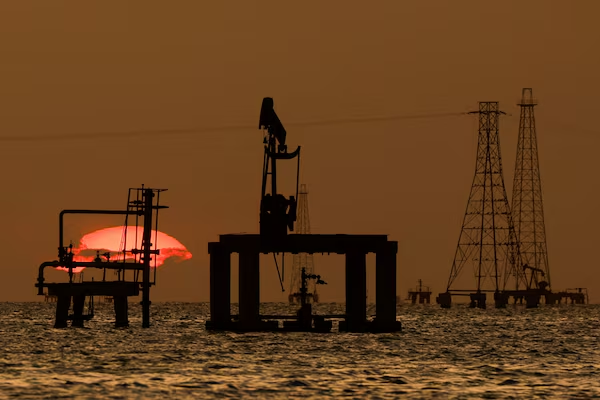
Washington (TDI): The United States Treasury Department has announced that it will begin authorizing licenses to allow companies to resell Venezuelan oil to Cuba, to alleviate the island’s worsening energy crisis.
The announcement, that surfaced on Wednesday, said that transactions must benefit the Cuban people and private sector, and expressly excludes deals involving Cuba’s government.
The decision comes against the backdrop of a crippling fuel shortage on the Caribbean island following the US seizure of influence over Venezuela’s oil exports after the dramatic capture of President Nicolás Maduro by US forces in early last month.
For more than two decades, Venezuela has been Cuba’s principal energy supplier under a subsidized pact. The flow abruptly stopped after Washington tightened control over Caracas’s oil, exacerbating Cuba’s already fragile energy infrastructure.
Mexico, which briefly stepped in as an alternative supplier, also halted shipments in January, further deepening Cuba’s shortages and contributing to widespread blackouts, fuel rationing, and strained essential services.
Read More: Crisis in Havana: Russia Condemns US Tactics as Cuba’s Fuel Emergency Spirals
Under the new US policy, licenses will be granted for resales intended for commercial and humanitarian use within Cuba, particularly in its private sector, which US officials say is separate from state-controlled distribution channels.
While this adjustment signals Washington’s concern over the humanitarian fallout of Cuba’s energy squeeze, it does not entirely reverse the broader sanctions regime.
The United States maintains its long-held position that the crisis stems from Cuba’s own economic policies and the communist government’s mismanagement, rather than its sanctions and blockade strategy.
The announcement coincided with Secretary of State Marco Rubio’s visit to the Caribbean for talks with leaders worried that Cuba’s destabilization will have wider regional repercussions.
Figures such as Jamaican Prime Minister Andrew Holness and Saint Kitts and Nevis Prime Minister Terrance Drew have urged Caribbean Community (CARICOM) to advocate dialogue between Washington and Havana to mitigate spill-over effects.
Caribbean countries share concerns that any crisis in Cuba may trigger migration flows, economic instability, and heightened insecurity across the broader basin if left unaddressed.