

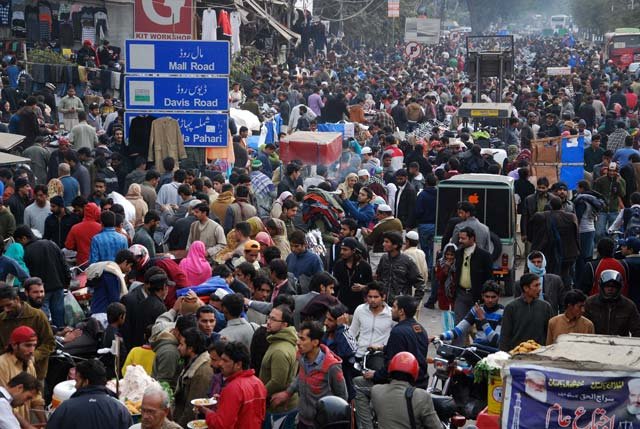
Islamabad (TDI): A report released by the US Census Bureau on Tuesday revealed that Pakistan’s population has crossed an estimated 257 million at midyear, placing it among the world’s most populous nations even as its fertility and growth rates continue to decline.
With a population density of 333 persons per square kilometer, the pressure on land and public services is considerable. The country faces one of the most complex population transitions in South Asia, characterized by rapid numerical growth and slow human development gains.
Despite decades of policy debate, the annual population growth rate stands at 1.82%, high enough to keep total numbers rising steeply for at least another generation.
The total fertility rate (TFR) has fallen to 3.25, yet remains well above the replacement level of 2.1, ensuring continued expansion through population momentum.
Simultaneously, key social indicators remain weak. Life expectancy at birth is estimated at 60.5 years, among the lowest in the region, while the under-5 mortality rate stands at nearly 65 deaths per 1,000 live births, reflecting persistent shortcomings in maternal health, child nutrition, disease prevention and primary healthcare access. Together, these figures underscore the uneven nature of Pakistan’s demographic transition.
Read More: Pakistan Population Summit Highlights Urgent Need For Planning
A broad base of children and working-age youth means that pressure on schools, universities, housing, transport and employment will intensify through the 2030s and 2040s, guaranteeing continued high demand for jobs and public services for decades.
Economists warn that without sustained economic growth and large-scale job creation, this youth bulge could become a source of long-term instability rather than a demographic dividend.
Urban centers are already showing signs of strain through informal housing expansion, transport congestion, and widening access gaps in health and education.
Demographers note that Pakistan is now at a critical midpoint of its demographic transition: fertility is declining, but not fast enough to reduce near-term population stress; mortality is falling, but not fast enough to lift life expectancy to regional standards; and urbanization is accelerating without the infrastructure needed to support it.
Read More: World Population Day 2025: In Numbers and Trends
Without major gains in girls’ education, reproductive healthcare, nutrition, clean water and employment, Pakistan risks entering the second half of the century with both an ageing population and weak human capital, a combination that could severely strain public finances, pension systems and healthcare services.
Experts argue that the coming two decades will be decisive. If investments in health, education and economic productivity accelerate, Pakistan could still convert its youth bulge into sustained growth.
If not, the same numbers could amplify unemployment, migration pressures and fiscal strain well into the latter half of the century.


