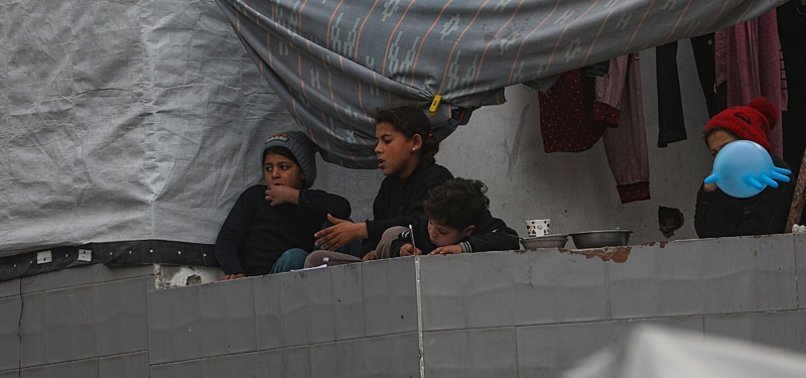
Hamilton (TDI): UNICEF has warned that more than 200 million children worldwide will require humanitarian assistance in 2026, describing the situation as one of the most severe child emergencies in recent history.
The remarks were made by UNICEF Executive Director, Catherine Russell, during the first regular session of the UNICEF Executive Board in Hamilton, Canada.
According to Russell, the scale and complexity of children’s needs are intensifying as conflicts, climate shocks, economic instability, and inequality continue to squeeze families and communities.
She noted that decades of hard-won progress in child survival and wellbeing could be reversed, with 2025 potentially marking the first year this century in which global child deaths increased.
UNICEF’s latest Humanitarian Action for Children (HAC) 2026 appeal highlights that among children in need are those affected by violent conflict, displacement, disasters, disruption of essential services, hunger, and acute malnutrition.
The appeal calls for $7.66 billion to support humanitarian operations that will reach 73 million of the most vulnerable children and their families in 133 countries and territories.
Read More: Pernille Ironside Returns to Pakistan After 15 Years as UNICEF Country Representative
In Ukraine, UNICEF is seeking an additional $350 million to assist 725,000 children affected by nearly four years of war, as violence deepens poverty and disrupts basic services.
In South Asia, climate-induced disasters and public health emergencies are expected to push millions of children into precarious conditions, with UNICEF planning targeted support in countries including Pakistan, India and Nepal.
Ongoing conflict in Sudan continues to fuel what UNICEF describes as the world’s largest humanitarian crisis, with millions internally displaced and children at grave risk of malnutrition and exploitation.
A recent UNICEF analysis shows that deep cuts to humanitarian funding, including a 72% gap in nutritional programming and a $745 million shortfall in education, have significantly constrained life-saving operations and forced difficult decisions about where limited resources can be deployed.
Russell stressed that global cooperation and sustained investment are essential to prevent the “collapse” of critical services, restore essential support systems and safeguard children’s rights.
She urged governments, donors, and humanitarian partners to increase multi-year, flexible funding and ensure unimpeded access for aid delivery.