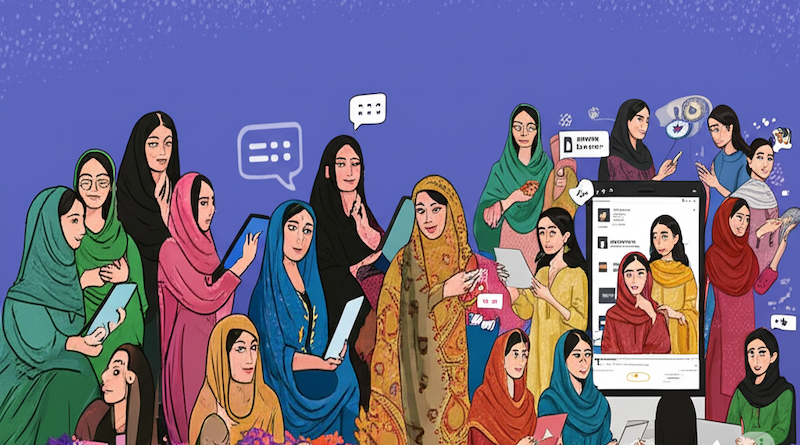
Islamabad (TDI): A recent report by UNFPA Pakistan has sounded a stark warning; as digital technology becomes more entwined with everyday life, new forms of violence, online harassment, cyberstalking, non-consensual image sharing and deep fake abuse, are increasingly targeting women, girls and other vulnerable groups in Pakistan.
The report, titled “Technology Facilitated Gender Based Violence in Pakistan: Critical Gaps in Justice System’s Response”, reveals that although many victims are coming forward, the justice system remains poorly equipped to deliver accountability.
Technology-facilitated gender-based violence (TFGBV) has emerged as a serious and growing form of gender-based abuse in Pakistan. While gender-based violence (GBV) has long been a societal challenge, the rapid spread of digital technologies has created new avenues for harassment, exploitation, and coercion.
We heard from our Aawaz community leaders how technology exacerbates gender-based violence. There is no excuse for digital abuse, and that’s why our report on tackling this violence calls for a survivor centred, tech informed and coordinated response. pic.twitter.com/naZcKjERTi
— UK in Pakistan 🇬🇧🇵🇰 (@ukinpakistan) December 8, 2025
Women, girls, and gender minorities increasingly face abuse on social media, messaging apps, AI-driven platforms, and online forums, leaving survivors socially isolated, vulnerable, and psychologically harmed.
Despite the widespread nature of technology-facilitated gender-based violence (TFGBV) in Pakistan, there is a significant lack of comprehensive data, making it difficult to develop evidence-based policies and interventions.
Without accurate information on prevalence, patterns, perpetrators, and affected communities, efforts to tackle TFGBV remain limited and ineffective.
To address this gap, UNFPA has taken the lead in generating evidence by collaborating with service providers, the criminal justice system, and community organizations.
This evidence informs policies and programs designed to prevent and respond to TFGBV in a targeted and contextually relevant way.
Globally, UN agencies have developed a package of essential services for survivors of gender-based violence, emphasizing holistic, survivor-centered care.
Pakistan is adapting these principles locally to establish standards for responding to TFGBV, particularly for survivors facing systemic vulnerabilities and societal stigma.
Read More: Pakistan, UN Agencies Come Together to End Digital Violence Against Women & Girls
Technology-facilitated violence covers a wide range of abuses, including cyberstalking, online harassment, non-consensual sharing of intimate images, deep fakes, impersonation, doxxing, grooming, extortion, and coordinated hate campaigns.
Globally, 38% of women report experiencing online abuse, and 85% have witnessed it. Deepfakes are predominantly pornographic, with 90–95% targeting women, and female journalists are especially at risk, with 73% reporting work-related attacks.
Pakistan mirrors these global trends. With over 143 million internet users and 139 million mobile broadband subscribers in 2024, digital connectivity is expanding rapidly, but protections are weak.
The Digital Rights Foundation recorded 3,171 complaints of technology-facilitated gender-based violence in 2024, with women filing more than half of these cases.
In response, UNFPA calls on Pakistani authorities to modernize the country’s legal framework to address technology-enabled abuses, such as cyber-stalking, non-consensual sharing of intimate images, and AI-driven harassment.
The agency also emphasizes the need to strengthen law enforcement and judicial capacity to effectively handle digital-age gender-based violence, ensuring survivor-centric protocols, confidentiality, and timely prosecutions.
Additionally, UNFPA advocates for the launch of nationwide digital-safety education campaigns, particularly aimed at women and youth, to build awareness, resilience, and preventive behaviors.

Minahil Khurshid holds a Master's in Peace and Conflict Studies from NUST. She is passionate about current affairs, public policy, and geopolitics.