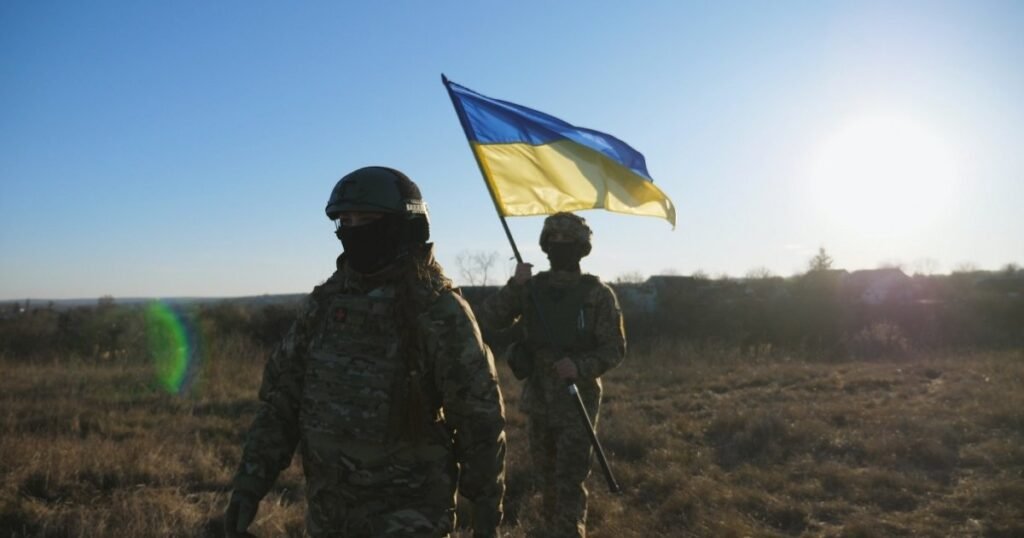
February 24 marks four years since the beginning of Russia’s full-scale war of aggression against Ukraine. For the fifth consecutive year, Ukraine has been resisting the invasion, exercising the inherent right of self-defense enshrined in Article 51 of the UN Charter. The war has already lasted longer than the 1941–1945 conflict between the Nazi Third Reich and the USSR — a sobering historical parallel that underscores both its duration and its magnitude.
From the outset, Russia’s actions have constituted a flagrant violation of the purposes and principles of the UN Charter, which prohibits the acquisition of territory by force. On 2 March 2022, 141 UN member states adopted the UN General Assembly Resolution “Aggression against Ukraine,” unequivocally condemning Moscow’s invasion. Yet condemnation alone has not halted the violence.
The human cost is staggering. According to expert assessments, Russia’s losses in killed and wounded have exceeded one million people.
What has Russia achieved at such an enormous cost? Over the past two years, Russian forces have occupied approximately 1.5 percent of Ukraine’s territory. In many sectors, their daily advance has been measured in tens of meters — slower than during trench warfare in the First World War. The inability to break Ukraine’s resistance has exposed the limitations of the Russian military machine. Despite vast material and human resources, Moscow has failed to achieve its strategic objectives: the destruction of Ukraine’s statehood and independence.
Meanwhile, Ukraine has demonstrated resilience and operational effectiveness. It now possesses the largest land army in Europe and ranks among the world’s twenty most powerful armed forces. Its defense-industrial complex has shown unprecedented growth under wartime conditions, significantly strengthening national defense capabilities.
The driving force behind this war remains Vladimir Putin’s obsession with imperial greatness and his disregard for human life. Russian citizens are paying with their lives for the ideological illusions of their leadership. At the same time, the war has accelerated the erosion of Russia’s geopolitical position — from Central Asia and the Caucasus to the Middle East and Latin America.
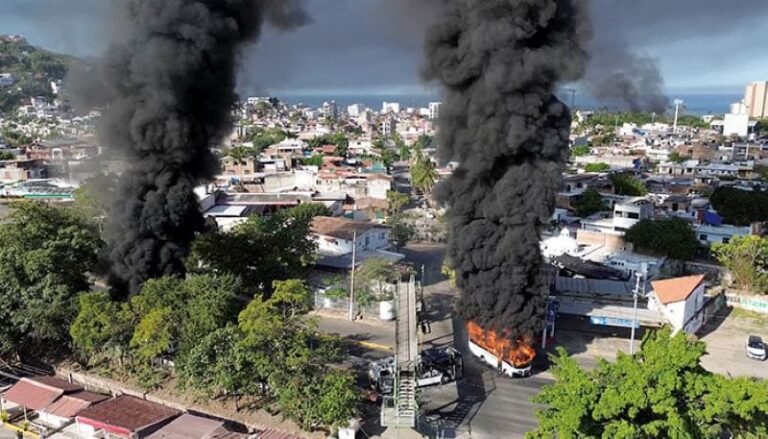
For Ukraine, the price has been immense: tens of thousands of lives lost, children abducted, millions of refugees and internally displaced persons, and large-scale destruction of civilian and industrial infrastructure. During the winter of 2026, as temperatures fell below minus twenty degrees Celsius, Russia intensified massive missile and drone attacks against Ukraine’s critical energy infrastructure. Millions were left without electricity, heating or water in freezing conditions. Such deliberate targeting civilians fall within the scope of Article II(c) of the Genocide Convention.
Read More: EU, Team Europe in Pakistan Come Together for 4th Anniversary of Ukraine War
In 2026, Russia continues to target maternity hospitals, residential buildings, markets, schools, passenger trains and buses — further expanding its record of war crimes and crimes against humanity. On the battlefield, Russian forces have also used ammunition containing dangerous chemical agents, including CS and CN gas grenades, more than 12,000 times since the start of the full-scale invasion. In January 2026 alone, at least 224 such incidents were documented. These actions constitute grave violations of the Chemical Weapons Convention.
Ukrainian law enforcement agencies have opened 216,090 investigations into war crimes and crimes of aggression committed by Russia. These cases include the killing of at least 16,784 civilians, among them 684 children, and the wounding of 40,178 civilians, including 2,367 children.
According to UN data, in 2025 alone, at least 2,514 civilians were killed and 12,142 injured — the highest annual civilian toll since the beginning of the full-scale invasion. Ninety-seven percent of these casualties resulted from deliberate Russian strikes on residential areas and civilian infrastructure.
Justice is indispensable to a comprehensive and lasting peace. On 25 June 2025, an agreement establishing the Special Tribunal for the Crime of Aggression against Ukraine was signed in Hague. This Tribunal is the first international judicial body since World War II mandated to prosecute the crime of aggression regardless of the official position of the suspects. Ukraine continues to cooperate closely with the International Criminal Court to ensure accountability for war crimes and crimes against humanity.
Russia’s aggression has also generated destabilizing global effects. By disrupting supply chains, Moscow has pushed at least 70 million people worldwide to the brink of starvation. Despite being at war, Ukraine remains a reliable guarantor of global food security through the humanitarian initiative “Grain from Ukraine,” launched by President Volodymyr Zelenskyy. More than 320,000 tons of agricultural commodities have been delivered to 18 countries in Africa, the Middle East, and Asia, supporting approximately 20 million people.
In 2025, Pakistan became a recipient of this initiative. With the support of Spain and the Czech Republic, Ukraine delivered 2,000 tons of wheat, 100 tons of vegetable oil, and 200 tons of peas — assistance valued at approximately two million US dollars. These supplies were distributed among 26,000 people affected by floods in Sindh.
Diplomatic efforts continue. Ukraine seeks peace and remains open to diplomacy. However, peace requires political will and readiness for compromise on both sides—conditions that are currently absent in Moscow. The jingoistic rhetoric of Russian officials and the continued strikes against civilians reveal the aggressor’s true intentions.
Read More: Pakistan Calls for ‘Meaningful’ Russia-Ukraine Dialogue to End Escalating Conflict
Ukraine’s red lines remain unchanged: full respect for territorial integrity and sovereignty; the sovereign right to choose alliances; and no externally imposed limitations on Ukraine’s defense capabilities. All security-related decisions concerning Ukraine must be made with Ukraine’s full participation.
Draft peace proposals that legitimize Russian occupation or annexation are perceived by Ukrainians as appeasement of aggression, with grave consequences not only for Ukraine but for the integrity of the international legal order. Such arrangements would preserve a criminal regime, normalize territorial conquest, and incentivize further expansionism. There is no credible reason to believe that this would produce a safer or more stable world.
The international community appears disoriented. Instead of a renewed and equitable order, we are witnessing the emergence of an era defined by arbitrary dominance and intensified competition among major powers. Law is increasingly being supplanted by force.
Despite immense suffering, Ukraine will not surrender. This war is existential for us. Yet our struggle extends beyond national survival. By containing an aggressive and terrorist regime, Ukraine makes a decisive contribution to European and global security. Support for Ukraine is not charity; it is a rational investment in shared stability.
Ukraine expresses appreciation for the consistent efforts of the United States aimed at ending the war and for the steadfast support of its European partners. We are equally grateful to Pakistan for its principled position in support of sovereignty and territorial integrity, and for its commitment to a just and lasting peace. As a non-permanent member of the UN Security Council, Pakistan holds significant potential to contribute to advancing a just settlement.
Ukraine does not ask neutral states to choose between geopolitical blocs. Neutrality in great-power rivalry is understandable. However, neutrality must not become indifference to aggression and war crimes. Those who seek peace for their own societies cannot remain passive observers when the foundations of international law are under assault.
Ukraine firmly aspires to be part of a united Europe — a normative alternative to imperialism and autocracy. For its own defense and prosperity, Europe must continue to strengthen itself militarily and politically and be prepared, when necessary, to respond to global challenges in the language of power. Ukraine sees itself as a pillar of this stronger Europe.
Four years of war have passed. The path to a comprehensive, just, and lasting peace remains arduous. Yet Ukraine calls on its friends and partners to remain resolute and united. Our resilience today is an investment in a more secure tomorrow — for Ukraine, for Europe, and for the international community as a whole.
Markiian Chuchuk
Markiian Chuchuk is the Ambassador Extraordinary and Plenipotentiary of Ukraine in Pakistan.