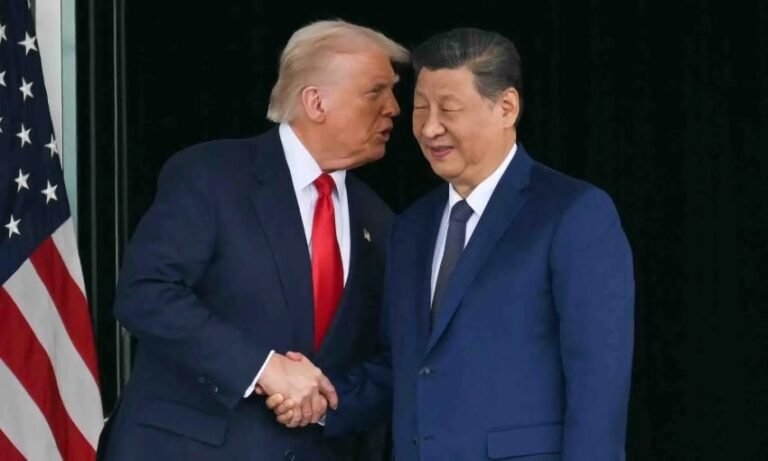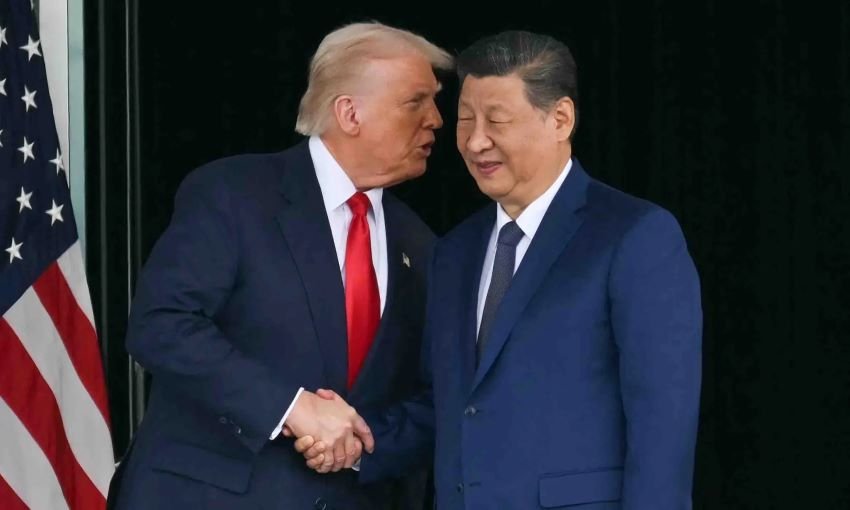
Washington (TDI): US President Donald Trump will travel to China from March 31 to April 2 for high-level talks with President Xi Jinping, the first in-person meeting between the leaders since an October truce on trade.
The announcement comes just as the Supreme Court of the United States struck down several of Trump’s sweeping tariffs imposed under emergency powers, raising questions about the future of US-China economic relations.
The upcoming visit is expected to focus on extending the trade truce, which has stabilized relations after months of tension, according to Reuters.
Trump’s global tariffs, including a 20 percent duty on Chinese imports under the International Emergency Economic Powers Act, were overturned by the Supreme Court, while other tariffs imposed under Section 301 and Section 232 remain in effect.
The Trump administration has maintained that tariffs were necessary to address trade imbalances that it argues weaken US manufacturing. Analysts note that the Supreme Court ruling limits Trump’s ability to unilaterally enforce emergency tariffs, potentially weakening US leverage in negotiations.
Read More: Trump Vows New 10% Global Tariff After Supreme Court Blocks Emergency Levies
Trump has indicated he plans to impose a new 10 percent global tariff for 150 days, though details of which existing tariffs may be reinstated remain unclear. He described the upcoming visit as a “wild one” and pledged an unprecedented diplomatic display in Beijing.
The leaders’ discussions are expected to touch on sensitive security and regional issues, including US arms sales to Taiwan. While the October truce largely avoided Taiwan-related tensions, Xi raised concerns over US arms transfers during a February call. Washington, which maintains unofficial ties with Taipei, approved its largest-ever arms sale to Taiwan in December, totaling $11.1 billion.
Agriculture, particularly soybean purchases, is another key issue. China is the top consumer of US soybeans, and any disruption could impact American farmers, a critical political constituency for Trump. Analysts suggest that the Supreme Court ruling may affect Beijing’s willingness to commit to further large-scale purchases.
Read More: Trump Engages Beijing, Reassures Tokyo Ahead of China Visit
Trump’s global trade war, initiated in January 2025 during his second term, has strained relations with multiple countries, including close allies. Critics argue that broad tariffs have sometimes insulated China and reduced incentives to shift supply chains elsewhere.
The visit is widely seen as a critical test of the US-China relationship, balancing trade, economic security, and regional diplomacy amid legal and political uncertainties.