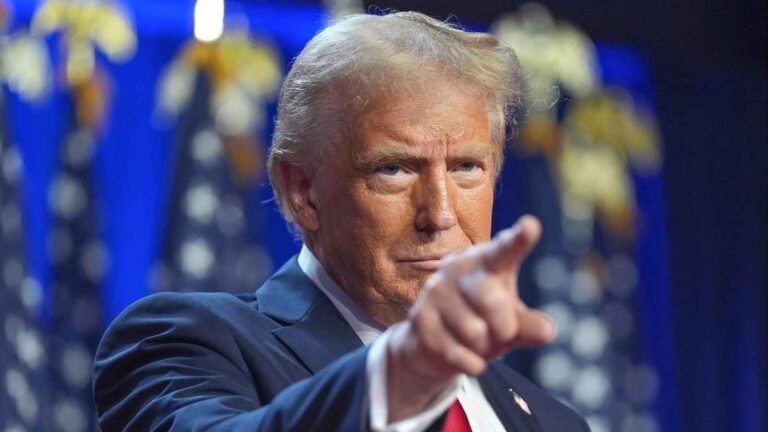
Washington (TDI): US President Donald Trump on Monday warned that any countries attempting to “play games” following a key Supreme Court ruling on his tariffs could face significantly higher import duties.
The Supreme Court recently ruled that tariffs Trump imposed last year under a national emergency law were illegal, reigniting uncertainty among trading partners about existing or pending agreements with the United States.
“Any Country that wants to ‘play games’ with the ridiculous Supreme Court decision, especially those that have ‘Ripped Off’ the US for years, and even decades, will be met with a much higher Tariff, and worse, than that which they just recently agreed to. BUYER BEWARE!!!” Trump wrote in a post on Truth Social.
On February 20, Trump vowed to continue his global trade campaign despite the court ruling, announcing a temporary 10% tariff on imports from all countries. A day later, he said he would increase the rate to 15%, the maximum allowed under the law, citing Section 122, an untested statute permitting tariffs up to that level but requiring congressional approval to extend them beyond 150 days.
Read More: Trump to Visit China Next Month Amid Tariff Uncertainty
Trump indicated he would use the 150-day period to explore other “legally permissible” tariffs, relying on separate statutes that allow import taxes on specific goods or countries based on national security concerns or unfair trade practices.
“I, as President of the United States of America, will be, effective immediately, raising the 10% Worldwide Tariff on Countries, many of which have been ‘ripping’ the US off for decades, without retribution (until I came along!), to the fully allowed, and legally tested, 15% level,” he wrote.
Read More: Trump Vows New 10% Global Tariff After Supreme Court Blocks Emergency Levies
The Supreme Court decision and Trump’s new 15% worldwide tariff have introduced fresh uncertainty into international trade. For countries like China and Brazil, the new 15% rate is lower than previous US tariffs they faced. However, for nations that negotiated bilateral deals to avoid reciprocal tariffs, including the United Kingdom, the European Union, and Japan, the enforceability of those agreements is now in question.
The move underscores Trump’s continued focus on leveraging tariffs as a tool in his broader trade strategy and signals potential friction with multiple trading partners in the coming months.