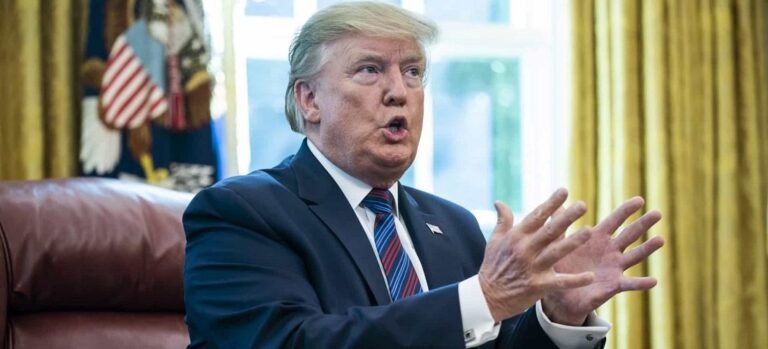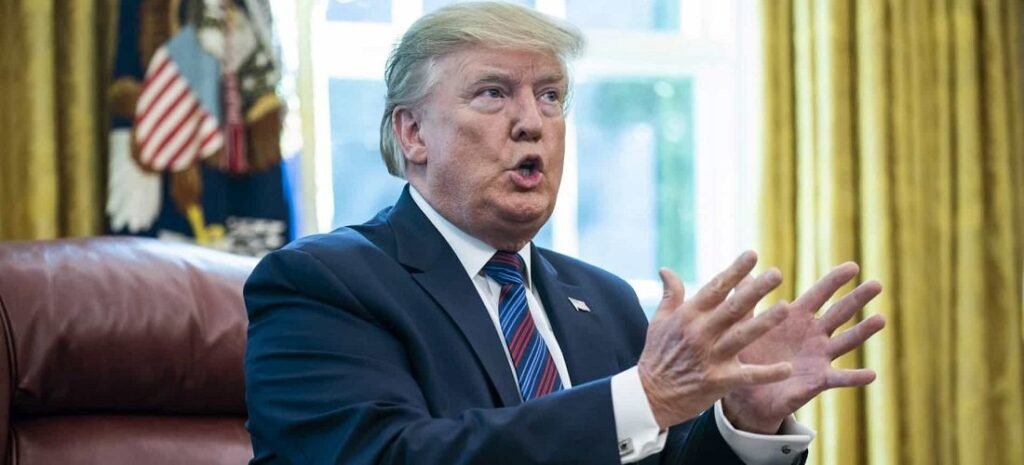
Washington (TDI): US President Donald Trump on Friday pledged to impose a fresh 10 percent global tariff on American trading partners after the Supreme Court of the United States struck down his sweeping import duties introduced under emergency powers legislation.
In a 6–3 ruling, the conservative-majority court determined that the International Emergency Economic Powers Act (IEEPA) does not authorize a president to impose tariffs. The decision marked one of the most significant judicial setbacks for Trump since returning to the White House last year.
Despite the ruling, Trump insisted he would proceed using “alternative authorities” to maintain tariff measures. Speaking to reporters, he asserted that the court’s decision ultimately clarified presidential trade powers and said existing trade negotiations would continue. “The India deal is on,” he said, indicating that agreements reached under the threat of tariffs would remain valid.
The case was brought by affected businesses and 12 US states challenging Trump’s unprecedented use of IEEPA to impose tariffs on nearly all major trading partners without congressional approval.
Read More: Trump Says 25% Tariff on Countries Doing Business With Iran
The US Constitution grants Congress the authority to levy taxes and tariffs. Chief Justice John Roberts, delivering the majority opinion, noted that IEEPA contains “no reference to tariffs or duties,” concluding that Congress had not explicitly granted such sweeping authority under the law.
Three liberal justices joined three conservatives in ruling against the administration. Justice Brett Kavanaugh was the only Trump appointee to side with the president, dissenting alongside Clarence Thomas and Samuel Alito.
Trump had made tariffs a cornerstone of his economic and foreign policy strategy during his second term, triggering a global trade war that unsettled financial markets and strained relations with allies.
Economists from the Penn-Wharton Budget Model estimate that more than $175 billion has been collected under IEEPA-based tariffs, funds that could potentially require refunds following the ruling. The Congressional Budget Office had projected that if all tariffs remained in place, they could generate roughly $300 billion annually over the next decade.
US Treasury data show that total net customs duty receipts reached a record $195 billion in fiscal 2025.
Administration officials, including Treasury Secretary Scott Bessent, indicated that other statutory provisions may be used to retain key tariff measures. These include laws permitting tariffs on imports deemed threats to national security or in response to unfair trade practices. However, analysts note that such mechanisms lack the sweeping flexibility IEEPA provided.
Read More: Trump Mocks Modi as US-India Tariff Dispute Intensifies
IEEPA has historically been used to impose sanctions or freeze assets during national emergencies, not to levy tariffs.
Canada welcomed the decision, calling the tariffs “unjustified,” though sector-specific duties affecting steel, aluminum, and auto industries remain in place.
The European Union said it was carefully reviewing the ruling. EU trade spokesperson Olof Gill stated that Brussels remains in close contact with Washington to assess the implications.
In the UK, government officials said they would work with US counterparts to understand how the decision might affect bilateral trade arrangements, while expressing confidence that Britain’s trading position with the US would remain stable.
Stock markets in the United States and Europe rose following the ruling, with shares of major exporters and luxury brands, including LVMH, Hermès, and Moncler, posting gains amid investor optimism over reduced tariff uncertainty.