Islamabad (TDI): The International Crisis Group (ICG) says that Pakistan has emerged as the country most affected by the Taliban’s 2021 seizure of power in Afghanistan. While a fragile ceasefire currently holds, Islamabad is reportedly prepared to launch further strikes if militant attacks persist.
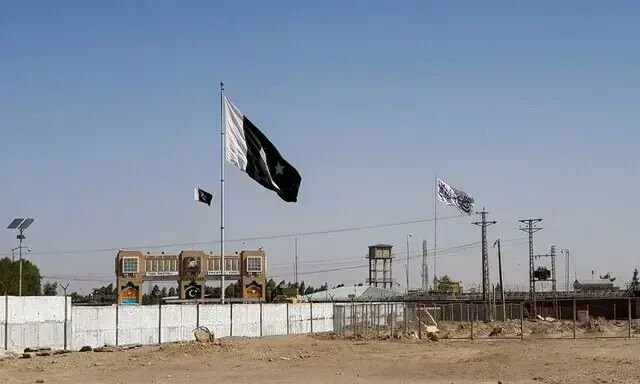
The think tank, known for its independent analyses of global conflicts, highlights a sharp deterioration in Pakistan-Afghanistan relations. The main point of contention remains the Afghan Taliban’s reluctance to act against the Tehreek-i-Taliban Pakistan (TTP).
Violence in Pakistan has surged since 2022. In 2025 alone, militant attacks claimed the lives of more than 600 Pakistani soldiers and police officers, primarily in Khyber Pakhtunkhwa and Balochistan, the provinces bordering Afghanistan. Islamabad holds the TTP responsible for these attacks, alongside Baloch insurgent groups which receive backing from India.
The ICG report warns that Islamabad could again target Afghan territory if future attacks are traced back to militants operating from Afghanistan. UN observers have reported that the TTP enjoys support from the Taliban, although the Afghan government publicly denies the presence of Pakistani militants and attributes the violence to domestic factors.
Read More: Pakistan Keeps Diplomatic Channels Open, Demands Afghan Action Against Terror Groups
Tensions escalated in October after a TTP attack killed 11 Pakistani military personnel. Pakistan responded with cross-border airstrikes, including its first-ever strike on Kabul, reportedly aiming at TTP leader Noor Wali Mehsud. Afghanistan retaliated by targeting Pakistani military positions, resulting in casualties on both sides.
Despite being militarily weaker, the Taliban are capable of striking back, with Kabul claiming to possess missiles that could reach Pakistani cities, a move likely to provoke a strong response from Islamabad.
Regionally, Pakistan faces precarious relations with both Afghanistan and India. The ICG notes that further militant activity could destabilize the uneasy peace established after brief conflicts with both neighbors in 2025, according to Dawn.
Looking at the broader international landscape, the report lists ten conflicts to watch in 2026, including Afghanistan-Pakistan, Myanmar, Iran-US/Israel, Israel-Palestine, Syria, Ukraine, Mali and Burkina Faso, Ethiopia-Eritrea, Sudan, and Venezuela.
Read More: Pakistan Sees Decline in Cross-Border Violence Following Afghan Border Closure
The ICG also comments on the global impact of US President Donald Trump’s return to power. While Trump has brought renewed attention to diplomatic efforts, his first year back in office has often intensified conflicts rather than resolving them. His approach relies heavily on leveraging US influence, through negotiations, business incentives, or economic pressure, but has yet to produce lasting peace in any major crisis zone.
European leaders, preoccupied with security challenges closer to home, have limited capacity to engage in conflict resolution elsewhere, according to the report.