In the context of globalization and an increasingly complex international system, the most effective force capable of uniting nations is the promotion of peace, friendship, and good neighborly relations. Such an atmosphere serves as the foundation for constructive engagement, regional stability, economic prosperity, and meaningful cultural exchange among states.
The peoples of Central Asia and South Asia were united in the past through the ancient Silk Road, and in addition to geographical proximity, these two regions have a common history, rich culture and civilizational ties. Central Asia and South Asia together form an important part of Eurasia. According to the 19th century British geographer H. Mackinder, the Eurasian region is considered the “heart of history”, and whoever controls it controls the world. Geographically, this continent forms the core of Eurasia, where the strategic borders of Central Asia, China, Afghanistan, and India and Pakistan meet.
According to the United Nations geographical division and classification, the South Asian region consists of Afghanistan, Bangladesh, Bhutan, India, Maldives, Nepal, Pakistan, and Sri Lanka. It is worth noting that among the South Asian countries, Afghanistan, Pakistan, and India have the closest relations with Central Asia in terms of geographical proximity and diplomatic relations.
Historically, mankind has been constantly in search of freedom, independence and respect for man, which has repeatedly been embodied in the precious heritage of mankind in its entirety. According to the Tajik archaeologist Pulotov Abdurahmon, it is precisely in the context of the clash of civilizations, the opposition of ideas about the fate of humanity and the protection of universal values, which puts the bright future of humanity under question, that the adoption of the “Cyrus’ Pillar: The First Declaration of Human Rights and Cultural Diversity” is considered important as a global symbol of freedom and coexistence of cultures. This resolution is not just a symbolic document, but a spiritual pact between the past and the present: it shows that ancient heritage can bring a message of hope and understanding to modern society.
Thus, with the common language and literature, arts and ties between these countries have developed well and successfully, and various projects and programs play a strategic role in sharing their abundant natural resources and creative initiatives in solving various world issues. In this context, Tajikistan is one of the countries that having close geographical ties with Pakistan, and diplomatic relations between the two countries were established on June 6, 1992.
Read More: Ambassador of Tajikistan to Pakistan Receives Prestigious Global Ambassador Award
The Embassy of Pakistan in Dushanbe was first opened in 1993, and its activities began in early 1994. It is noteworthy that in the last ten years, the trade exchange between the two countries has reached 100 million US dollars, and the parties are striving to increase it to 500 million dollars.
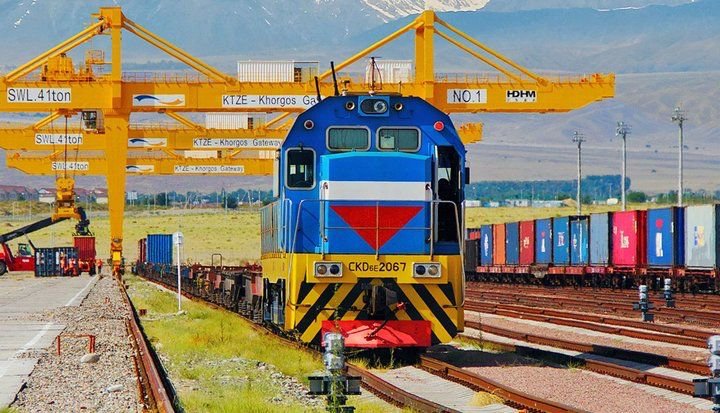
Another area that brings Tajikistan and Pakistan closer together is the implementation of the CASA-1000 project, the main coordination of which is Tajikistan, Kyrgyzstan, Afghanistan and Pakistan. It should be noted that the main goal and objective of the CASA-1000 project is the generation and transmission of hydroelectric power from Central Asia to South Asia. With the implementation of this project, Pakistan will receive 1300 megawatts of electricity, thereby further strengthening regional relations.
It is worth noting that the Society for Friendship and Cultural Relations of Tajikistan with Foreign Countries, as a promoter of the state’s foreign and domestic policy in matters of international relations, friendship of peoples and cultural relations between them, has been established and continues to work in the direction of fulfilling its statutory tasks, promoting the activities of friendship societies operating within its framework, strengthening ties with national and cultural associations and centers of national minorities, expanding cooperation with embassies, international organizations residing in the country, partners, as well as embassies of Tajikistan. Its goals and objectives are to promote and strengthen friendship, culture, traditions and customs of other nations residing in Tajikistan and to promote the cultural history of the country abroad, and expand its activities within the framework of national and cultural values and people’s diplomacy.
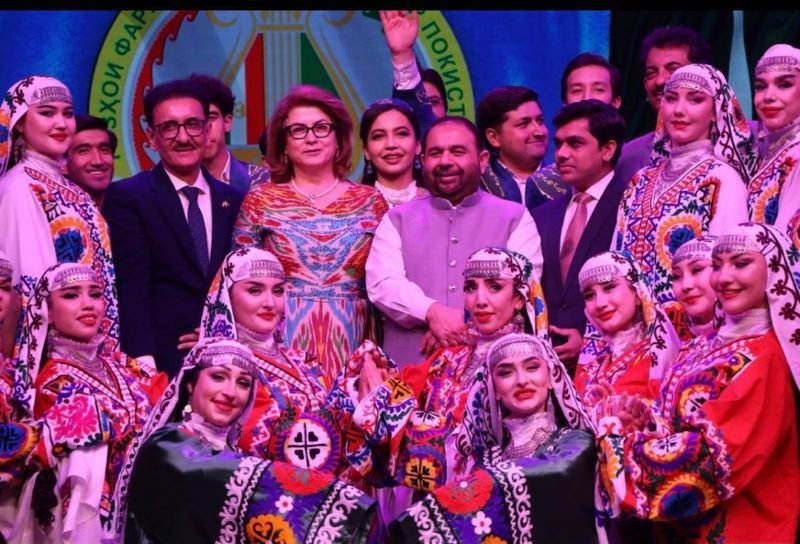
Thus, for the development of diplomatic relations, the “Days of Culture of the Republic of Tajikistan” were planned and held in Pakistan from December 17 to 24, 2025. The colorful concert featured national songs and melodies, and culture ministers of both countries held a meeting. They discussed the mutually beneficial cooperation between educational institutions in the field of culture and art, as well as the training of professionals and the exchange of experience.
Within the framework of the Days of Culture of the Republic of Tajikistan, Prime Minister Muhammad Shehbaz Sharif met with the Minister of Culture of Tajikistan Matlubakhon Sattoriyon and expressed his pleasure that “this initiative testifies to the high level of relations between the two countries.” This important cultural gathering, as a bridge of communication, will lay a solid foundation for further strengthening cooperation between Tajikistan and Pakistan and provide good foundations for creating an atmosphere of peace and constructiveness.
As part of the Tajik Culture Week in Pakistan, the International Forum titled “Pakistan and Tajikistan – Two Forms and One Soul” was held at Lok Virsa Hall in Islamabad. The forum brought together scholars, poets, and writers from both countries. Among the speakers, Mubarakshoh Shamsov, Candidate of Philosophy at the National Academy of Sciences of Tajikistan, presented a paper on “Bahauddin Naqshband as a Bearer of the Cultural Heritage of the Mystics of Central and South Asia.” Najmiddin Salohiddinzoda delivered a presentation titled “Faiz Ahmad Faiz and Mirzo Tursunzoda,” while Zamira Ghaffori, Professor at Bobojon Ghafurov Khujand State University, spoke on “Abdullojon Ghafforov and the Formation of the Tajik School of Literary Studies.”
Read More: Pakistan, Tajikistan Agree to Boost Trade and Regional Cooperation
These presentations highlighted the shared Sufi traditions of the two nations, the deep historical roots of Tajikistan–Pakistan friendship, and the role of Tajik scholars in promoting and interpreting the legacy of Allama Muhammad Iqbal. Pakistani scholars, including Rabia Kayani, Ambar Yasmin, and Wasim Raja, also shared their perspectives on Iqbal’s philosophy and Sufism, emphasizing the strong cultural bonds between the two countries and expressing confidence that academic and literary cooperation between Tajikistan and Pakistan will continue to expand.
Cultural enthusiasts and historians emphasize that cultural initiatives such as the Cultural Week serve as an effective and sustainable platform for promoting people-to-people ties, mutual respect, and deeper cultural understanding between countries.
It is worth noting that Tajikistan and the countries of the South Asian region, especially Pakistan and India, have had literary and cultural ties since ancient times, and during the period of independence they developed through the representatives of language, literature, science and culture. An example of this can be observed in the literary and cultural works of writers from these countries. Currently, these countries are active members of the United Nations, the Economic Cooperation Organization (ECO), the Shanghai Cooperation Organization, the Organization of Islamic Countries and other regional forums and organizations, which jointly contribute to holding festivals and celebrations, especially the celebration of Nowruz.
Thus, in the field of multilateral diplomacy, Tajikistan pays special attention to the development of effective relations within the framework of forums and organizations, especially the Shanghai Cooperation Organization. The country sees priority areas of its activity within this organization not only in the field of security and economic cooperation, but also in the development and strengthening of multilateral cooperation in the cultural and humanitarian spheres.
The regional countries should continue cooperation for the development and well-being of humanity, and should carry out the following activities:
- Greater cooperation within the framework of joint forums and projects in the fields of economy, trade, and water and electricity
- Respect and development of each other’s languages, literature, and culture
- Expansion of cooperation by holding cultural programs and events to create and develop regional integration
- Joint cooperation and struggles to get rid of threats and dangers
In conclusion, countries, drawing upon Tajikistan’s school of peace and constructiveness, should shape their pathways toward lasting security and peace through concrete mechanisms and models, including cultural promotion, economic development, the effective implementation of joint projects and programs, and sustained cooperation. Such efforts can guide the region and the wider world toward constructive engagement and peacemaking, while further strengthening people-to-people diplomacy.

Mirsaid Rahmonov
Mirsaid Rahmonov is a Senior Research Analyst at the Institute of Asian and European Studies, Tajikistan.