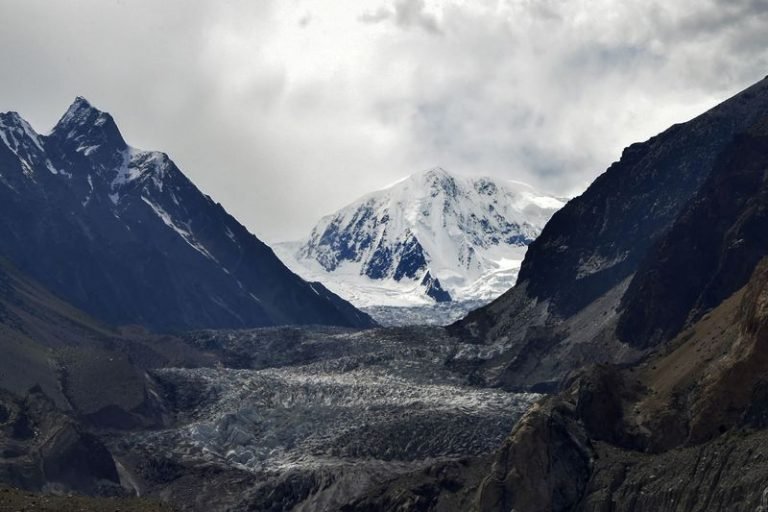
Glaciers play a fundamental role in the formation of water resources in Central Asia and in maintaining the stability of mountain ecosystems. In Tajikistan, glaciers represent one of the most important natural components of the cryosphere and serve as a major source of river runoff. Under conditions of global climate change, the accelerated retreat of glaciers has become a serious environmental and socio-economic challenge affecting water availability, ecological stability, and sustainable development. The scientific study of glaciers, including monitoring their dynamics and understanding the processes affecting their transformation, has therefore become increasingly important. Research on glaciers is not only a matter of academic interest but also a strategic priority for countries whose water resources depend heavily on mountain cryosphere systems.
In recent years, the international community has paid growing attention to the preservation of glaciers and their role in global water security. In this context, the initiatives of Tajikistan at the international level have gained particular significance. At the initiative of President Emomali Rahmon, the United Nations General Assembly adopted a resolution on December 14, 2022, proclaiming 2025 as the International Year of Glaciers’ Preservation and establishing the International Day of Glaciers (March 21). These initiatives aim to consolidate global scientific and political efforts to improve glacier monitoring, strengthen international cooperation in cryospheric research, and raise awareness about the importance of glaciers for sustainable development. The successful implementation of such international initiatives requires the development of national scientific capacity and the active participation of researchers in glacier studies.
In Tajikistan, a modern scientific community working in the field of glaciology has gradually formed, bringing together specialists in hydrology, climatology, environmental sciences, and water resource management. A notable feature of this development is the increasing participation of women scientists who contribute to both fundamental and applied research on glaciers and climate change.
Read More: Mother’s Day Highlights Women’s Role in Tajikistan’s Development
The Government of Tajikistan pays considerable attention to the promotion of women’s participation in science and public life. In this regard, the National Strategy for Enhancing the Role of Women in Tajikistan for 2021–2030 provides important opportunities for the professional development of women researchers. The strategy supports gender equality in various sectors, including scientific research, and encourages women’s involvement in addressing national and global challenges related to climate change and environmental sustainability.
One important initiative in this direction has been the establishment of the Association of Women Glaciologists at the State Scientific Institution “Center for Glacier Studies of the National Academy of Sciences of Tajikistan.” The association aims to promote interdisciplinary research, strengthen scientific cooperation, and support young female researchers interested in cryospheric studies. It also plays an important role in promoting scientific knowledge and encouraging greater participation of young people in research related to glaciers and climate change.
Modern glaciological research increasingly relies on advanced analytical approaches. One of the promising directions is the application of isotope methods for studying water resources and cryospheric processes. Isotope analysis makes it possible to determine the origin and transformation of water masses, trace hydrological pathways, and better understand the interactions between glaciers, snow cover, and river systems. The introduction of isotope techniques into glacier research in Tajikistan has significantly expanded the scientific capabilities of national research institutions and contributes to the integration of Tajik science into the international research community.
Another important aspect of contemporary cryospheric research is the interdisciplinary connection between environmental change and public health. Climate change affects hydrological processes and may influence the chemical composition of water resources. In mountainous regions, pollutants accumulated in glaciers and snow cover can potentially enter freshwater systems during melting processes. Such changes may have implications for drinking water quality and human health. In particular, vulnerable population groups may experience increased exposure to environmental risks associated with changes in water resources. In this context, research combining hydrochemical and isotopic analysis of water resources becomes especially important. These studies help to identify potential environmental risks, improve water management strategies, and support the development of sustainable public health policies in regions affected by climate change.
Read More: President Emomali Rahmon’s Role in Advancing American Studies in Tajikistan
Field research remains an essential component of glaciological studies. Scientists from Tajikistan regularly participate in high-mountain expeditions aimed at monitoring glacier conditions, studying snow cover, and collecting hydrological and climatic data. These expeditions often take place in remote mountain areas at high altitudes, where researchers work under challenging environmental conditions. The active participation of women scientists in such fieldwork demonstrates their growing role in scientific research and highlights the importance of gender inclusion in modern scientific practice. Within the framework of the International Year of Glaciers’ Preservation (2025), scientists in Tajikistan have also been actively involved in educational and outreach activities.
Special attention has been given to raising awareness among young people about climate change, the importance of glaciers, and the role of scientific research in addressing environmental challenges. Educational programs, open lectures, and public science initiatives contribute to strengthening environmental awareness and encouraging the next generation of researchers. In addition, new communication platforms have been developed to disseminate scientific information about glacier research and environmental issues. These initiatives aim to promote scientific literacy, foster dialogue between scientists and society, and highlight the importance of glacier preservation for the sustainable future of the region.
In conclusion, the contribution of women scientists in Tajikistan to glacier research represents an important element of the country’s scientific development and its participation in addressing global environmental challenges. Their work contributes to expanding knowledge about cryospheric processes, strengthening international scientific cooperation, and promoting sustainable approaches to water resource management.
The active involvement of women researchers in glacier studies, scientific expeditions, and educational initiatives demonstrates that scientific development, gender equality, and environmental protection are closely interconnected components of sustainable development. In this context, the participation of women scientists plays a significant role in advancing the goals of the International Year of Glaciers’ Preservation and in promoting a broader understanding of the importance of glaciers for the future of humanity.

Dilorom Kayumova
Dilorom Kayumova is a Candidate of Sciences and a Leading Researcher at the State Scientific Institution Center for Glacier Research of the National Academy of Sciences of Tajikistan.