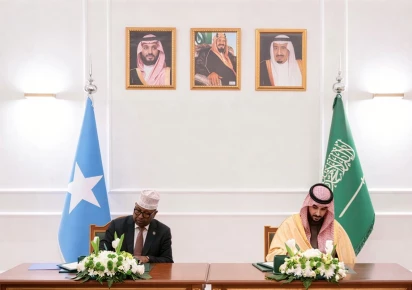
Riyadh (TDI): Somalia and Saudi Arabia have entered into a new defense and military cooperation agreement, as regional geopolitical tensions intensify across the Horn of Africa and the Red Sea corridor.
The pact was signed on Monday in Riyadh by Somali Defense Minister, Ahmed Moallim Fiqi, and Saudi Defense Minister, Prince Khalid bin Salman, according to official statements from both governments.
The agreement broadens the scope of bilateral military collaboration, encompassing areas such as training, capacity building, equipment support, intelligence sharing, and enhanced coordination on defense planning.
Official rhetoric in both countries describes the agreement as a framework to improve operational readiness and professionalism of the Somali National Army – a force still rebuilding after decades of internal conflict and insurgent violence.
Saudi Arabia’s participation is seen as part of its long-standing support for Somalia’s stabilization efforts against groups like al-Shabab, as well as broader security challenges in the region.
Read More: Pakistan, Somalia Waiver Visa Requirement for Diplomatic Passport Holders
While specific operational details of the pact have not been publicly disclosed, the agreement acknowledges shared strategic concerns over maritime security in the Red Sea and Gulf of Aden, vital international trade routes that have drawn heightened attention from global powers.
The deal can also be interpreted in the context of escalating competition among Gulf states for influence in the Horn of Africa, as well as Israel’s recent recognition of Somaliland.
Somalia also signed a separate defense cooperation agreement with Qatar last month, reflecting Mogadishu’s broader diplomatic efforts to secure international partners as Somaliland’s recognition stirs insecurity within the country.
Somaliland, a breakaway region in northern Somalia that has sought international recognition, has only been able to draw legitimacy from Israel while the United Nations Security Council (UNSC) and the Organization of Islamic Cooperation (OIC) severely condemned Israel’s move.
In response, leadership in Mogadishu warned Israel against threatening its territorial integrity. Saudi Arabia publicly supported Somalia’s sovereignty and rejected unilateral moves in the wake of this recognition. Additionally, the Horn of Africa has increasingly been a battleground for proxy influence involving Gulf monarchies.