Somalia (TDI): The Somali government announced on Monday that it has canceled all agreements with the United Arab Emirates (UAE), including security, defense cooperation, and port arrangements, stating that Abu Dhabi’s actions have undermined Somalia’s national sovereignty and unity.
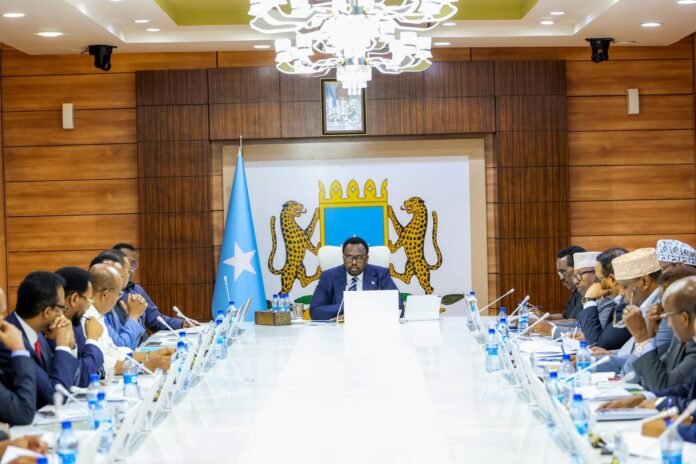
The decision was made at a cabinet meeting chaired by Deputy Prime Minister Salah Ahmed Jama, during which ministers voted to annul bilateral pacts that had governed defense cooperation and involvement at key strategic ports, including Berbera, Bosaso, and Kismayo.
In its official statement, it said the decision reflects “credible reports and strong evidence concerning hostile actions that undermine national sovereignty, territorial unity, and political independence.”
Somalia’s decision is widely believed to be connected to Israel’s recognition of Somaliland in December, according to an independent analyst Abdinor Dahir.
Somaliland, which declared independence in 1991, is not internationally recognized and remains a highly sensitive issue for Mogadishu.
Dahir said many Somalis suspect that the UAE played a role in facilitating Israel’s move, viewing it as a direct challenge to Somalia’s sovereignty.
As a result, the cabinet’s decision to cancel agreements is largely seen as a political response to Abu Dhabi, which has been accused of supporting non-state actors and separatist movements across Africa, including Sudan’s Rapid Support Forces (RSF).
Read More: Somalian Envoy Visits COMSTECH Secretariat to Strengthen Bilateral Cooperation
The UAE has repeatedly rejected claims that it is supplying arms to the RSF in Sudan. While Abu Dhabi did not endorse a joint Arab-Islamic statement condemning Israel’s recognition of Somaliland in December, it later issued a joint declaration with the African Union on January 7, reaffirming its support for Somalia’s sovereignty, territorial integrity, security, and stability.
Somalia’s federal structure grants considerable autonomy to its member states, raising questions over whether regional governments will comply with the decision to cancel agreements with the UAE.
Puntland and Jubaland, both of which maintain close relations with Abu Dhabi, are already at odds with the federal government over proposed constitutional amendments and disagreements surrounding the country’s upcoming elections.
Somaliland also rejected Mogadishu’s move, with its Minister of the Presidency, Khadar Hussein Abdi, dismissing the federal government’s authority and reaffirming strong ties with the UAE.
He said Emirati investment in the Berbera port demonstrated long-standing trust, adding that Somaliland remains committed to its partnerships despite Somalia’s decision.
The UAE has so far remained silent on Somalia’s decision to cancel the agreements. The move has already stirred uncertainty across the Horn of Africa, a region where foreign influence, internal political rifts, and disputes over federal authority continue to test a fragile peace.

Minahil Khurshid holds a master’s degree in Peace and Conflict Studies from CIPS, NUST. She has a strong interest in current affairs, geopolitics, and policy analysis.