
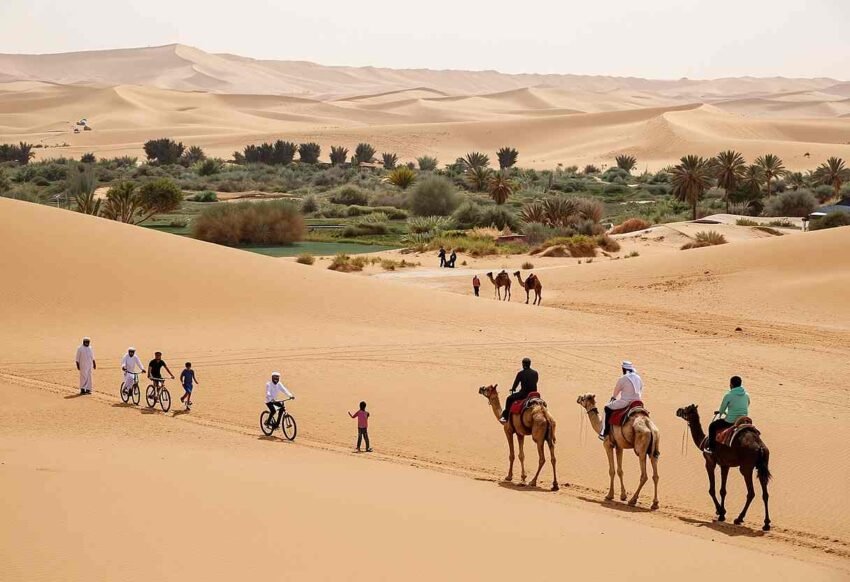
Riyadh (TDI): Saudi Arabia’s Al-Urumah Season has wrapped up its fifth edition on a record note, drawing over 800,000 visitors in a single six-month run.
This is a major leap upwards from the 52,000 who attended its debut five years ago, and a sign that the Kingdom’s bet on nature-based tourism is paying off.
The season, held across the Imam Abdulaziz bin Mohammed Royal Reserve and the King Khalid Royal Reserve northeast of Riyadh, drew visitors from within Saudi Arabia and abroad while generating jobs, supporting local communities and strengthening environmental awareness.
Fourteen tourism service providers participated this year, offering activities ranging from hiking and cycling to horseback riding, camel trekking, stargazing and guided exploration trips.
The season also created around 84 jobs and contributed to the growth of ecotourism-related industries in surrounding communities.
Read More: Saudi Crown Prince, FIFA Chief Discuss Expanding Global Football Cooperation
The latest figures mean that nearly two million people have visited Al-Urumah Season since its launch; a remarkable rise for an initiative that began as a niche outdoor project and has evolved into one of Saudi Arabia’s leading ecotourism destinations.
What sets Al-Urumah apart from the Kingdom’s flashier entertainment festivals is its setting and ethos. Named after a 700-kilometre mountain range stretching east of Riyadh, the season focuses on connecting visitors with Saudi Arabia’s natural landscapes.
The 11,300-square-kilometre Imam Abdulaziz bin Mohammed Royal Reserve encompasses parts of the Dahna Desert and green areas such as Rawdat Khuraim, while the King Khalid Royal Reserve is known for its desert-and-mountain landscapes, archaeological sites, ancient rock art and wildlife, including Arabian oryx and gazelles.
The initiative reflects Saudi Vision 2030’s vow to diversify the economy, expand tourism offerings and promote environmental sustainability, with infrastructure improvements, eco-lodging facilities, private-sector participation and community engagement programs fueling steady growth in visitor numbers.
A sixth edition has already been announced for next November, with new programs aimed at enhancing sustainability, increasing community participation and showcasing the natural and cultural heritage of the two royal reserves.