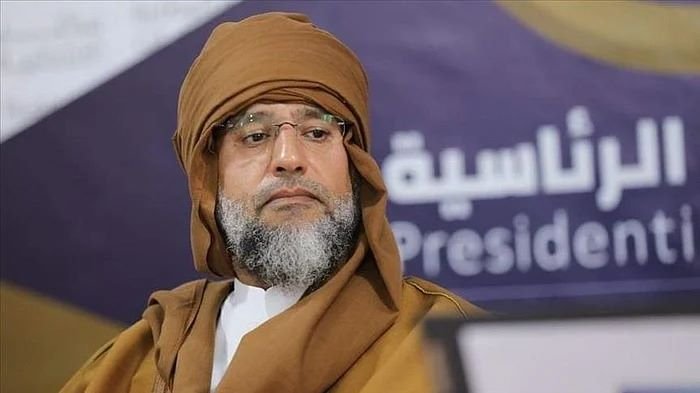
Tripoli (TDI): Saif al-Islam Gaddafi, the most prominent son of the late Libyan leader Muammar Gaddafi, was shot dead at his home on Tuesday, according to relatives.
Abdullah Othman Abdul Rahim, a family member, told a television channel that four unidentified armed men stormed Saif al-Islam’s residence after disabling surveillance cameras and killed him.
Once a highly influential figure in Libya, particularly during his father’s rule, Saif al-Islam’s public profile had diminished in recent years. In 2015, a Libyan court sentenced him to death in absentia for suppressing peaceful protests during the 2011 revolution that toppled his father. He also faced provisional charges from the International Criminal Court for alleged crimes against humanity.
In 2021, he registered as a presidential candidate for elections that were later canceled due to a political deadlock.
Saif al-Islam was regarded as his father’s heir apparent and had held significant influence despite never holding an official position. He was involved in key negotiations, including Libya’s dismantling of its weapons of mass destruction and compensation talks related to the 1988 Pan Am bombing over Scotland.
Read More: Pakistan and Libya Explore New Avenues for Cooperation
The killing of Saif al-Islam adds another layer of uncertainty to Libya’s already fragile political landscape. The country has struggled with factional conflicts and intermittent civil war since the fall of Muammar Gaddafi in 2011, with rival governments and militias vying for power.
Observers have expressed concern that his death could further destabilize the region and potentially spark retaliation by armed groups aligned with different factions. Libya remains a focal point for regional and global security due to its strategic location and energy resources.
Read More: Rebuilding & Rising: A Conversation with Ambassador Moamer Abdalmotlab on Libya-Pakistan Relations
Analysts note that the events surrounding Saif al-Islam’s life and death reflect the broader challenges Libya faces in transitioning from decades of authoritarian rule to political stability. His story underscores the complex interplay of personal ambition, tribal loyalties, and international interests shaping the country’s future.