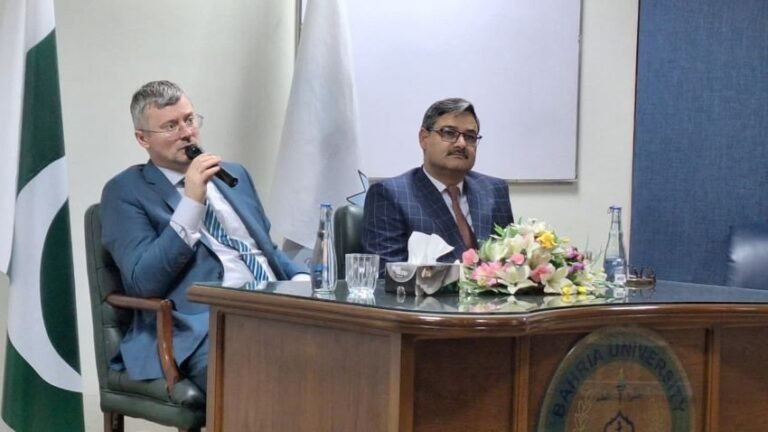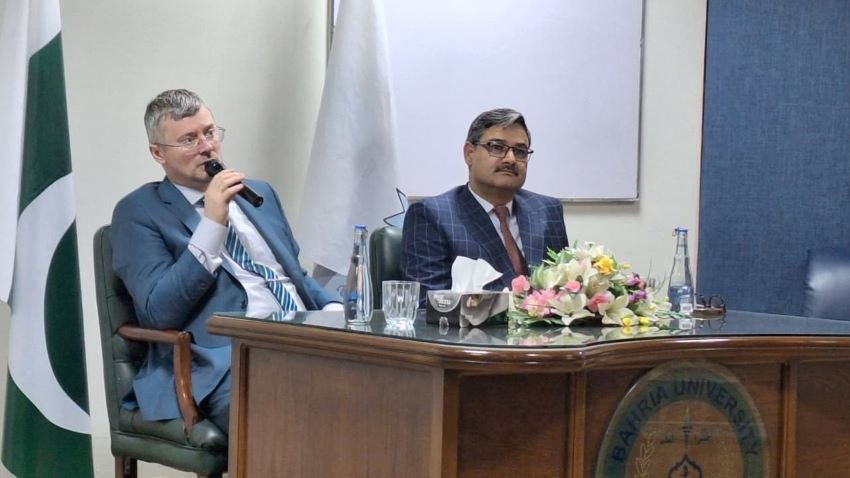
Islamabad (TDI): Russian Ambassador Albert P. Khorev on Wednesday outlined the growing momentum in Russia–Pakistan relations, highlighted historic Soviet-backed industrial cooperation, and shared Moscow’s perspective on the Ukraine conflict during a lecture at Bahria University, where he also discussed expanding academic partnerships.
Addressing students, Ambassador Khorev said that despite the often complex nature of global politics, ties between Moscow and Islamabad have consistently remained constructive.
He cited major industrial initiatives undertaken with Soviet assistance in the 1970s and 1980s as enduring symbols of cooperation, including the development of Karachi Steel Mills and the Guddu Thermal Power Plant.
Read More: Dar, Russian Envoy Reaffirm Commitment to Strengthen Bilateral Ties
He noted that contemporary Russia–Pakistan relations are increasingly dynamic, marked by expanding political dialogue, economic engagement, and humanitarian exchanges.
During the session, the ambassador also briefed students on the situation in and around Ukraine, discussing what he described as the underlying causes of the crisis.
He criticized Western countries for their role in destabilizing the Eurasian region and emphasized Russia’s stated efforts to safeguard the rights of Russian-speaking communities in Ukraine.
Read More: Ukraine Peace Needs Root Cause Fix: Russian Envoy
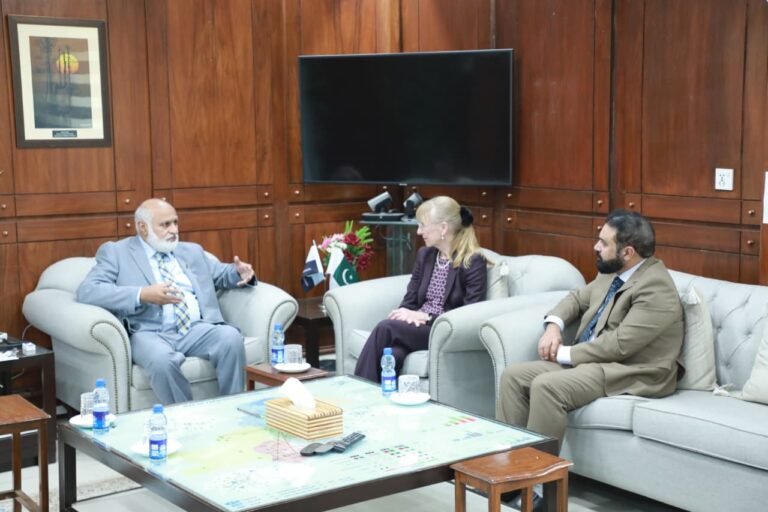
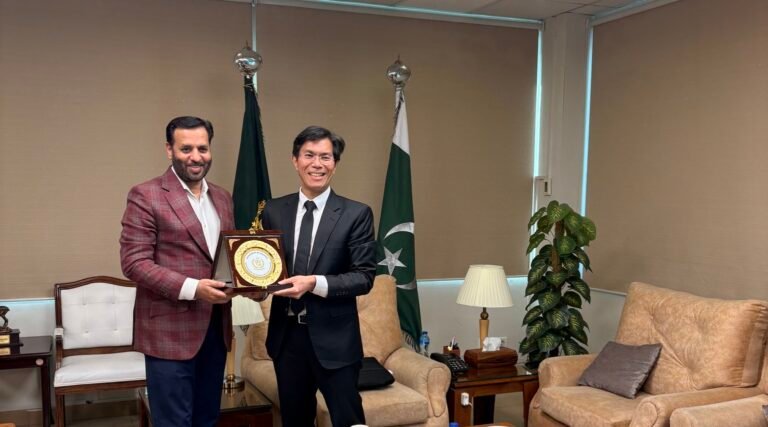
On the sidelines of the lecture, Ambassador Khorev met with the Rector of Bahria University, Vice Admiral Abid Hameed.
Both sides explored opportunities to strengthen institutional collaboration with Russian universities and expressed a shared interest in deepening academic cooperation going forward.

Sohail Majeed
Sohail Majeed is a Special Correspondent at The Diplomatic Insight. He has twelve plus years of experience in journalism & reporting. He covers International Affairs, Diplomacy, UN, Sports, Climate Change, Economy, Technology, and Health.