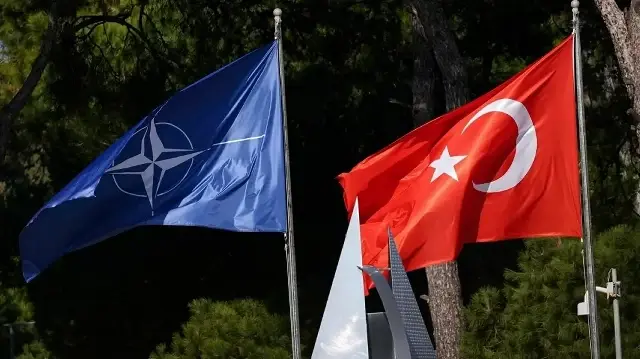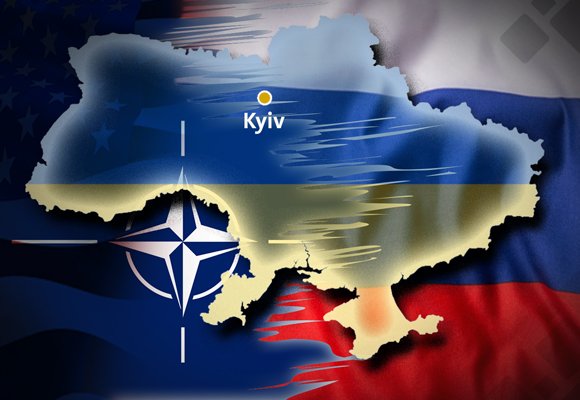
There are 59 ongoing kinetic conflicts in the world today. 59 countries are at war with each other. One of the major kinetic conflicts in the world is the conflict between Russia and Ukraine that commenced in February 2014. Its aftermaths continue to shape global security, energy markets, and diplomatic relations. The primary reason is that Ukraine was being inducted into NATO which is a political and military alliance of 32 member countries from North America and Europe signed on April 04, 1949. Article 5 of the NATO said that attack on one NATO’s member will consider the attack on all the NATO’s members, and they will retaliate collectively.
Therefore, Putin does not want NATO on his doorstep. Not only Russia but also not any country will accept that its competitor sits in its border. The Russian leadership has often argued that its main concern is NATO’s expansion rather than Ukraine itself. If Kyiv begins to say that it will not become the part of NATO, Moscow will stop fighting the next day. Russian officials have said on several occasions that Ukraine joining NATO would make a serious challenge to Russia’s security interests. Howbeit, it is not only a matter of security but also the matter of Moscow’s economy as well.
Russia has no access to warm water ports; over 85 percent trade of the world depends on water; there is a deep- sea port in Ukraine ‘Sevastopol’ the major port in Crimea it was transferred to Ukraine in 1954 by the Soviet leadership. While the gift was largely symbolic at the time. Moscow captured it in 2014 by invading in Ukraine. Russia ensured continued access to only warm water to counter Western influence in the region. Additionally, Russia is one of the largest exporters of energy (mainly oil and gas) to Europe, and energy exports make up a significant portion of its economy.
Moreover, two of Russia’s major gas pipelines – the Soyuz and Brotherhood routes pass through Ukraine, reflecting their shared Soviet-era energy infrastructure. These transit routes have been important for supplying Russian gas to Europe, and Ukraine has benefited financially through the fees paid for transporting this gas across its territory; this energy interdependence has long influenced political relations between Moscow and Kyiv.
Additionally, Putin is a man who has seen the bipolarized world when there were two global superpowers the USSR and the USA. He wants that glorification back same as Trump. Although, Putin faces strong criticism from many Europeans leaders, he is seen by many within Russia as a defender of national interests. It is said that morals take a back seat when it comes to national interests.
Read More: What Does France’s Incursion on Russian Shadow Tanker Mean for the War in Ukraine
Moreover, Russia and Ukraine have long been connected through what many describe as “family ties,” shaped by shared history, cultural traditions, and close linguistic links. These deep social connections influenced Russia viewed its relationship with Ukraine, often considering it a vital partner in the region. Building on this sense of closeness, Russia hoped that Ukraine join its Eurasian Economic Union (EAEU). Whereas the EAEU is officially an economic project, for Russia it also represented in a way to maintain cooperation with countries bound by long-standing historical and cultural relationships.
Even the Russia-Ukraine war has also affected many NATO member states: Slovakia, Germany, Austria, Hungary; due to rising energy prices. For years, Russia supplied a substantial share of Europe’s natural gas, giving Moscow considerable influence over regional energy security. When the conflict escalated and sanctions took effect, gas supplied were disrupted, causing sharp increase in electricity and heating costs across NATO countries, this energy inflation highlighted how the confrontation between Vladimir Putin and the West extends beyond military and diplomatic arenas, shaping the economic stability of European allies as well.
Additionally, this conflict has had vital effects on global energy markets. As one of the world’s major exporters of oil and natural gas. Russia plays a key role in the international energy supply chain, when the war began, disruption in Russian exports sanctions from Western countries created uncertainly in global markets, leading to higher prices for oil and gas, and even electricity worldwide. Countries in Asia, Africa, and Latin America faced increased import costs, while developing states struggled with higher fuel and transportation prices as well.
The conflict also pushed many nations to seek alternative energy suppliers, invest more in renewable sources, and reconsider their long-term energy security strategies. As a result, the war reshaped not only regional energy dynamics but also global energy planning and market stability.
Some analysts draw comparisons by imagining a scenario in which Canada formed a military alliance with China and allowed Chinese troops to be stationed on North American soil. In such a case, they argue, the United States would likely respond in a manner like how Russia has reacted to Ukraine’s alignment with NATO. Moscow often claims that Western leaders informally assured Soviet officials in the early 1990s that NATO would not expand eastward, though this is debated globally. Nevertheless, Ukraine was being inducted into NATO’s expansion.
Read More: Trump Says No Firm Deadline for Russia-Ukraine Peace Deal
The Russia-Ukraine war has deeply reshaped global diplomatic relations, creating sharper divisions and new alignment in the global system. Many Western countries, particularly NATO and EU members, strengthened their cooperation and adopted a unified stance against Russia through sanctions, political pressure, and enhanced security coordination. At the same time, states such as China, India, and several countries in the Global South adopted more cautious or neutral positions, balancing their economic ties with Russia against global expectations. This conflict also strained Russia’s relations with Europe and North America as well, while pushing Moscow to deepen partnerships with non-Western actors.
Generally, the war has accelerated a shift toward a more polarized global environment, where strategic interests increasingly influence diplomatic decisions.
Although, Vladimir Putin’s mother was Ukrainian, he doesn’t want any kind of imperial rule; his primary hostility is not aimed at Ukraine as a nation or its people; his anger is aimed at NATO and Western influence. Putin even said that Ukraine could do free trade with the EU, it is indicating that his focus wasn’t on keeping Ukraine isolated. Any further steps by NATO risk harming Ukrainians, as tensions could put Ukraine and its citizens on thin ice. What Putin wants is to pull the carpet from under NATO’s feet. Weakening its position and influence on Moscow’s doorstep.
In a nut shell, NATO expansion lies at the heart of rising tensions with Russia. While the alliances see growth as a safeguard, Moscow views it as a threat. Overall, the war highlights the delicate balance between security aspirations and perceived threats, emphasizing the importance of dialogue, diplomacy, and carefully calibrated policy to prevent further escalation.
In today’s world, diplomacy remains the best policy, offering the most effective path to de-escalate tensions, promote dialogue, and ensure long-term international stability. The Russia-Ukraine conflict serves as a clear reminder that diplomacy is not a passive tool but a proactive instrument to handle issues, protect mankind, and endorse the global order. Eventually, the Russia-Ukraine conflict underscores that sustainable peace between Putin’s Russia and NATO can only be achieved through dialogue, diplomacy, and mutual recognition of security concerns.
*The views expressed in this article are the authors’ own and do not represent TDI. The contributor is responsible for the originality of this piece.

Ahmad Azhar
Ahmad Azhar is a student of Government and Public Policy at National Defense University, Islamabad. Additionally, he is a researcher in geopolitics. He can be reached at ahmadahmadazhar1818@gmail.com