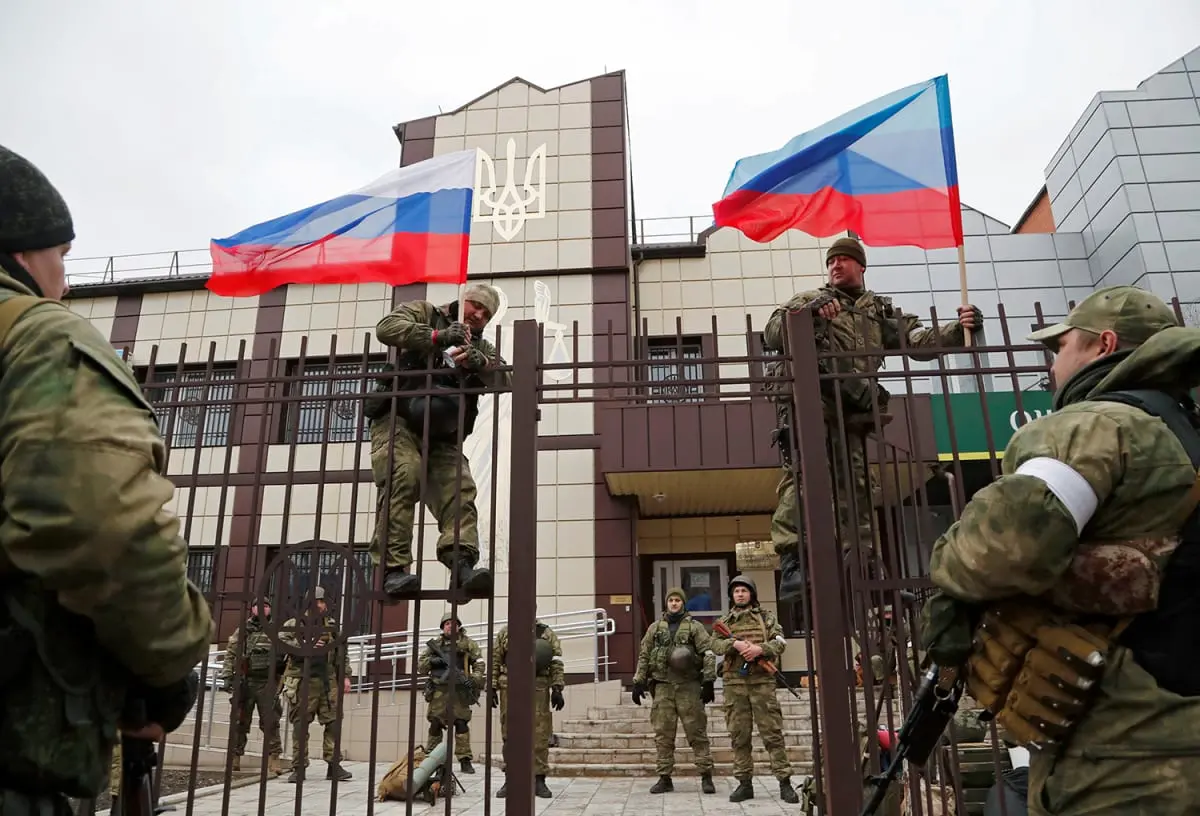
In the Russia-Ukraine war, Ukraine has lost land, while Russia has lost everything except land. Its economy, regional influence, political leverage — all being reduced to rubble.
In a multipolar world that has emerged, Russia could have been a pole in itself along with China. But that opportunity is lost as it is bogged down in Ukraine while other actors consistently build their leverage. Russia has been reduced to China’s junior partner as China gathers nations around itself to present a counter-weight to the Western world order.
To get a sense of what Russia has lost, we have to take a step back and look at the international leverage it enjoyed before its invasion of Ukraine.
When the USSR dissolved, Russia’s political and cultural influence didn’t dissolve with it. Sure, Russia was weakened, its early days mired in economic uncertainty, political instability, and wars (in Chechnya and Transdniestria). Yet, it was expected to stabilize and rise again eventually.
It had all the material needed for it: a permanent seat at the UN, piles of nuclear weapons, a strong military, natural resources, cultural influence, and historical precedent. The final element required to become a consequential regional power, intention and will, was expressed soon after Vladimir Putin became President in 2000. Russia led the creation of multilateral forums such as Commonwealth of Independent State and Collective Security Treaty Organization to maintain its position as the leading political actor in the region.
Under Putin, Russia further built economic leverage by becoming Europe’s largest energy supplier and became the prime destination for Central Asian labor, their remittances becoming an important source of income for their home countries. Moreover, Russian was the language of the elite throughout the ex-Soviet republics, a signal of cultural soft power.
Workers found jobs in Russia, students preferred Russian universities, intelligentsia spoke and socialized in Russian. Alongside this economic and cultural leverage, Russia also developed its hard power. It strengthened its military and expanded its role beyond its traditional backyard to the Middle East and Africa.
In short, along with military power, Russian soft power was strong in its sphere of influence. So how did it start to wane so quickly?
To assert its position as a regional power, Russia under Putin utilized its economic leverage. For example, Russia banned Belarussian dairy products in 2009 to extract political concessions from the Belarussian government (which ultimately failed, but it showed Russia’s willingness to take economic measures to score diplomatic gains). Its migration control policies for Central Asian labor and the constant threat of changing the rules are used as a bargaining chip with nations dependent on remittances.
But more importantly, Russia never shied away from using its military might for quick geopolitical gains. Since the 2000s, it has intervened militarily in Moldova, the Nagorno-Karabakh conflict, Georgia (in support of Abkhazian and South Ossetian separatists), internal conflicts of Central Asian Republics through the CSTO, and later in the Syrian civil war.
This willingness to use force has kept its region of influence in a constant state of mistrust, alertness, and maneuvering, ultimately leading to the fall of Russia’s influence. Russia has not been trusted even by its working partners (“allies” would go too far) in the region such as Kazakhstan, Belarus, Tajikistan, and Armenia, staying within its sphere only for geopolitical and economic compulsion.
Power doesn’t come in indefinite supply: the more you use it, the more you lose it. The United States, too, is in decline for that very reason: its forever wars and double-standards slowly eroded its global standing.
As of now, Russia has lost the Caucasus. Armenia (rightly) feels betrayed, Azerbaijan (rightly) feels distant.
All of Russia’s regional working partners are diversifying their economies and political ties, reducing dependency on Russia. Kazakhstan, for instance, has increasingly turned to China for trade and investment while strengthening ties with Turkey and the West, reducing its reliance on Moscow. Moreover, the Russian language, a vehicle for cultural and psychological influence, has been in consistent decline in its supposed sphere of influence.
Talking of diversifying economic and political ties, a major player that has emerged in Russia’s ex-sphere of influence is Turkey. The contrast with Turkey’s gains illustrates what Russia might have achieved with different strategic choices.
Turkey is seen as a credible pole and a major power for the ex-Soviet republics in the Caucasus and Central Asia to turn towards. Though the US and EU (the West) are also increasing their footprint in the region, geopolitics necessitates careful balancing acts by the countries so as to not trigger Russian wrath or alienate rising China. On the other hand, their relations with Turkey appear to come with fewer complications.
Turkey is a middle ground, not overly antagonistic to either the West or Russia, open to dialogue and negotiation with a diverse set of actors. Turkey offers a destination for Central Asian economic migrants, cultural and linguistic affinity, and political incentives.
In international relations, credible and consequential power is a combination of hard, soft, and smart power. Major powers maintain military muscle AND enjoy cultural, economic, and psychological influence over other nations. In this sense, Turkey, despite its economic and domestic political problems, has more leverage than Russia. Throughout the last decade, its cultural influence, business and economic relations, and diplomatic presence have grown considerably in Central Asia, West Asia, and Africa. Moreover, its powerful military and NATO membership establish the kind of hard power required to deter regional challengers.
From the point-of-view of Central Asian Republics, Eastern European countries, and the Caucasus, Turkey appears to be a more reliable partner in multiple sectors compared to Russia.
One that can be trusted not to force them against their national interests; one they can turn to for dialogue as equal partners.
Can Russia regain its prestige and soft power in its former sphere of influence?
Probably not, especially as long as it continues its fight in Ukraine. Russia stays a regional power, but its “power” today is just the power to disrupt and destruct, not the power to build and construct. Russia is on course from regional power to regional disruptor—influential enough to cause problems, but no longer credible enough to solve them.
For Ukraine, winning back the land it has lost is a great challenge, and probably too far a goal to be realistic. Yet, for Russia, gaining back a credible major power status has become virtually impossible. With increasingly diverging interests, no countries will be willing to trust Russia as a partner for years to come. As long as it’s focused on winning in Ukraine, Russia will remain a peripheral player in the rising China-led world order.
*The views expressed in this article are the author’s own and do not necessarily reflect the editorial policy of TDI.

Shahana Naseer
Shahana Naseer is a Research Assistant at the Centre for Research and Security Studies. Her work focuses on the impact of socio-political, economic, and environmental factors on women and children. She also occasionally writes on geopolitics. She can be reached at shahananaseer50@gmail.com