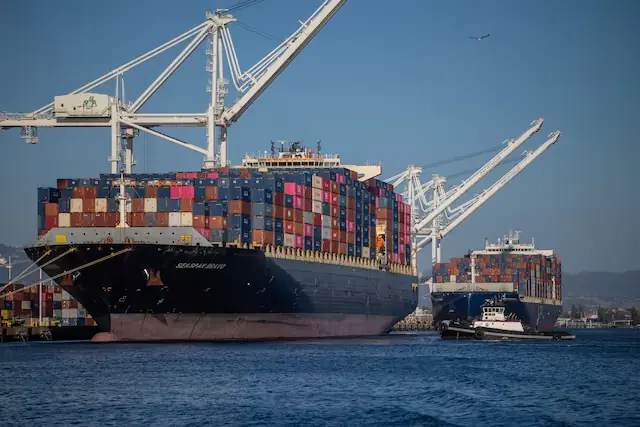
Islamabad (TDI): Pakistan’s exports to Europe declined during the first quarter of fiscal year 2026-27 despite preferential market access under the European Union’s Generalized Scheme of Preferences Plus (GSP+), highlighting mounting challenges for the country’s export sector in one of its most important trading regions.
Data compiled by the State Bank of Pakistan (SBP) showed that exports to European countries fell by 1.84 percent to $2.350 billion during July-September 2026, compared with $2.394 billion in the corresponding period of the previous fiscal year.
The overall decline, however, concealed differing trends across European markets. While exports to northern and southern Europe recorded growth, shipments to western and eastern Europe contracted, with the decline in western Europe particularly significant given the region’s importance to Pakistan’s trade.
Trade analysts have warned that the ongoing conflict in the Middle East could place additional pressure on export demand. Rising energy costs may further constrain consumer spending across European economies, which are already facing economic pressures following the Ukraine war.
Read More: Pakistan Prepares to Seek Fresh EU GSP+ Status from January 2027
Another challenge is the European Union’s preferential market access arrangements with India, a major competitor to Pakistan in textile exports. The changing trade environment could intensify competition for Pakistani exporters in European markets.
Exports to northern Europe increased by 21.07 percent to $236.321 million in the July-September quarter, up from $195.191 million a year earlier.
Southern Europe also recorded positive growth, with Pakistani exports rising 5.26 percent to $879.896 million from $835.862 million during the same period last year, according to Dawn.
Spain remained a major contributor to this increase. Exports to the country grew by 17.78 percent to $451.244 million, compared with $383.122 million in the corresponding quarter of the previous fiscal year.
However, exports to Italy declined by 8.49 percent to $298.731 million from $326.460 million. Shipments to Greece, meanwhile, increased by 3.52 percent to $34.961 million, compared with $33.774 million a year earlier.
Eastern Europe registered a sharper contraction, with exports falling 15.05 percent to $168.761 million from $198.677 million in the first quarter of FY2026.
Western Europe, which includes key destinations such as Germany, the Netherlands, France, Italy and Belgium, accounts for the largest share of Pakistan’s exports to the European Union.
Exports to the region declined by 8.51 percent to $1.065 billion during the first quarter of FY2027, compared with $1.164 billion in the same period of the previous fiscal year.
Germany, one of Pakistan’s major European trading partners, recorded a 12.77 percent decline in imports from Pakistan. Export proceeds fell to $389.116 million from $446.100 million a year earlier.
Read More: Pakistan Remains Largest Beneficiary of EU’s GSP+ Scheme
The Netherlands, the second-largest market for Pakistani goods among the destinations highlighted in the data, also recorded a decline. Exports fell by 3.07 percent to $370.005 million from $381.752 million.
Shipments to France decreased marginally by 0.47 percent to $136.030 million, compared with $136.686 million in the corresponding period last year.
Belgium recorded a more pronounced decline, with exports falling 7.57 percent to $127.431 million from $137.871 million. Outside the European Union, the United Kingdom continued to register growth in imports from Pakistan following Brexit.
Pakistan’s exports to the UK increased by 6.64 percent to $612.305 million in the first quarter of FY2027, compared with $574.171 million a year earlier.
Before Brexit, the UK was among Pakistan’s major export destinations within the broader European market. The latest figures indicate that it continues to provide an important outlet for Pakistani products.
The contrasting performance across European markets underscores the challenges facing Pakistan’s exporters despite the advantages of GSP+ preferences. With western Europe accounting for a substantial share of exports, the continued decline in shipments to major destinations could weigh on overall trade performance.
Rising energy costs, weaker consumer demand and intensifying competition in the textile sector are likely to remain important concerns for exporters as Pakistan seeks to sustain its market share in Europe.