

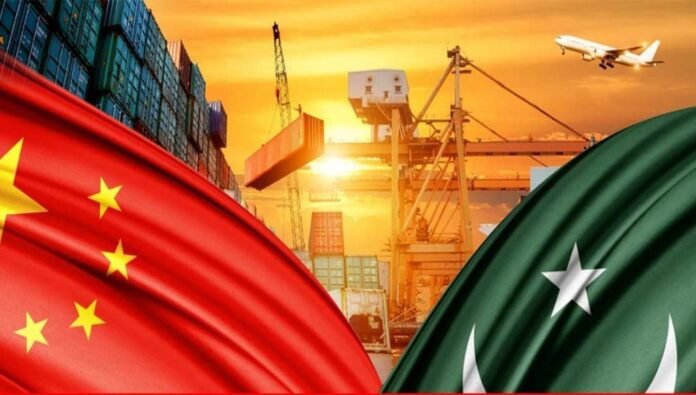
Islamabad (TDI): Pakistan and China have agreed to establish a consortium of international and bilateral financiers to fund the $7 billion Main Line-1 (ML-1) railway project, while also unveiling a four-year action plan (2025–29) for the second phase of the China-Pakistan Economic Corridor (CPEC).
Planning and Development Minister Ahsan Iqbal, speaking at a press conference on Monday, said the understanding was reached during Prime Minister Shehbaz Sharif’s recent visit to Beijing. The consortium will bring together the Asian Development Bank (ADB), the Asian Infrastructure Investment Bank (AIIB), as well as Chinese and Pakistani partners, to finance the 1,700-kilometre Karachi–Peshawar railway line.
He noted that China had also assured Pakistan of funding for the Karakoram Highway. Negotiations with the multiple financiers, he said, would be finalized within a month. The minister lamented that projects like ML-1 and the Sukkur, Hyderabad Motorway could already have been completed had political instability in 2018 not disrupted progress, blaming the previous PTI government for stalling the process.
Iqbal said the two countries had also settled on a roadmap for building what he described as a “China-Pakistan community with a shared future,” focusing on stronger political trust, expanded trade and industrial cooperation, improved security ties, and closer people-to-people exchanges. Agriculture modernization and industrial growth would be at the center of CPEC’s second phase, he added, with scope for third-party participation.
Read More: CPEC Carbon Sink Trading Boosts Pakistan’s Energy Shift, Industrial Development
The next Joint Cooperation Committee (JCC) meeting on CPEC is scheduled for Sept 26 in Beijing. Both sides have agreed to step up work on industrial parks, encourage Chinese investment in special economic zones (SEZs), especially in Karachi and Islamabad, and provide a business-friendly environment through preferential policies.
He further highlighted that the new action plan represents a “substantive outcome” of high-level leadership talks, designed to strengthen the long-standing strategic partnership between the two countries.
Read More: Pakistan, China Pledge Closer Cooperation on CPEC-II
The framework also emphasizes industrialization, boosting exports, and attracting Chinese companies to invest in sectors such as mining, including the development of mining industrial parks. On the agricultural side, cooperation will expand to areas such as crop cultivation, livestock development, disease control, aquaculture, agro-processing, mechanization, seed technology, and efficient irrigation systems.
According to the minister, the plan integrates the Belt and Road Initiative (BRI) with Pakistan’s 5Es Framework, seeking to balance flagship mega-projects with smaller-scale community-focused initiatives, while ensuring sustainable development and robust security.

Farkhund Yousafzai is an Associate Editor at The Diplomatic Insight.

