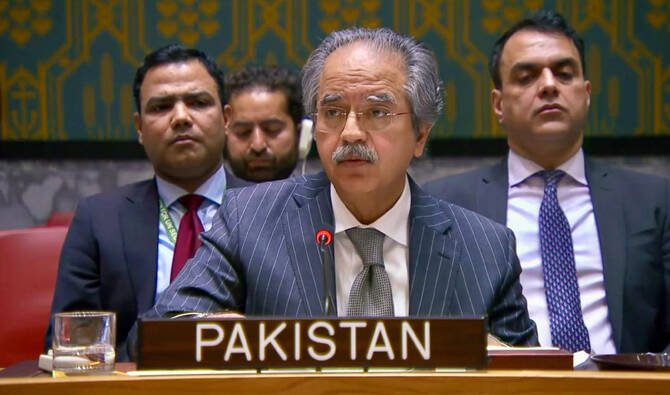
NEW YORK (TDI): Pakistan’s Permanent Representative to the United Nations, Ambassador Asim Iftikhar Ahmad, on Monday called for the consistent and equal application of international law to resolve global conflicts, highlighting South Asia’s tensions and pressing international concerns.
Speaking at an open debate of the UN Security Council on “Leadership for Peace,” he warned that selective enforcement of international law and silence in the face of violations were fueling instability worldwide.
The open debate on ‘Leadership for Peace’ is a key initiative of the UN Security Council, aimed at addressing global conflicts and reinforcing the UN’s role in maintaining international peace and security.
It underscores that peace requires proactive leadership, full commitment from all Member States to uphold the UN Charter and international law, and reform of global governance institutions to restore credibility and effectiveness.
Focusing on the region, Ambassador Iftikhar Ahmad criticized India’s decision to hold the 1960 Indus Waters Treaty in abeyance and the unresolved Kashmir dispute, describing both as threats to peace in South Asia. He said that “India’s unilateral suspension of the Indus Waters Treaty, a rare and enduring example of successful diplomacy, is yet another blatant breach of international obligations that undermines regional stability and endangers the lives and livelihoods of millions.”
He urged the international community to support a just resolution in line with UN resolutions and the wishes of the Kashmiri people.
Ambassador Ahmad also addressed global flashpoints, citing conflicts in Gaza, Ukraine, Sudan, and elsewhere. He stressed that peace cannot be achieved through selective enforcement of law or by sidelining the United Nations.
While welcoming this year’s Pact for the Future, aimed at strengthening multilateral cooperation and progress toward the 2030 development goals, he warned that words alone would not ensure peace. He highlighted challenges such as widening development financing gaps, rising debt distress, and climate shocks that threaten the Global South.
Calling for a stronger and more proactive role for the UN Secretary-General, Ahmad urged the Security Council to use preventive tools under the UN Charter more effectively and demonstrate credibility through consistency and respect for international rulings.
He stated that “No nation can secure peace alone. It is a collective endeavor, requiring leadership, cooperation and genuine multilateralism.”

Minahil Khurshid holds a Master's in Peace and Conflict Studies from NUST. She is passionate about current affairs, public policy, and geopolitics.