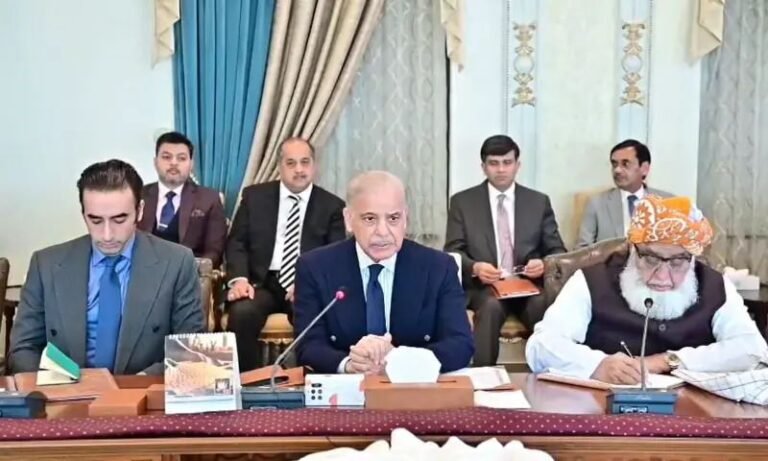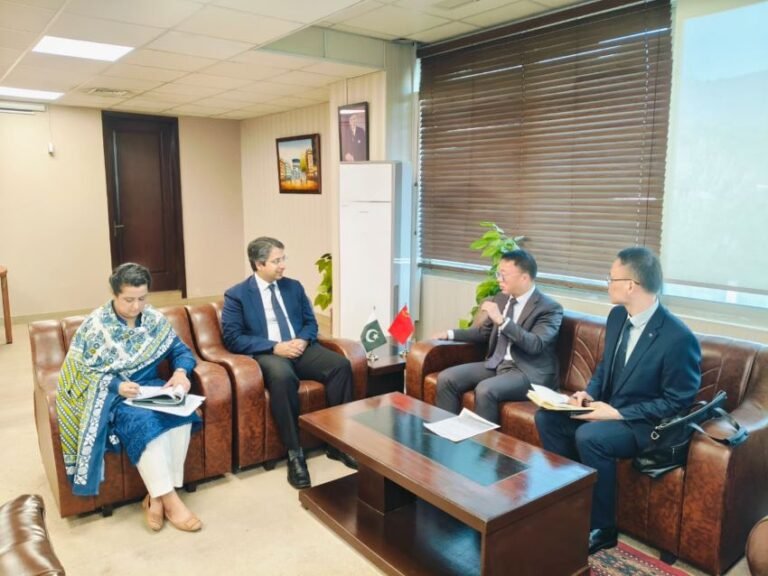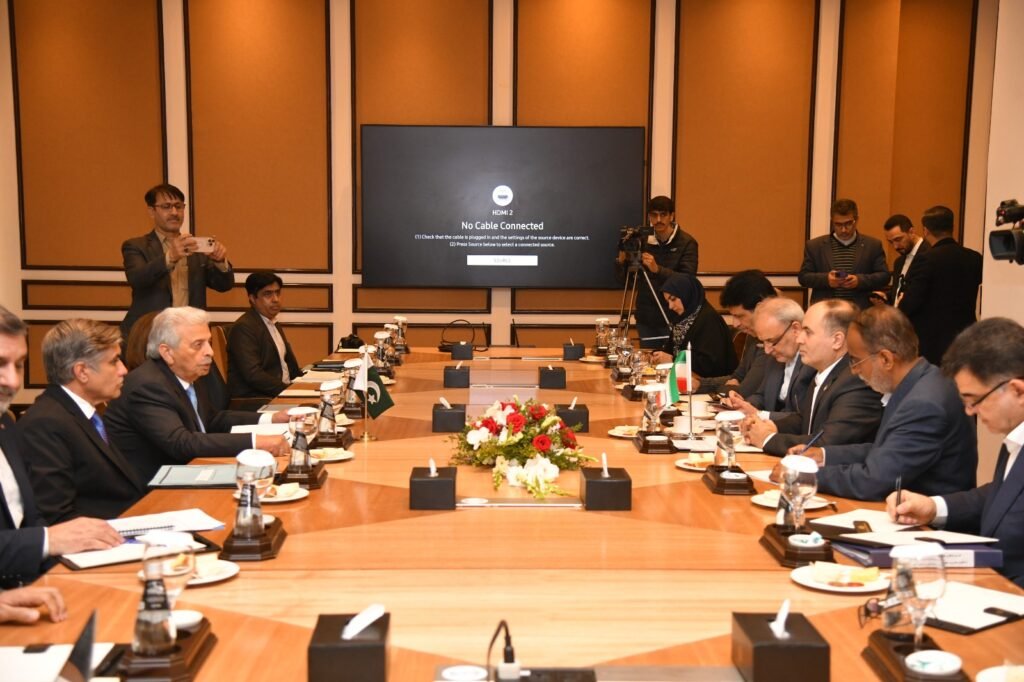
A high-level meeting between Pakistan and Iran has reaffirmed both countries’ commitment to strengthening bilateral cooperation in agriculture and food security, signaling a renewed push to expand economic ties across key sectors.
The meeting brought together Iran’s Minister of Agriculture, Gholamreza Nouri Ghezeljeh, Pakistan’s Federal Minister for National Food Security and Research, Rana Tanveer Hussain, and Federal Minister for Commerce, Jam Kamal Khan.
Discussions were described as constructive and forward-looking, reflecting a shared resolve to enhance economic cooperation between the neighboring nations.
The engagement underscored the longstanding and brotherly relations between Pakistan and Iran, rooted in shared history, cultural affinity, and geographic proximity.
Both sides expressed satisfaction over the current level of engagement and reaffirmed their intention to deepen collaboration in areas of mutual interest, particularly agriculture and food security.
Rana Tanveer Hussain emphasized the critical role of agriculture in ensuring food security, promoting rural development, and maintaining economic stability in both countries.
He highlighted the importance of institutional collaboration between relevant ministries and called for enhanced technical cooperation, exchange of expertise, and stronger coordination among research institutions and departments.
Read More: Pakistan, Iran Renew Pledge to Strengthen Economic Partnership
Gholamreza Nouri Ghezeljeh commended Pakistan’s efforts to promote agricultural development and stressed the benefits of closer cooperation in horticulture, livestock, crop management, and modern farming techniques.
He noted that both countries possess complementary strengths and stand to gain from structured collaboration, joint initiatives, and regular institutional dialogue.
Commerce Minister Jam Kamal Khan underscored the need to facilitate cooperation through improved connectivity, streamlined trade procedures, and practical coordination at the operational level.
Sustained engagement and mutual understanding, he said, would help unlock the untapped potential of bilateral relations across multiple sectors.
The ministers also reviewed ongoing collaboration under existing agreements, including cooperation in veterinary and animal health, plant protection, and quarantine measures.
Both sides agreed on the importance of effectively implementing signed agreements and expediting pending institutional mechanisms to ensure consistent and measurable progress.
In addition, discussions covered agricultural exchanges, joint research initiatives, capacity building, and the facilitation of farmers and agri-business stakeholders.
The two sides acknowledged the shared climatic and environmental challenges facing the region and stressed the need to promote collaborative research in water conservation, high-value crops, livestock improvement, and sustainable farming practices.