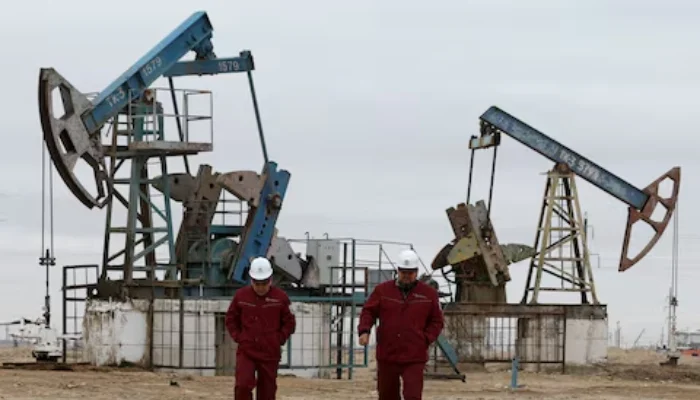
New York (TDI): Oil prices edged lower on Tuesday, extending the previous session’s losses as investors looked for clearer evidence that crude shipments through the Strait of Hormuz are returning to normal following recent US-Iran peace talks.
Brent crude futures fell 20 cents, or 0.3 per cent, to $77.70 a barrel, while US West Texas Intermediate (WTI) crude slipped 12 cents, or 0.2 per cent, to $73.74 a barrel in early trading.
The decline follows a sharp sell-off on Monday, when both benchmarks dropped more than 3pc after Washington granted Tehran a 60-day sanctions waiver and signs emerged of easing tensions in Lebanon under the broader US-Iran understanding.
Markets remain focused on developments surrounding the Strait of Hormuz, a key global oil transit route. Investor sentiment improved after initial peace talks between Washington and Tehran produced a framework for further negotiations and efforts to restore maritime traffic through the strategic waterway. However, analysts said traders remain cautious despite the diplomatic progress.
Over the weekend, concerns resurfaced after Iran announced the closure of the Strait of Hormuz and US President Donald Trump warned that military action could resume if Tehran disrupted shipping routes. Those fears have since eased, but uncertainty continues to weigh on market sentiment.
Read More: Oil Slips After US-Iran Talks Conclude in Switzerland
Trump said on Monday that Iran had agreed to weapons inspections aimed at ensuring what he described as “nuclear honesty”. “If Iran doesn’t live up to their agreement, or if they’re not behaving, I will do what I have to do,” he told reporters.
According to analysts, the market had initially priced in optimism surrounding the diplomatic roadmap and the prospect of reopening the Strait of Hormuz. However, traders are now adopting a more measured approach while awaiting concrete proof that the agreement will hold and shipping activity will fully normalise.
Ship-tracking data showed two crude tankers carrying nearly two million barrels of oil passed through the Strait of Hormuz on Monday, suggesting traffic is gradually recovering after slowing significantly a day earlier due to security concerns.
Read More: Oil Slips Again After US–Iran Interim Agreement
Meanwhile, the US Department of Energy reported that crude inventories in the Strategic Petroleum Reserve fell to 331.2 million barrels last week, the lowest level since June 1983, highlighting tighter supply conditions in the aftermath of the US-Iran conflict.