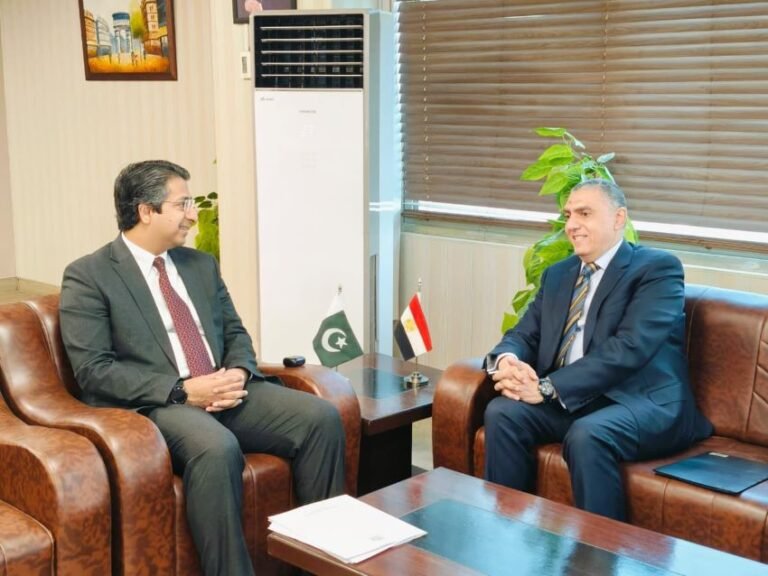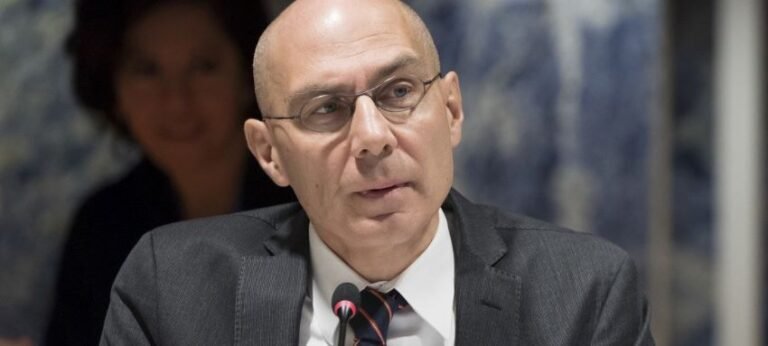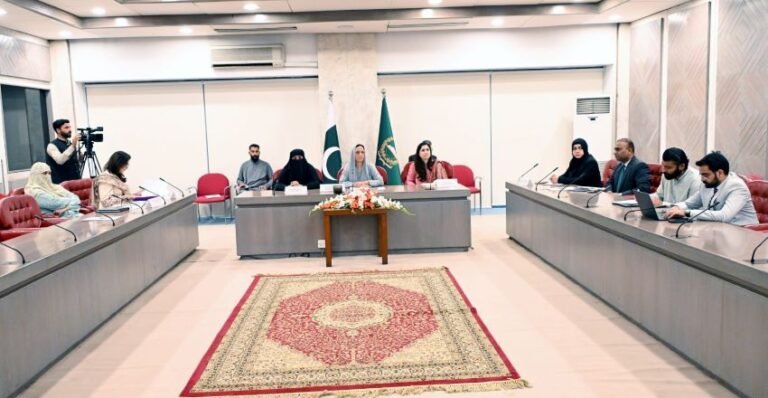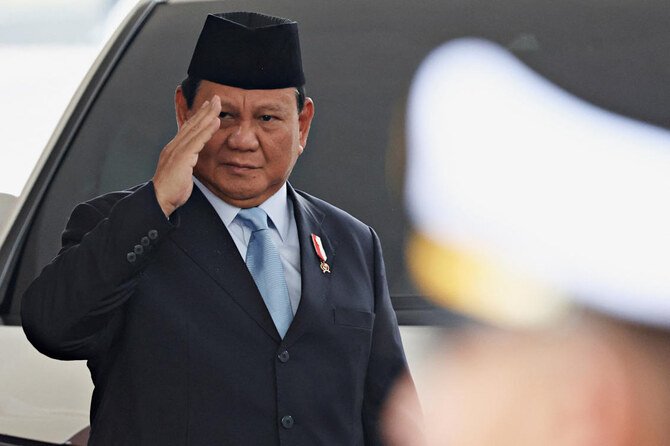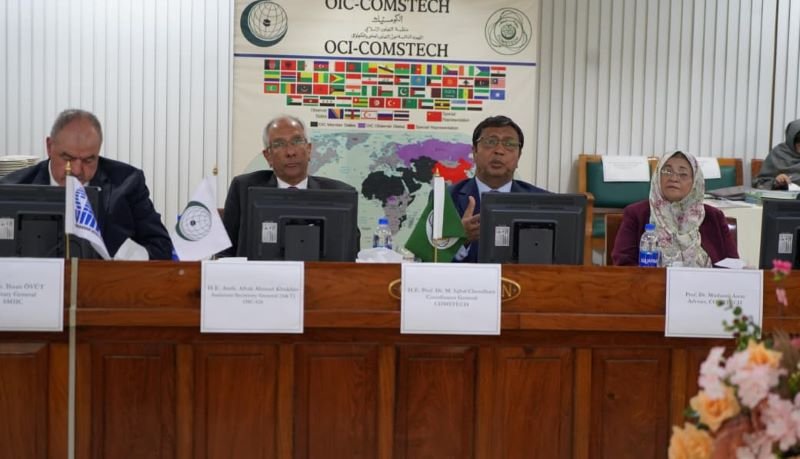
Islamabad (TDI): The 7th Steering Committee Meeting on the implementation of the OIC Science, Technology and Innovation (STI) Agenda 2026 concluded at the OIC-COMSTECH Secretariat in Islamabad, bringing together senior officials from the Organisation of Islamic Cooperation (OIC) General Secretariat and representatives of key OIC institutions.
The session focused on reviewing progress made under the STI Agenda 2026 as it enters its final phase, while outlining strategic directions for the next decade. Participants assessed achievements, discussed implementation gaps, and emphasized the need for stronger coordination among member states.
In his welcome address, Coordinator General COMSTECH Prof. Dr. Muhammad Iqbal Choudhary highlighted the evolution of the Steering Committee process since 2019 and underscored the importance of this session in evaluating achievements and identifying gaps. He noted progress in capacity building, research collaboration, innovation support, and institutional strengthening while also acknowledging continuing disparities in implementation capacities among Member States.
Assistant Secretary-General for Science and Technology, Ambassador Aftab Ahmad Khokher, stressed the urgency of preparing a comprehensive implementation report ahead of the 53rd session of the OIC Council of Foreign Ministers in Baghdad. He called for clarity on the report’s scope, methodology, and timeline and encouraged members to consider extending the STI framework beyond 2026 under a more focused and results-oriented model.
Read More: Kazakhstan Seeks Science and Higher Education Cooperation with OIC-COMSTECH
Brief presentations were delivered by institutions including the Islamic Development Bank, Islamic World Educational, Scientific and Cultural Organization, SESRIC, COMCEC, and the Islamic Organization for Food Security, highlighting ongoing initiatives aligned with the twelve priority areas of the Agenda.
On the second day, a statistical review presented by COMSTECH indicated a 27% increase in international patents, a fourfold rise in research publications, and improved global university rankings among OIC Member States. However, participants cautioned against widening technological gaps, particularly in emerging domains such as artificial intelligence.
During its deliberations, the Steering Committee agreed that the OIC General Secretariat will seek formal feedback from member States on the implementation status of the STI Agenda 2026. It was also decided that COMSTECH and SESRIC will jointly prepare a comprehensive, data-driven evaluation report to ensure an evidence-based assessment while avoiding duplication of efforts.
Importantly, members agreed in principle on the need for a new ten-year framework, tentatively titled “OIC STI Agenda 2036.” The forthcoming framework will be prepared through a consultative process aligned with the OIC Programme of Action (2026–2035) and is expected to adopt a more focused, project-based and measurable approach. The Committee further decided that an 8th Steering Committee Meeting will be convened, preceded by preparatory virtual consultations, to finalize the draft implementation report for submission to the appropriate OIC forum.
Read More: OIC-COMSTECH, Pathfinder CITADEL Host AI Conference, Announce Davos Representation
In their closing remarks, Ambassador Khokher and Prof. Choudhary thanked participants for their constructive engagement and reaffirmed the collective resolve to strengthen science, technology, and innovation cooperation across the OIC region.
Sohail Majeed
Sohail Majeed is a Special Correspondent at The Diplomatic Insight. He has twelve plus years of experience in journalism & reporting. He covers International Affairs, Diplomacy, UN, Sports, Climate Change, Economy, Technology, and Health.