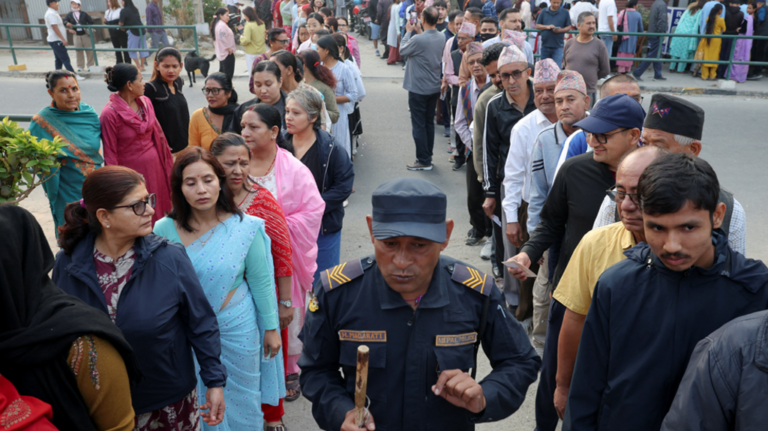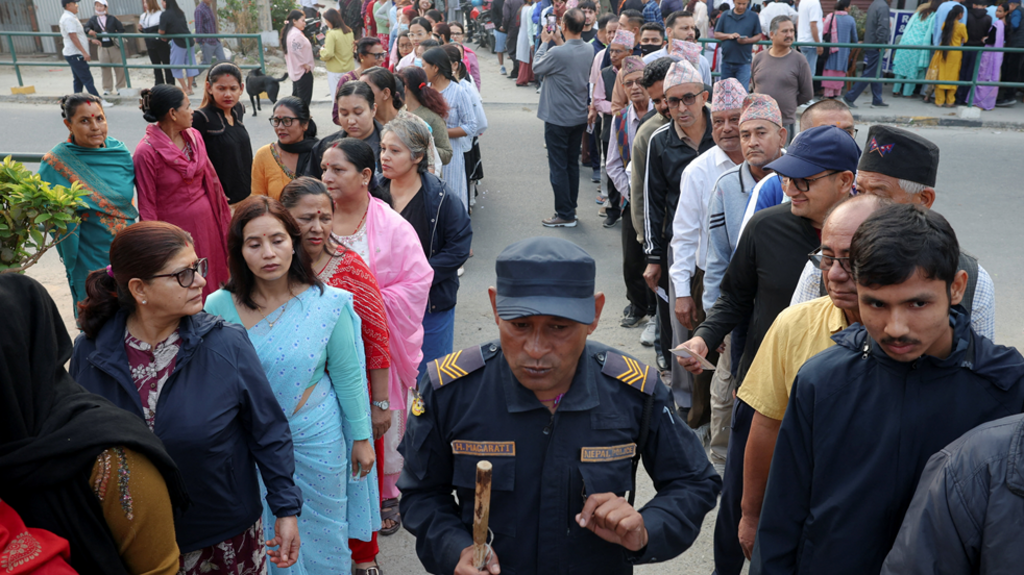
Kathmandu (TDI): Nepal has stepped into polls, on Thursday, in a pivotal general election widely viewed as a test of the country’s political future after a wave of youth-led protests reshaped its political landscape last year.
Nearly 19 million registered voters are eligible to cast ballots to elect the 275-member House of Representatives in a contest between the entrenched political establishment and a rising reformist movement.
Voting began early across the Himalayan nation’s 77 districts with tight security, as authorities deployed more than 300,000 personnel and imposed restrictions on vehicles and campaign activities to prevent unrest. Voter turnout is expected to reach roughly 65%.
The election comes months after nationwide demonstrations, often described as a “Gen Z uprising,” toppled the government of former prime minister KP Sharma Oli, exposing widespread frustration over corruption, unemployment, and political instability.
The protests, initially sparked by a controversial social media ban, escalated into broader demands for reform and resulted in dozens of deaths.
Read More: Inside the 9-Point Recommendations on External Voting for Nepali Citizens Abroad
At the center of the election is an unlikely political challenger: Balendra “Balen” Shah, a 35-year-old rapper-turned-politician and former mayor of Kathmandu.
Shah, who emerged as a prominent voice during the protests, is contesting against Oli in the veteran leader’s stronghold and campaigning on promises of transparency, institutional reform, and better public services. His rise has energized young voters and disrupted Nepal’s traditional party system.
On the other hand, established parties such as the Nepali Congress and the Communist Party of Nepal (UML) retain strong grassroots networks and decades of political influence.
With more than 6,000 candidates from dozens of parties competing for parliamentary seats, coalition negotiations are widely expected after the vote. Issues such as job creation, tackling corruption, and balancing relations with neighboring India and China dominate public debate.
For many voters, the election is about more than choosing a government. It represents a referendum on whether Nepal’s political system can respond to the grievances that fueled last year’s protests.