Modern conflicts are no longer fought only with weapons. Information warfare has become an effective part of the conflict, where enemy countries use propaganda as a tool to shape public opinion, control narratives, and influence global perceptions. The Pakistan-India duel of May 2025 clearly indicated that things have changed, especially how conflicts are handled. Pakistan has successfully leveraged social media during the May 2025 conflict to counter panic, misinformation, and propaganda to secure its credibility around the world.
The nature of conflict has changed over time from military and economic spheres to narrative framing and digital communication to influence the audience. Misinformation is deployed as a strategic tool to weaken critical thinking, create the atmosphere of fear and panic to make ambiguity obscure ground realities. Over the past decade, it is evident that Indian media has not remained independent and fed the people the diet of fear and fiction by resourcing to ultra nationalism.
The term “Godi Media”, coined by Indian journalist Ravish Kumar, illustrates that news outlets are closely linked with BJP government, particularly Prime Minister Narender Modi’s doctrine of Hindutva. During the Modi regime, journalists have constantly faced political and financial pressures, online harassment, which has made independent reporting next to impossible.
A notable example was observed in May 2025, when “The Hindu”, a leading newspaper, published a report saying that three Indian fighter jets had crashed in Jammu and Kashmir, Rambam, and Pampore, and then took it down. Later, Indian officials too denied any such eventuality on May 6 and 7. The removal of reports and simultaneously circulating images of wreckages clearly indicates the state influence over media narrative.
Building on this landscape, Pakistan has successfully countered widely seen misinformation through meme culture, official statements, online activists and influencers. In early May, Indian news channels, online platforms, disseminated fake news of “imminent strikes”, “Pakistan’s heavy losses”, and cover operations by using visually compelled content.
Read More: New National Crush? AVM Aurangzeb Is the Latest Internet Sensation
On May 8, another fabricated report claimed that Pakistan has attacked Amritsar, later digital missile tracking showed that four missiles were launched from Indian air base, Adampur. One headline screamed the “destruction of Karachi”, “Islamabad fall”, and the “arrest of General Asim Munir” which were almost laughable. India has also cracked down on Pakistani digital content, denied access to Pakistan government officials, actors, and other celebrities as a part of “counter disinformation effort”.
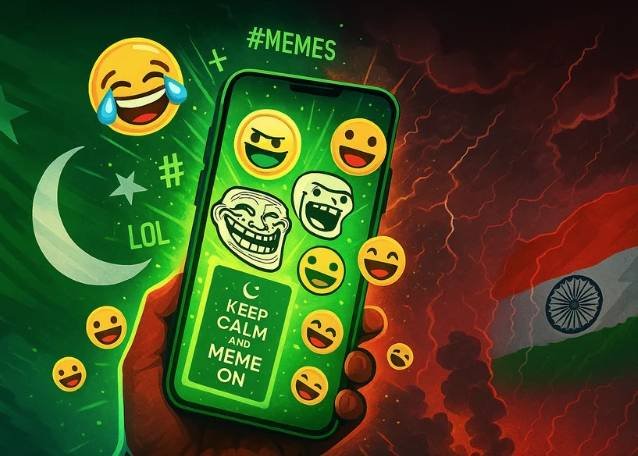
During the May 2025 crisis, “meme war” became an effective tool of soft power, largely led by Gen-Z, a generation grown up using digital platforms. A generation, which is competent in sharing memes quickly on Instagram, X, and WhatsApp. Humor, sarcasm, and symbolism are used as weapons, which are condensed into images and short captions to influence emotions and narratives. The digital engagement had turned the crisis into a proactive information battlefield.
It is interesting to note how fast and innovative Pakistani social media members were. As Indian media claimed that Karachi, and Pakistan, itself had been “destroyed”, Pakistani keyboard warriors responded with humor by making memes: “According to India we all are dead. This is my soul, and I’m tweeting from Heaven!”
Another viral meme about Indian fighter jets used famous movie title, “Taaray Zameen Per” (stars razed to ground). As the symbolic statement of tea is quite common, coined by the capturing of pilot Abhinandan in 2019, it was repeated far and wide. Pakistan had successfully used humor as coping mechanism during the time of stress and anxiety. At the same time, memes have come to strengthen social unity and contribute to public confidence.
The May 2025 crisis exemplified the importance of narrative control as an essential element in policy making. It’s time the government and public maintain strong unity, bridge gaps and come up with a unified narrative on security and social harmony. Through coordinated official messaging, active digital engagement, and strong military, Pakistan can successfully counter smear campaigns and maintain its credibility both at home and abroad.
*The views presented in this article are the author’s own and do not necessarily reflect the views of The Diplomatic Insight.

Syeda Sakeena Ali Naqvi
Syeda Sakeena Ali Naqvi is a researcher based in Islamabad and can be reached at sakeena5816@gmail.com