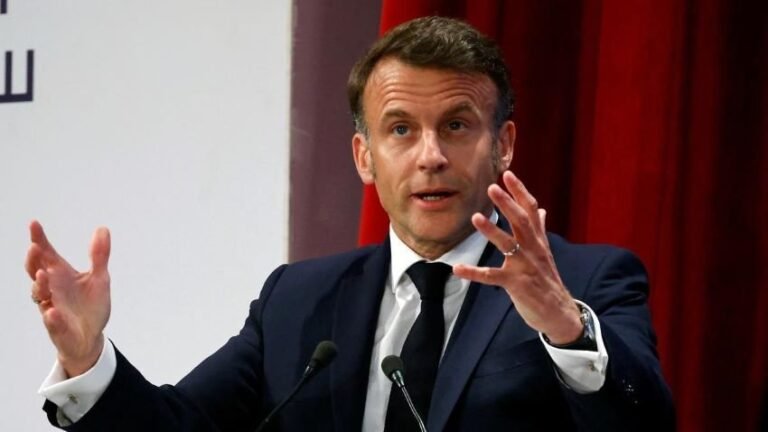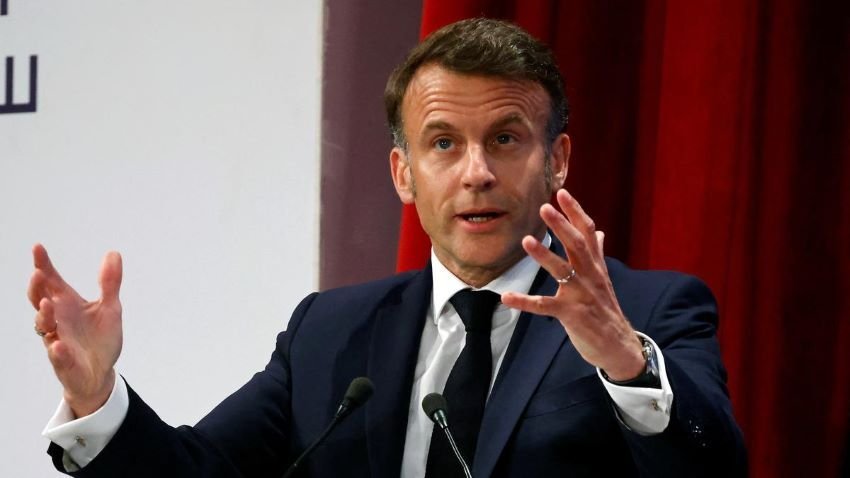
Paris (TDI): Emmanuel Macron is set to outline France’s nuclear doctrine on Monday, reaffirming Paris’s independent control while highlighting what the country can offer European allies concerned about the reliability of the US nuclear umbrella under President Donald Trump.
Although both France and the United Kingdom possess nuclear arsenals, most European nations rely on the United States for deterrence, a cornerstone of transatlantic security for decades. But Trump’s engagement with Russia during the Ukraine war and his confrontational approach toward traditional allies, including threats to seize Greenland, have unsettled European governments.
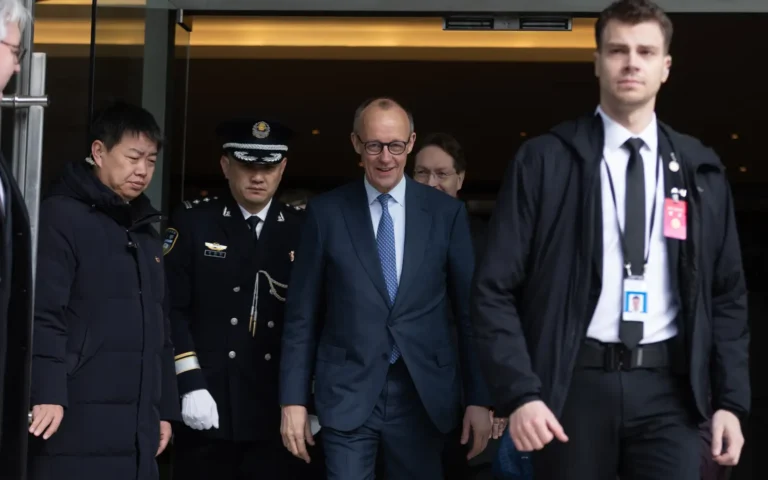
Earlier this month in Munich, Friedrich Merz confirmed that Germany had opened discussions with France on a potential European nuclear deterrent, which Macron described as part of a “holistic approach to defense and security.” Some Nordic countries, traditionally pro-US, have expressed tentative interest.
European officials, however, privately question how far France’s arsenal could realistically protect the continent, according to Reuters. Concerns include cost-sharing, control over launch decisions, and whether prioritising nuclear forces could divert funding from conventional capabilities. France currently spends around €5.6 billion ($6.04 billion) annually to maintain its stockpile of roughly 290 submarine- and air-launched weapons, the world’s fourth-largest arsenal.
Read More:Madagascar and the New Contest Between Russia and France
NATO Secretary-General Mark Rutte noted that building an independent European deterrent would cost “billions and billions of euros” and could reduce reliance on the ultimate guarantor of security: the US nuclear umbrella. Under NATO’s “nuclear sharing” arrangement, around 100 US bombs are stationed in Belgium, Germany, Italy, the Netherlands, and Turkey, with air forces of these nations capable of delivering them in conflict.
US Undersecretary of Defense Elbridge Colby has assured European allies that Washington will continue to extend its nuclear deterrent, even as it invests over a trillion dollars in modernising its own arsenal.
French officials stress that Paris does not seek to replace the US umbrella or compete with NATO. Analysts note that France’s arsenal, designed to inflict unacceptable damage on an adversary, requires far fewer warheads to remain credible. Officials want European partners to better understand the limitations of France’s doctrine, while insisting that funding must remain under exclusive French control.
Read More: France Clarifies Troops in DR Congo Only to Train Local Forces
A key feature of France’s nuclear posture is “strategic ambiguity” regarding when weapons might be used and how French vital interests overlap with broader European security. Some European diplomats find this uncertainty unsettling, particularly as expanding France’s role would require Europe to develop deep-strike missiles with ranges beyond 2,000 km, a capability it currently lacks. Developing tactical nuclear weapons is even less likely, as it could contravene the nuclear non-proliferation treaty.
European Union foreign policy chief Kaja Kallas acknowledged that these discussions reflect changes in the transatlantic alliance. “More nuclear weapons in the world do not make it a more peaceful place,” she said.
Macron will deliver the customary once-per-presidential-term update at France’s nuclear submarine base in Brittany. Officials emphasized that only the French president can authorise a nuclear strike, a principle that remains unchanged.