

Bishkek (TDI): Kyrgyzstan’s economy is showing robust growth, with the country expected to surpass a historic milestone of $12.5 billion in its consolidated budget for 2025, government officials announced.
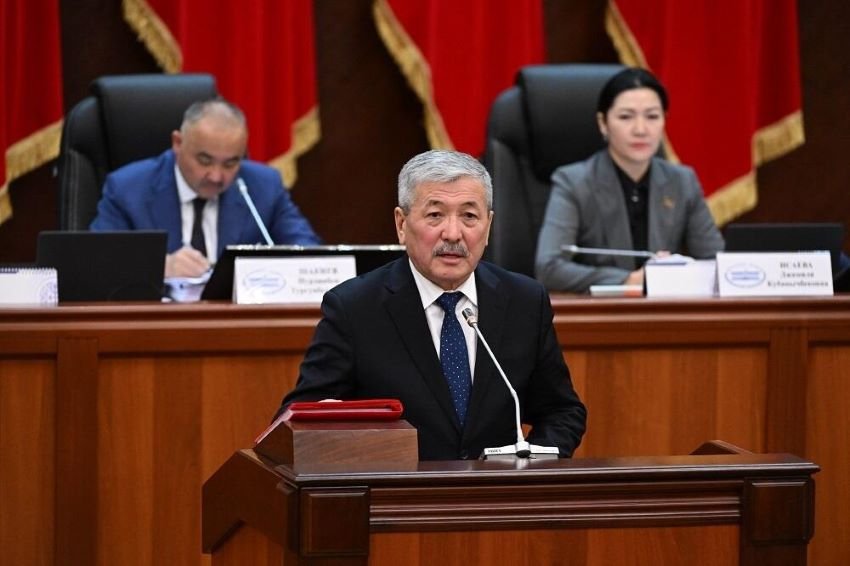
Chairman of the Cabinet of Ministers, Adylbek Kasymaliev, revealed during a government meeting on December 8 that while the 2025 state budget was initially set at $8 billion, it expanded by $4.3 billion by year-end, resulting in a budget surplus exceeding $110 million.
According to the Eurasian Economic Commission, Kyrgyzstan was the only member of the Eurasian Economic Union (EAEU) to record a budget surplus in the first nine months of 2025. Revenues reached $4.9 billion against expenditures of $3.9 billion, generating a surplus of $1 billion, double the $0.5 billion surplus recorded during the same period in 2024.
Citing IMF data, Kasymaliev highlighted Kyrgyzstan’s strong global standing, noting it ranked among the top three countries worldwide in real GDP growth in 2024.
Read More: Uzbekistan, Kyrgyzstan Deepen Energy Ties with Kambarata-1 Project
The national economy grew by 10% in the first ten months of 2025, with all major sectors expanding. The construction sector led the way with an exceptional 42.8% growth rate. GDP per capita, initially projected at $2,616, is now expected to reach $2,770 by year-end.
Kyrgyzstan’s international reserves also saw substantial growth, rising to $7.955 billion by the end of October 2025, an increase of $3.02 billion compared to October 2024, according to the National Bank.
Earlier data from the National Statistics Committee showed Kyrgyzstan’s GDP expanded by 11.5% in 2024, with services contributing 52.3% of GDP, goods-producing industries at 33.3%, industry at 17%, construction at 7.7%, and agriculture at 8.6%.
Read More: Central Asian Support Boosts Kyrgyzstan’s UNSC Campaign
The Eurasian Development Bank (EDB) forecasts record-high growth for 2025, driven by strong investment activity. Fixed capital investment rose 18.9% between January and October, with state budget funds and private company resources contributing 31% and 23% of that total, respectively.


