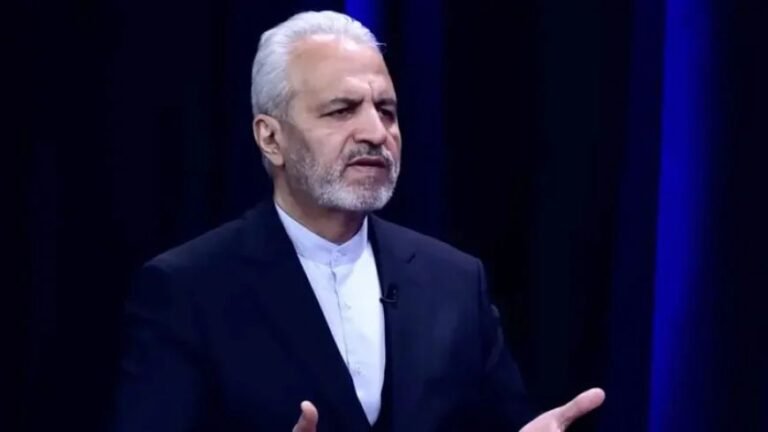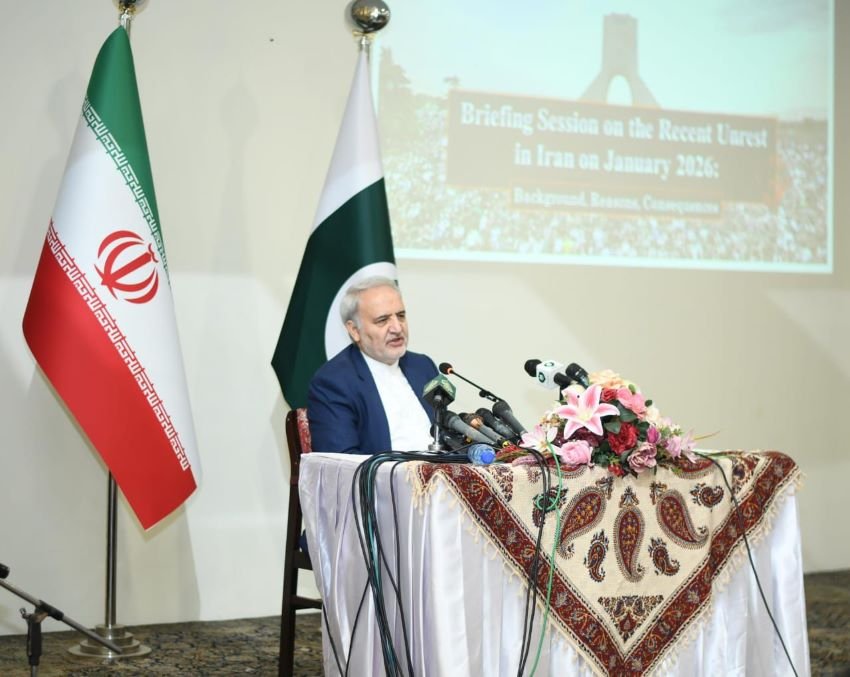
Islamabad (TDI): Iran’s Ambassador to Pakistan, Reza Amiri Moghadam, has said he does not foresee a military conflict against Iran in the immediate future, though he cautioned that political pressure and narrative battles against Tehran are expected to continue.
Speaking to a small group of journalists in Islamabad, the envoy argued that alongside military tensions, Iran is also facing what he described as an ongoing “war of narratives.” He accused the United States and Israel of pursuing hostile policies toward his country, claiming their past actions demonstrate a pattern of betrayal and strategic deception.
Referring to last year’s brief but intense confrontation between Iran and Israel, which he described as a 12-day conflict, the ambassador maintained that the episode demonstrated both Iran’s military capabilities and national resilience, according to Dawn.
He said that the confrontation made it clear that any future escalation would not be straightforward. The envoy added that while regional dynamics remain volatile, a large-scale war appears unlikely for now.
Read More: Pakistan Urges Direct US-Iran Talks on Nuclear Program
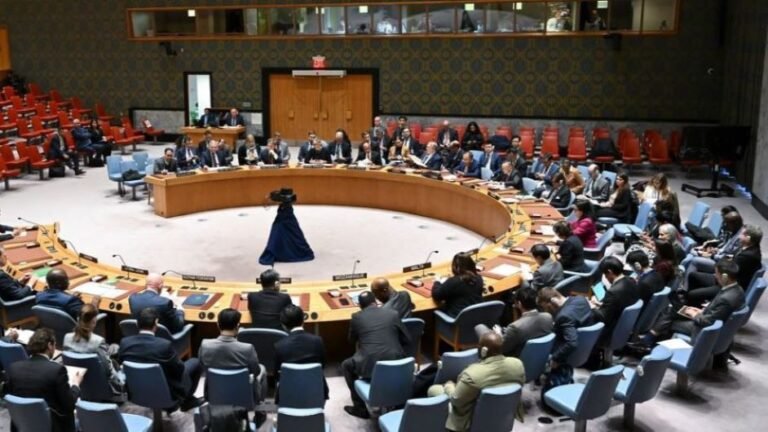
At the same time, Moghadam warned that if hostilities were to erupt, the consequences would not be confined to one country. “Any war would impact the entire region,” he said, stressing that neighboring states would then have to make independent strategic decisions based on their own interests.
He reiterated Tehran’s long-standing call for unity among Muslim-majority nations, saying regional solidarity is essential in the face of shared challenges. In this context, he expressed appreciation for Pakistan’s diplomatic stance during the previous confrontation, stating that Islamabad’s position was viewed positively in Tehran.
The ambassador was critical of recent international proposals concerning Gaza, particularly a US-backed peace initiative. He questioned the credibility and structure of such plans, arguing that they risk sidelining Palestinian agency. He also described suggestions of an international stabilization force as problematic, suggesting that such efforts could complicate the already fragile situation.
Read More: President Zardari Stresses Dialogue over Force at Iran’s National Day Event
Turning to bilateral matters, Moghadam highlighted security concerns along the Iran-Pakistan border, particularly in Pakistan’s Balochistan province and Iran’s Sistan-Baluchestan region. He emphasized that militancy and unrest in these areas cannot be resolved through force alone. Instead, he called for joint efforts focused on economic development, employment opportunities, and addressing long-standing grievances among local populations.