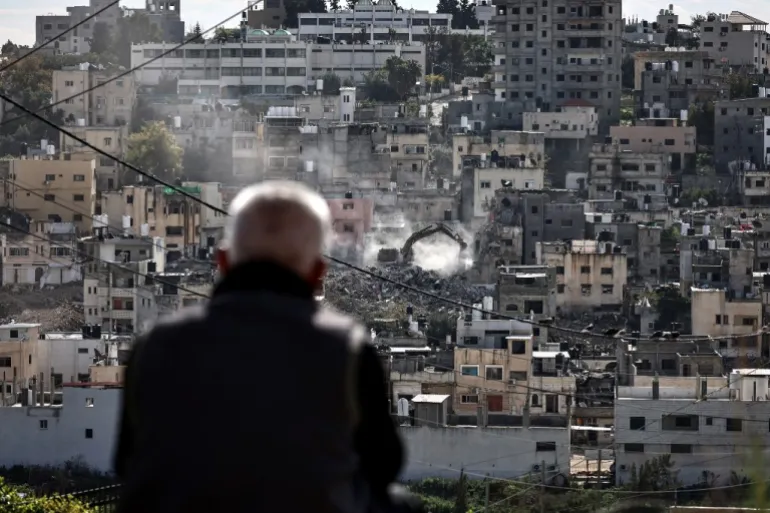
Jerusalem (TDI): Israeli forces initiated the demolition of numerous buildings in the northern West Bank, causing widespread displacement as winter temperatures drop.
Military bulldozers and cranes targeted residential blocks within the Nur Shams refugee camp, destroying homes for approximately 100 families.
Residents report that multiple generations of the same family are now seeking shelter in a single, small apartment after being driven from their ancestral neighborhood.
The Israeli military characterized these operations as necessary measures against Palestinian resistance groups. However, residents and human rights organizations argue the demolitions constitute collective punishment and forced displacement.
According to Nihaya al-Jendi, a member of Nur Shams popular committee, more than 1,500 families from Nur Shams are unable to return to their homes, creating a severe humanitarian crisis.
Read More: US warns Israel over Gaza and West Bank settlement.
Human Rights Watch analyzed satellite imagery and found that at least 850 homes across Nur Shams, Tulkarem and Jenin have been damaged or destroyed. The organization suggests these actions aim to establish permanent buffer zones and increase territorial control.
Simultaneously, Israeli authorities approved the construction of 126 housing units in the Sa-Nur outpost. This area was previously evacuated in 2005 under a disengagement plan but is now being reoccupied following the repeal of the law in early 2024.
Diplomatic tensions have also increased regarding the United Nations Relief and Works Agency. Israel recently moved to cut electricity and water services to agency facilities, prompting condemnation from the UN Secretary-General.
Legislative bans now prohibit the agency from operating within the country or contacting official entities. Critics suggest these measures aim to dismantle the infrastructure supporting Palestinian refugees across the region.
The humanitarian and infrastructural damage in Gaza is extreme. Financial losses across fifteen essential sectors exceeded $33 billion in 2025.
Read More: UN Condemns Israel for Cutting Utilities to Refugee Agency
Agricultural destruction includes 178,000 dunams of farmland, 1,000 wells and 500 farms. Public infrastructure has faced total devastation, with the loss of 700 water wells, 3,080 kilometers of electrical lines and 400 kilometers of water and sewage systems. Roads, government offices and historical sites have been razed.
Since late 2023, the conflict has resulted in significant casualties and thousands of arrests. Educational and religious institutions have suffered extensive damage, leaving the majority of schools unusable.
Residential demolitions left roughly 213,000 Palestinians displaced, with attacks even occurring at emergency shelters. Building collapses due to heavy rain have led to additional fatalities.
Data from WAFA indicates the death toll since October 2023 has reached 71,269, with 171,232 individuals injured. Furthermore, harsh weather conditions caused building collapses that led to at least 19 additional deaths in recent months.
The combination of home demolitions, settlement growth and the targeting of aid agencies signals an effort to permanently alter the demographic and political landscape of the occupied territories.

Tayyaba Arif is a student of International Relations, and takes keen interest in conflict reporting and the dynamics of regional and global affairs. She is especially committed to SDG 17, and believes in effective partnerships and promoting cooperative initiatives. She can be reached at tayyabarrif0@gmail.com