Dhaka (TDI): On Wednesday, India officially summoned the High Commissioner of Bangladesh to New Delhi to convey deep-seated anxieties regarding the rapidly declining security in the country. The Indian Ministry of External Affairs emphasized that specific threats from extremist factions targeting the Indian Mission in Dhaka have become a matter of grave concern. This diplomatic intervention underscores the heightening volatility between the two neighboring nations during a sensitive political transition.
This development occurred just two days after Bangladesh took a similar step by summoning the Indian High Commissioner in Dhaka. The interim administration expressed strong disapproval of what they described as incendiary public remarks made by former Prime Minister Sheikh Hasina, who has been residing in India since her government collapsed.
Dhaka warned that such rhetoric from India could potentially destabilize the political atmosphere and undermine the integrity of the upcoming parliamentary elections, which are scheduled for February 12.
The relationship between Delhi and Dhaka has grown increasingly frosty since August 2024, when Hasina fled to India amid a massive protest. Currently, Bangladesh is governed by an interim administration led by Muhammad Yunus.
The new leadership has repeatedly called for Hasina’s extradition to face legal accountability. Adding to the friction, a Bangladesh’s court recently sentenced the former leader to death in absentia for her involvement in the violent crackdown on protesters during the final months of her tenure.
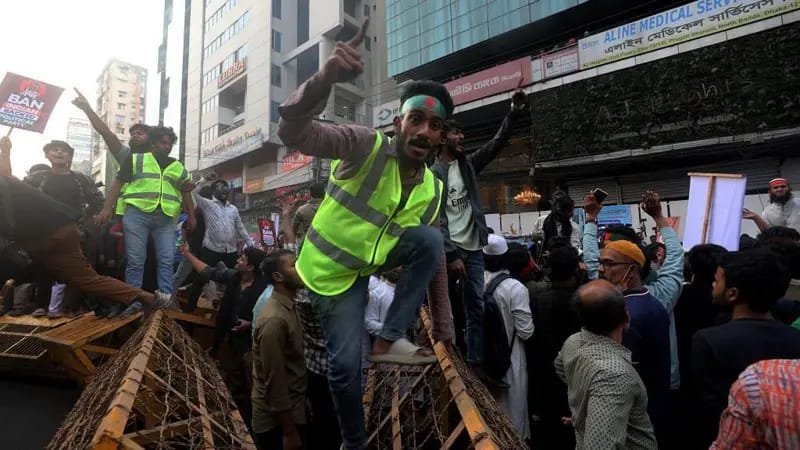
On the ground in Dhaka, the atmosphere remains tense. A faction known as July Oikya organized a march toward the Indian High Commission on Wednesday, demanding that Hasina be handed over to the Bangladeshi authorities.
In light of these demonstrations and reports of extremist elements planning to surround the diplomatic premises, the Indian Visa Application Centre (IVAC) announced an immediate suspension of its services. A formal notice cited the “prevailing security situation” as the reason for the closure. As of now, the interim government in Bangladesh has not released a formal statement in response to India’s latest diplomatic summons.

Tayyaba Arif is a student of International Relations, and takes keen interest in conflict reporting and the dynamics of regional and global affairs. She is especially committed to SDG 17, and believes in effective partnerships and promoting cooperative initiatives. She can be reached at tayyabarrif0@gmail.com