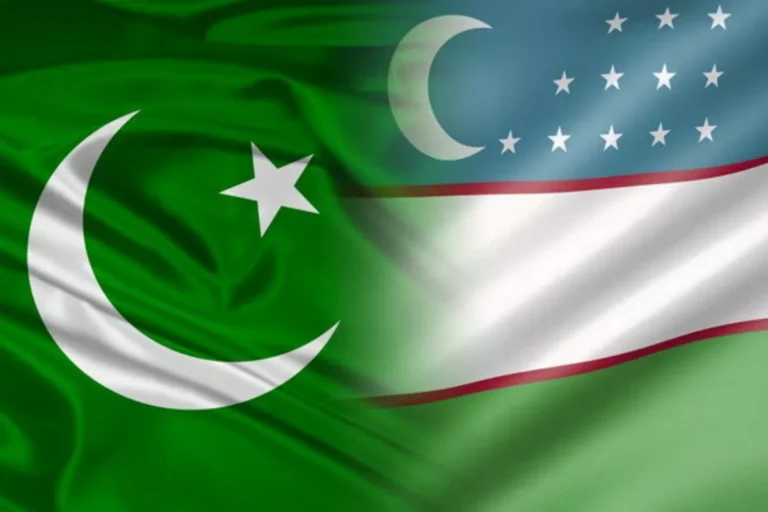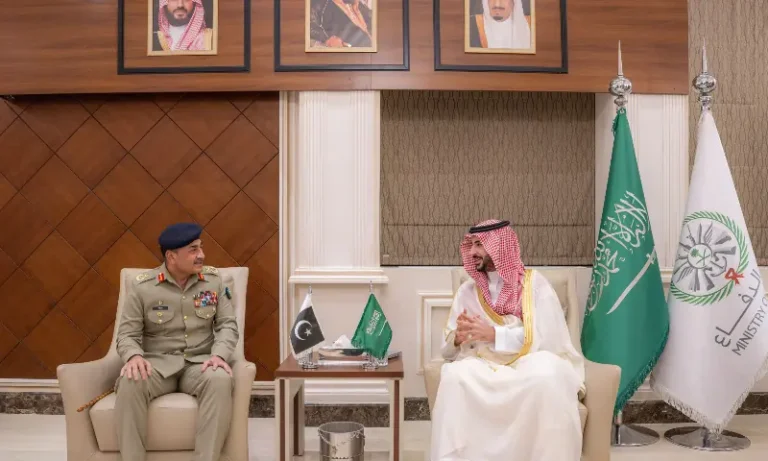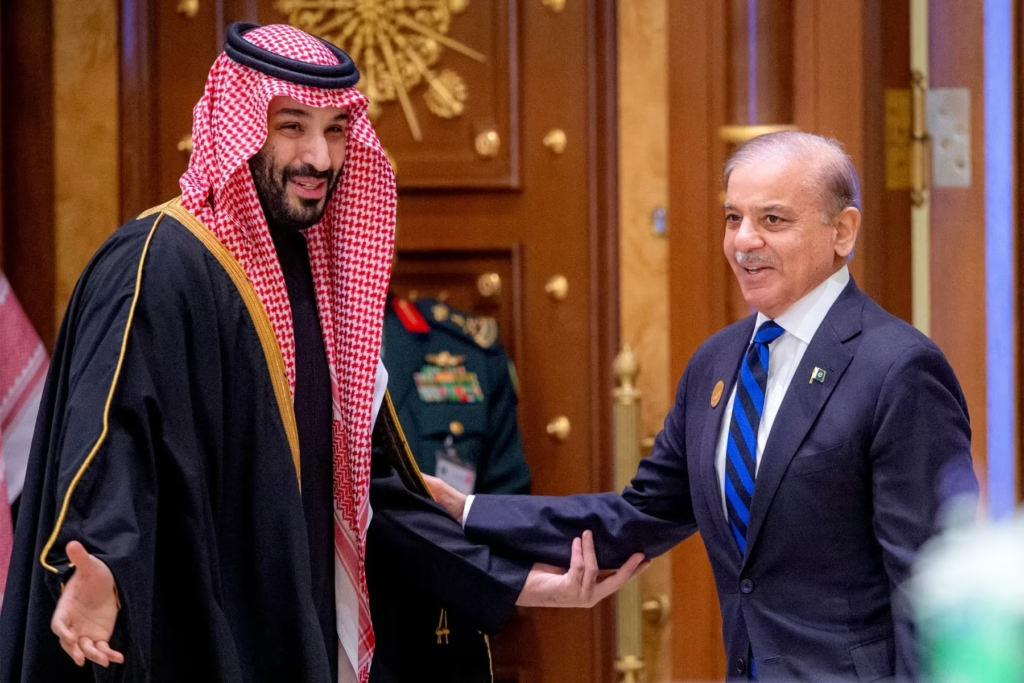
If there are two Iranian neighbors (one being a maritime neighbor) that are trying to keep a safe distance from the escalation engulfing the Middle East since the first US-Israeli joint strikes on Iran on February 28, they are Pakistan and Saudi Arabia. Interestingly, both are tied together in a defense pact that is in its infancy; being signed just last year on 17 September. Speculation suggests now is the best time for the mutual defense arrangement to be put to use; because one of the two parties to the pact has in fact come under attack.
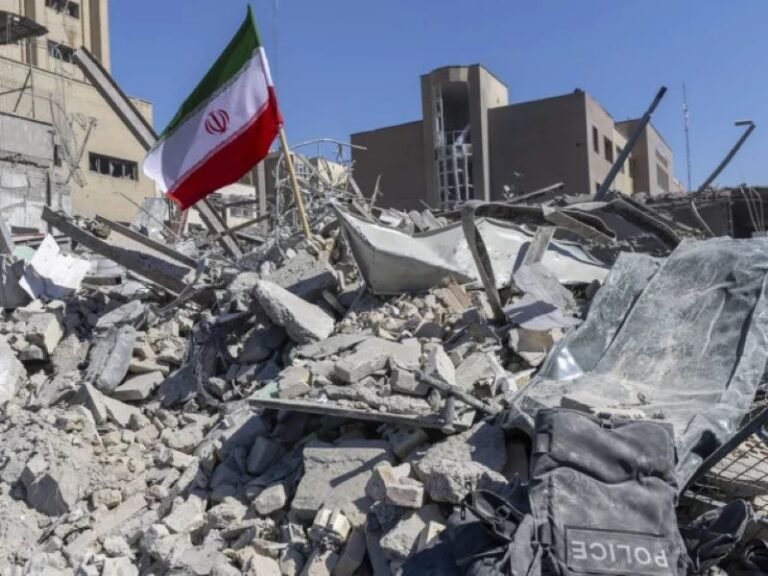
Speaking of the attack, Iran maintains that it is justified in targeting American interests and assets in the region, in retaliation of the US-Israeli strikes, and as a clarification, has also spoken about its intention to not attack any of the Gulf countries outside of this single criteria.
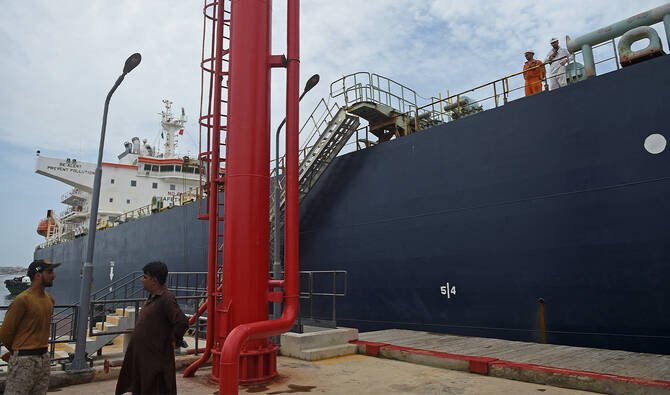
By this matrix, Iran clearly denied any involvement in the Monday attack on Saudi Arabia’s Ras Tanura oil refinery owned by Aramco. Tehran labeled it a false flag by Israel. This suggests two things: one, it does not want any more enemies; none other than the United States and Israel. Two, Iran is well aware of the fragility as its defense leadership retains the memory of the sustained rivalry with Saudi Arabia; one that practically came to an end with China’s mediation, in 2023.
And some ask, why is China not directly coming to save Iran. While this can be explained in a number of ways, the most useful thing China did for Iran in the recent past was facilitating a normalization with Saudi Arabia. The normalization served to cool down decades-old emotions and perceptions of animosity. Even then, frustration runs high among the Gulf countries on Iranian attacks today. But beyond intercepting missiles, these countries are hardly in possession of an active war strategy or preparedness.
Read More: CDF Munir, Saudi Defense Minister Discuss Iran Attacks and Regional Security
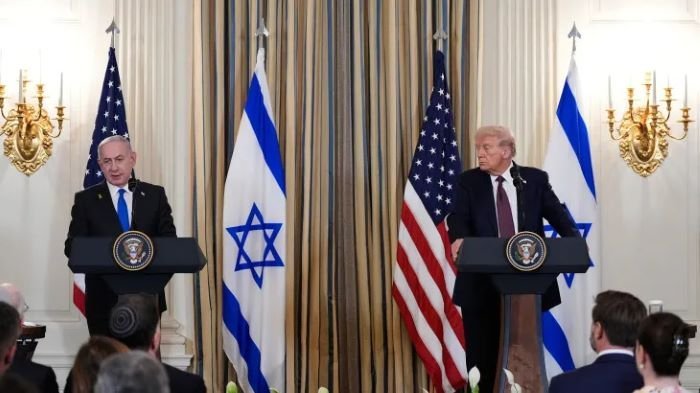
So how does the Strategic Mutual Defense Agreement (SMDA) come alive at this time? The answer is, it likely will not. Because the scope of this agreement must be judged from the timing when Pakistan and Saudi Arabia entered into it. This was just seven days after Israel struck a residential compound in Doha, targeting the senior leadership of Hamas.
The attack, though limited, targeted and not intending escalation, still sent a strong message among the Muslim-majority countries, especially within the region. The message being, no Muslim country is safe from Israel’s aggression and impunity. Pakistan and Saudi Arabia gave a timely push to their long-existing defense and military cooperation at that time. A push, an upgrade that culminated into mostly an open-ended defense pact. Now when Iran is being subject to that same impunity, it seems entirely pointless that the SMDA is invoked against Iran.
Another pattern that does not indicate any likely activation of the defense pact is Pakistan’s own position and official discourse; not just in the current crisis but one that it maintained during the 12-day war as well. What can be called a position of ‘neutrality’ is actually a conscious choice to not endorse aggression against Iran while restraining itself from getting involved in the conflict at all. This goes back to a dormant sectarian fault line within the country, as well as its age-old dilemma of how to balance between the complex alignments and animosities in the Middle East.
Perhaps the most significant thing about the defense pact is Pakistan extending deterrence to Saudi Arabia. In the ongoing conflict, this is playing out in ways that will shape the SMDA for times to come. In sharp contrast to years when Pakistan and Iran were mostly at daggers drawn to each other, the current state of ties is considerably warm; and such where Pakistan even enjoys various channels to get its message inside Iran, and to engage with its leadership.
This has not happened out of the blue but started with an easing off that accompanied the visit of the late Iranian President, Ebrahim Raisi, to Pakistan in 2024. This was followed by many similar visits of Iranian leadership in a short period of time.
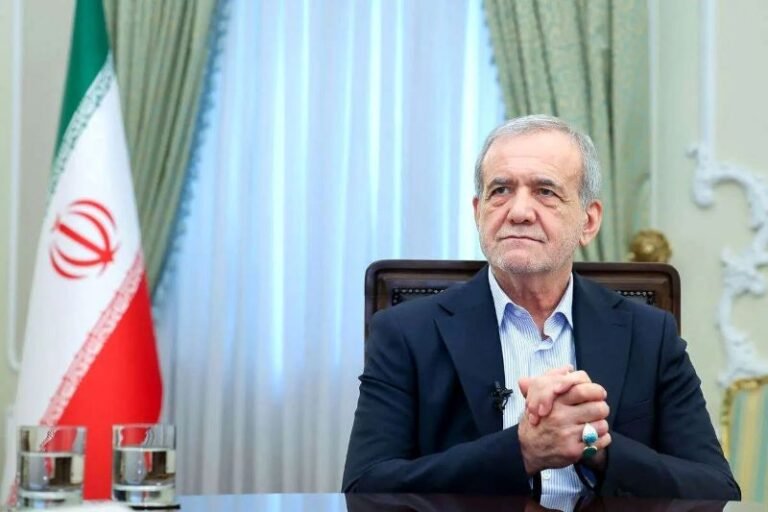
Read More: Iran to Halt Strikes on Neighbors Unless Provoked: Pezeshkian
At two different occasions, Iran and Turkiye expressed strong desire to become part of this otherwise bilateral arrangement; which again suggests that in essence, the SMDA can become a defense coalition of Muslim countries; at a later time when the region is not a battleground.
Coming back to extending deterrence and Pakistan’s diplomatic edge in Tehran, Islamabad will do everything to not have to invoke SMDA; which involves active diplomacy, to-and-fro contacts between Riyadh and Iran, reminding Iran of the existence of the pact; which the Pakistani Foreign Minister did in a recent call with Iranian Abbas Araghchi, and creating necessary trust between the two maritime neighbors and formal rivals.
“We have a defense pact with Saudi Arabia, and the whole world knows about it,” Dar said. “I told the Iranian leadership to take care of our pact with Saudi Arabia.”
The existence of the pact itself pushes Tehran to calculate and re-think attacks on Saudi Arabia; a Gulf country which has largely been spared compared to Qatar, Kuwait, Bahrain, and the United Arab Emirates; where Iran is indiscriminate and convinced to inflict as much damage to American assets as it can.

Established in December 2008, The Diplomatic Insight is Pakistan’s premier diplomacy and foreign affairs magazine, available in both digital and print formats.