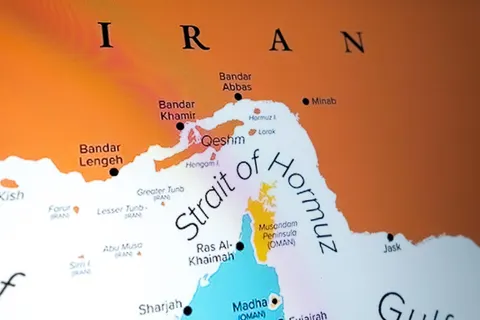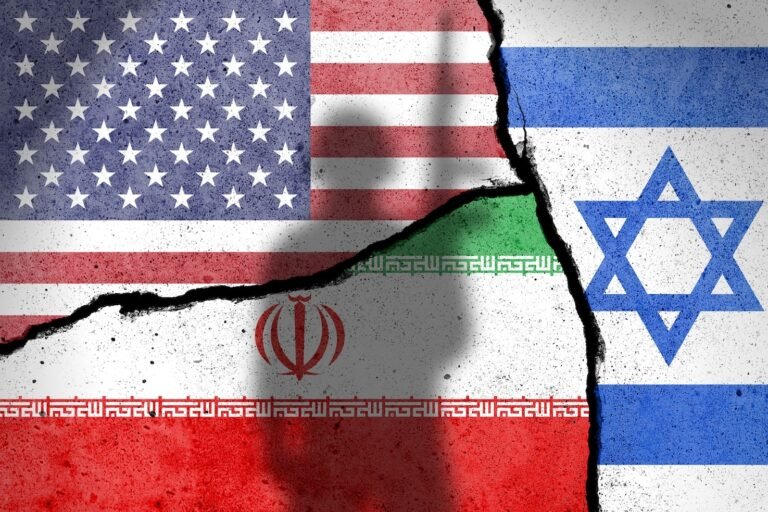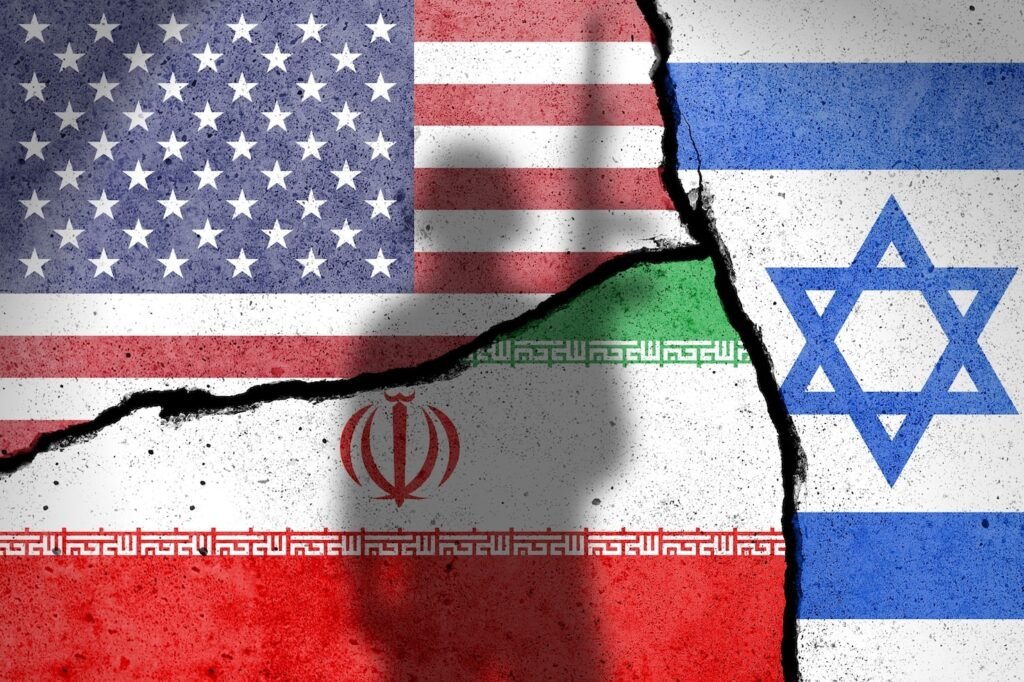
In late February 2026, the United States and Israel launched coordinated airstrikes on over 500 Iranian targets, nuclear facilities, missile infrastructure, and command compounds, in operations the U.S. dubbed “Epic Fury” and Israel called “Roaring Lion.”
Scores of people have been killed across the Middle East, and Iranian state media confirmed that Supreme Leader Ayatollah Ali Khamenei was killed at his office in the strikes, with a 40-day mourning period announced. Iran retaliated with missile strikes on Israeli cities and U.S. military installations across the Gulf.
Khamenei’s killing has created a power vacuum at the core of the Iranian regime, with a three-person council — comprising President Masoud Pezeshkian, Chief Justice Gholam-Hossein Mohseni-Ejei, and Ayatollah Alireza Arafi, a senior Guardian Council member and deputy chairman of the Assembly of Experts — formed to hold power until a successor is chosen.
Over the past week, I have been trying to understand what happened through legal, diplomatic, and institutional lenses, and to assess its broader geopolitical and economic consequences. The scale of the events is difficult to absorb. Yet beyond the immediate shock lies a more difficult question — not simply whether the strikes achieved military objectives, but whether they were legitimate in the legal sense of the term.
What the Law Actually Says
The UN Charter was not designed for ambiguity. Its logic on the use of force is actually quite stark. Article 2(4) prohibits force against another state’s territorial integrity. Article 51 permits self-defense, but only in response to an armed attack, and only if the response is necessary and proportionate.
The Caroline doctrine, a 19th-century standard, further requires that any pre-emptive action respond to a threat that is imminent and leaves no other option. The ICJ reaffirmed similar logic in Nicaragua v. United States (1986).
Supporters of the strikes frame them as pre-emptive measures against an existential nuclear threat. However, the International Atomic Energy Agency, which had monitored Iran’s program for years, found no evidence of imminent weaponization prior to the strikes. UN Secretary-General António Guterres condemned the strikes. Iran’s UN ambassador formally accused the U.S. of Charter violations during the emergency Security Council session.
The U.S. and Israel would dispute this reading — their argument rests on the severity of the threat Iran posed. But disputing the interpretation doesn’t change what the text says, and the burden of demonstrating imminence was never publicly met.
Under a strict reading of the Charter, pre-emptive force without Security Council authorization and without publicly demonstrated imminence sits outside the Charter’s framework. That is the plain reading of a treaty the United States helped negotiate.
Read More: US Federal Departments Start Transitioning Away From Anthropic as Phase-Out Begins
The AI Question, Now Confirmed, and Stranger Than Expected
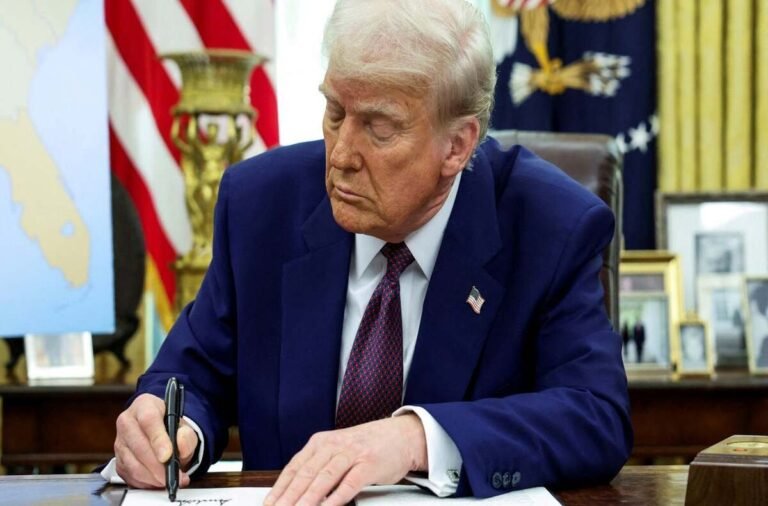
According to reporting by The Wall Street Journal, U.S. Central Command used Claude for intelligence assessments, target identification, and simulating battle scenarios during the Iran strikes. This came after President Trump ordered agencies to cease all use of Anthropic products, after Anthropic CEO Dario Amodei refused to strip safeguards preventing Claude from being deployed for mass domestic surveillance or fully autonomous weapons.
It is worth noting that Trump’s order included a six-month phase-out period — meaning Claude was still operationally embedded in military systems and could not simply be switched off overnight. That detail matters: it shows how quickly commercial AI becomes load-bearing infrastructure in military operations, long before any governance framework catches up.
Reports clarify that Claude was not used to independently control weapons systems; its role was as a decision-support tool providing intelligence summaries, threat evaluations, and battlefield simulations, with humans retaining lethal decision-making authority. That distinction matters legally. International humanitarian law requires human control over lethal decisions.
The fact that Anthropic itself drew a hard line against autonomous weapons use is significant, and the fact that the Pentagon pushed back against that line is even more so. Defense Secretary Hegseth designated Anthropic a “supply-chain risk to national security” — a label previously reserved for foreign adversaries — after the company refused Pentagon demands for unrestricted access.
What this episode actually showed is that on the day of a live military strike, the most binding constraint on how AI was used wasn’t a law, a treaty, or a presidential order. It was a private company’s refusal. That should unsettle anyone thinking seriously about where this is heading.
Unilateralism: A Setback to Diplomacy
The 1991 Gulf War was Security Council-authorized. These strikes were not. The difference isn’t procedural — it’s foundational. Multilateral authorization creates a record, forces public justification, and preserves the relevance of institutions that exist for exactly these moments.
When powerful states bypass those institutions, the rules don’t just bend for them — they bend for everyone. Iran is now invoking the same self-defense logic to justify its retaliatory strikes on U.S. bases across the Gulf. The IRGC pledged revenge and launched strikes on 27 bases hosting U.S. troops in the region, as well as Israeli military facilities.
That symmetry is the predictable outcome of abandoning a common legal framework for a precedent-based one. Smaller states are watching. Proliferators are watching. The message being absorbed is not reassuring.
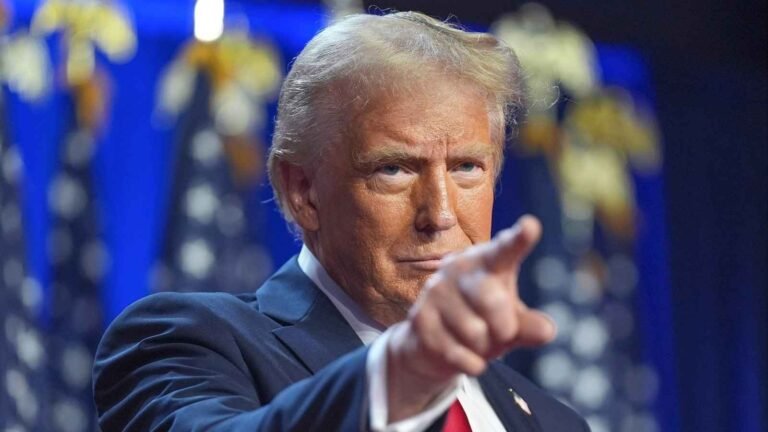
Prior to launching the attack, Trump said he preferred a negotiated deal, but would also welcome regime change. That framing — negotiation as one acceptable option among several — is precisely the problem. The UN Charter’s Article 33 doesn’t treat diplomacy as optional. It requires states to seek peaceful resolution of disputes.
What makes this harder to absorb is the timing. On 27 February 2026 — the day before the strikes began — Oman’s Foreign Minister announced that a breakthrough had been reached, with Iran agreeing to never stockpile enriched uranium and to full IAEA verification. Iran’s Foreign Minister Araghchi said a historic agreement was within reach. The strikes came not after diplomacy had failed, but while it was actively moving forward. That is perhaps the single most significant legal and moral fact in this entire episode.
The 2015 JCPOA, for all its limitations, was a Charter-compliant agreement — states bargaining within a shared framework. Its collapse in 2018 and the failure to revive it had left a vacuum that diplomacy was, by all accounts, beginning to fill. The strikes on U.S. bases in Jordan and Saudi Arabia — neither party to the Iran dispute — have now destabilized regional actors whose cooperation any eventual settlement will require.
Decapitation and Its Historical Record
Israel claimed that a majority of Iran’s senior military leaders were killed in the initial strikes, including the armed forces chief of staff, the IRGC commander, and the secretary of Iran’s Defense Council. Khamenei died without an officially declared heir, and with U.S.-Israeli strikes ongoing, naming a successor will take considerable time.
Under International Humanitarian Law, targeting military commanders is legally permissible where proportionate. But the strategic logic deserves scrutiny. Post-Saddam Iraq showed what decapitated command structures produce — not pacified states, but fragmented authority and prolonged conflict.
Analysts warn that leadership change in Iran could take three trajectories: regime continuity, military takeover, or regime collapse — and that none of these near-term scenarios suggest meaningful political liberalization in the immediate aftermath.
Decapitation assumes something better waits beneath the leadership removed. That assumption carries a poor historical record.
“Legitimacy doesn’t operate on classified information. It operates on publicly demonstrated justification, adherence to shared frameworks, and consistent application of norms across actors.”
I want to be honest about the limits of my own certainty here. I’m a student of international relations, not a lawyer or a policymaker. I don’t have access to the intelligence assessments that informed the decision to strike. It’s possible that classified information presented a genuinely imminent threat that public sources don’t reflect.
But legitimacy doesn’t operate on classified information. It operates on publicly demonstrated justification, adherence to shared frameworks, and consistent application of norms across actors. On each of those measures, these strikes fall short.
Read More: Fragmentation in the Middle East: Internal Rivalries and External Pressures
The deeper concern isn’t the specific outcome — it’s the precedent. As the Council on Foreign Relations noted, taking out a supreme leader is not the same as regime change; the IRGC is the regime. And if the IRGC consolidates control in the succession crisis, the strikes may have removed the single most recognizable face of Iranian governance while leaving its coercive infrastructure intact.
The damage here is real but it isn’t final. What it demands, though, is more than condemnations and emergency sessions — institutions need to act in ways that actually bind, not just signal.
The UN General Assembly should convene a special session on AI in armed conflict. The Anthropic episode alone demonstrates how urgently norms are needed for commercial AI in military targeting. The “Uniting for Peace” mechanism (Resolution 377) offers a path around Security Council paralysis for nuclear crises and should be seriously revisited.
Legitimacy isn’t something a state declares for itself — it’s built slowly, through consistency, through justification, through the willingness to be bound by the same rules you expect others to follow. It erodes the same way.
The post-1945 order may be flawed and has always been unevenly applied. But it has provided a framework, however imperfect, that has structured conflict and limited its worst excesses for eight decades. The question isn’t whether that framework is perfect. It isn’t. The question is whether we are prepared to act as though we can do without it.
Because once the rules become optional for those with enough power to ignore them, they cease to be rules at all. They become suggestions. And in a multipolar world, suggestions don’t hold.
*The views presented in this article are the authors’ own and do not necessarily reflect the views of The Diplomatic Insight.

Mohammed Affan Ansari
Mohammed Affan Ansari is a graduate of Political Science and International Relations from Istanbul Sabahattin Zaim University, with an Erasmus+ exchange at the University of Wroclaw. He has previously worked as a research and editorial intern. His writings focus on global governance, human security, and the evolving role of middle powers and the Global South.