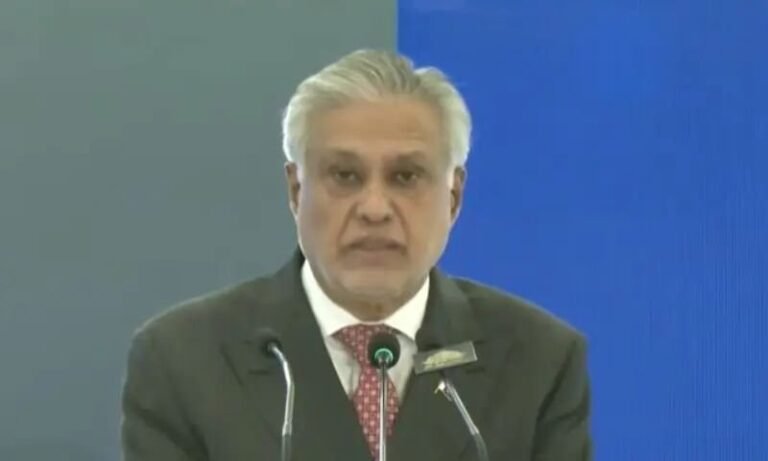
A familiar scene unfolds in a university auditorium in Pakistan. A guest speaker finishes the lecture on governance, public policy, civic responsibility, and national security. Some students listen, others disengage the moment the talk begins.
By the time it ends, many are already confident they understand the truth, not because they examined the arguments, but because the social media reels, and AI tools have provided them with a ready-made conclusion declaring who is corrupt, who is honest, who is patriotic, and who is not. Complex answers are reduced to merely a thirty-second clip.
In recent years, discussions around patriotism, civic responsibility, and state institutions have become emotionally charged, particularly among younger citizens. Many argue that loyalty cannot be taught, that engagement with institutions is inherently propagandistic, and that skepticism alone constitutes critical thinking. While these concerns are not without merit, they also risk replacing one form of unquestioned authority with another.
This is not a failure of intelligence. It is the failure of patience. A generation that rejects “taught patriotism” often ends up accepting “taught outrage” without scrutiny.
The contradiction is subtle but important, that the generation promoting itself as independent thinkers often struggles to sit with ideas they disagree with. There is certainty before understanding, and questioning is rejection rather than inquiry.
Read More: It Is Not Over: The Flip Side of the Generational Divide in Pakistan
Skepticism toward authority, state institutions, political elites, and official narratives is not inherently unhealthy. In fact, it is necessary, but skepticism alone does not provide answers. Critical thinking requires more than just disbelief. It requires engagement, evidence, and most importantly the willingness to revise one’s views.
While the younger generation is sketching a different pattern to reject institutional narratives while uncritically absorbing popular ones.
Today, a viral political reel feels more authentic than a lecture because it speaks the language of emotions. A ChatGPT generated answer feels more reliable than a textbook because it is instant and confident. A trending hashtag feels more truthful because it shows collective approval. In each case, people are just relocating credibility.
Although these tools are treated as neutral arbiters of reality. But in fact, social media algorithms do not reward accuracy, they reward engagement. Artificial intelligence does not understand truth, it predicts likely responses. Overall, it does not promote balance, it amplifies the outrage.
This is where the Gen Z paradox becomes clear. A generation deeply aware of manipulation is simultaneously the most vulnerable to it. Because manipulation now wears a mask of freedom, choice, and relevance.
Such environments help populism thrive. Not because the audience is uniformed, but because they are overwhelmed. When political life feels inaccessible and institutions appear distant, emotionally simple narratives become attractive. They offer moral clarity in a confusing world.
Read More: Trends, Dances and a Government Overthrown – Nepal’s Gen Z Protest in 10 Pictures
The danger is not disagreement with institutions. The danger is replacing analysis with allegiance, whether to a leader, a movement, or a narrative that claims exclusive ownership of truth. Populist narratives do not ask difficult questions. They offer comforting answers. They divide the world into heroes and villains, truth and betrayal, “us” and “them.”
Universities are meant to resist this impulse. They are not spaces for comfort, they are spaces for challenge. To engage with ideas, whether they come from the state, civil society, or dissenting voices, is not an endorsement. But when students disengage before a discussion begins, the loss is not institutional, it is intellectual.
This does not mean institutions are above criticism. They are not, but critique must be informed, not reactive. It must be grounded in evidence, not emotion. Otherwise, resistance becomes performance, not reform.
The real threat to democratic culture is not exposure to differing viewpoints. The real danger is when people lose the ability to judge, analyze, and distinguish between arguments. A society does not lose its freedom when people are silenced, it loses when people stop thinking and start confusing conviction with truth.
If a generation wishes to shape the future, it must first learn to tolerate complexity. That means accepting that no theory is sacred, no narrative is complete, and no leader, popular or powerful, should be followed blindly.
*The views presented in this article are the author’s own and do not necessarily reflect the views of The Diplomatic Insight.

Abdul Momin Rasul is a contributing author on TDI