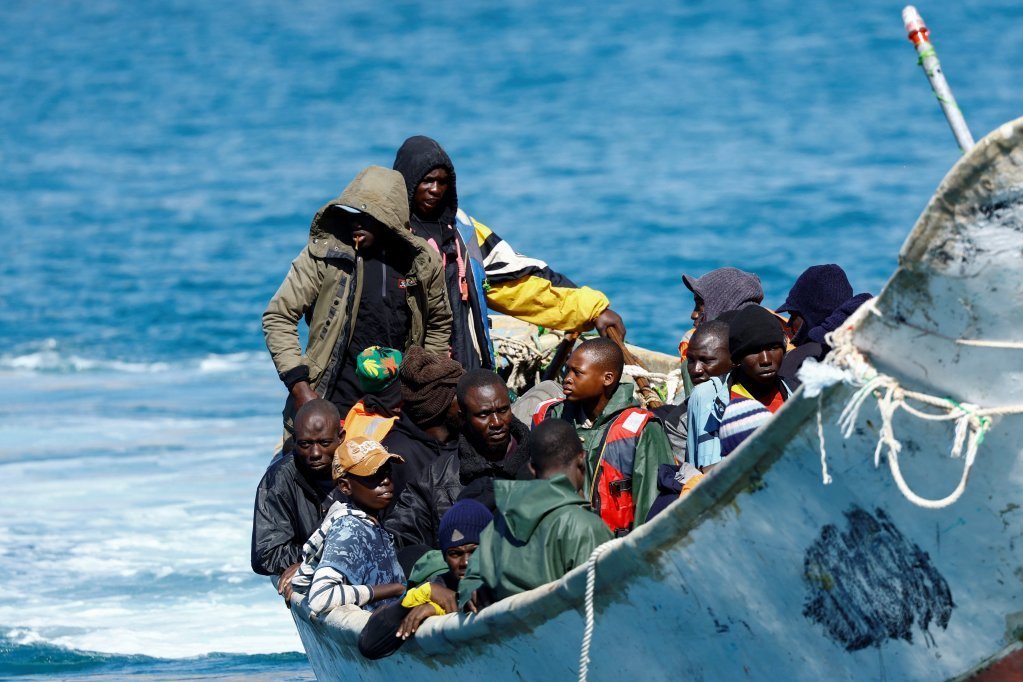
The Gambia has been experiencing irregular migration over a decade in spite of all the efforts to raise awareness, bilateral agreements with European counterparts and tightening of borders through the use of securitization as a response mechanism. This tendency is frequently described in the public discourse, where it is explained by the stories about the youth recklessness, criminal networks of smuggling, or the deception of the reality about life in Europe.
These factors are not unimportant, but they present the underlying structural forces of migration. In its essence, irregular migration out of The Gambia can be best viewed as the failure of the country to achieve inclusive development by using the context of unsuccessful youth unemployment, lack of economic opportunities, and governance restrictions, which has allowed demographic growth without a corresponding inclusive development.
The process of migration is influenced by incentives and not ignorance. Opportunity structures are responded rationally by individuals as has been well tested in the literature of political economy and development studies. The local economy does not provide many young Gambians with an opportunity to find a stable job, income guarantees, or career advancement. In that regard, migration, however hazardous, turns into a rational choice of social and economic progress as opposed to a misinformed action.
Unemployment of the Young and Organizational Limits
The Gambia is challenged with a high demographic. There is an increasing young population and it is accessing a labor market that has a low capacity of absorbing it. Youth unemployment and underemployment, according to the statistics provided by the World Bank, (2023) and the International Labor organization, (2024), have constantly been a high problem and most of the youths have been absorbed in low productivity activities in the informal sector.
Consistently, in comparison to other post-educated young people, the young people in tertiary education have a longer and unpredictable time of transition to stable jobs, which is a reflection of the long-standing lack of alignment between educational results and labor-market requirements.
This is not only a cyclical scenario. It is an indicator of more profound limitations in governance, such as the lack of diversification of the economy, the underdevelopment of the private sector, and the lack of alignment between the employment strategy and the education policy.
Job creation and youth empowerment are regularly prioritized in the national development models, but the gaps in the implementation of those strategies are still significant. This has led to a loss of confidence in institutions especially among the youth due to the resulting disconnection between policy aspiration and experienced reality.
In these circumstances, staying back at home may seem unacceptable compared to going away. Migration is not then a rejection of national belongings but a logical decision because of structural rejection.
Read More: When Desires Turn into Analogies: Why Comparing Brufut to Dubai Misrepresents the Point
Tourism, Economic Weakness and Skimpy Opportunity Structures
Tourism has always been touted as the economic powerhouse of The Gambia and one of the main job generators to young people. This industry is a high foreign exchange earner and has traditionally absorbed the labor in the hotel, transport services, beach vendors and informal trade. But its weakness as a sustainable source of employment is becoming clearer.
Most of the tourism jobs are seasonal and low-paying with little skills acquisition or future job security. The COVID-19 pandemic clearly demonstrated how vulnerable the sector is to external shocks as thousands of people had their livelihoods ruined due to border closures and travel restrictions.
Analysis by The United Nations Development Program, (2022) and the African Development Bank have carried out analysis that revealed that excessive dependence on tourism will make the economies of small countries like The Gambia weak instead of developing resilience over time.
With the decreasing ability of tourism to absorb labor, the lack of other employment opportunities becomes more evident. Once a precarious sector is shrinking, the pressure of migration only increases, not due to an increased desire to do so, but due to the fact that the domestic opportunities only become smaller.
Migration as a Household Rational Strategy
Politically economically, irregular migration has a political economy role of a household level risk management strategy. The house hold consumption, education, healthcare and housing are financed by remittances that are central to the Gambian economy.
It is reported by World Bank migration and development briefs (2023) that remittance inflows represent very high percentage of national income in The Gambia, and they usually exceed foreign direct investment and official development assistance.
In the case of financially precarious families, migration is often perceived as an investment, but not a bet. Social dynamics support this line of thinking Effective demonstration effects are created by success stories of migration which can be perceived as remittance financed houses or improved social position.
On the other hand, those returnees that find it difficult to reintegrate themselves economically tend to be stigmatized thus supporting the notion that staying home without any opportunity is an act of failure and not prudence.
Read More: The Green Transition: Gambia between Market Liberalism and State Capitalism
The Gambian policies have focused much on deterrence as a response to irregular migration. These involve awareness campaigns to be done on the risks of the backway, enhanced border control and collaboration with external partners in an attempt to curb departures. Although these measures might work in the short term to derail the migration routes, the measures have failed to modify the underlying incentives that attract migration.
The studies conducted by the International Organization of Migration (2024), such as the results published in its World Migration Report have regularly indicated that information campaigns do not have a deterrent effect on migration when there is no change in the structural conditions.
Most of the young Gambians understand all the risks posed but feel that the risk is better than being unemployed at home. On the same note, such policies that criminalize migrants or label them as those who failed cause more harm to social rejection than reintegration.
The problem is aggravated by the externalization of migration control. International initiatives funded by the Europeans have been more focused on containment and surveillance, and the allocation of resources to border security is usually higher compared to the creation of employment or economic diversification. This imbalance demonstrates a wider failure in governance to go to root causes and not to the symptoms.
Governance, Employment and Policy Reorientation
To curtail irregular migration in The Gambia, there is a need to change the governance approach to one that is focused on creating opportunities rather than deterring people. This will entail enhancing institutional capability to promote employment, diversify the economy and ensure that human capital development is consistent with labor-market demand.
The employment policies should shift away from tourism and instead invest in sectors that have greater absorptive capacity, such as the agricultural value chains, agro-processing, small-scale manufacturing, and digital services- things that the African Development Bank has always emphasized as ways to decarbonate growth.
The education and vocational training systems should also be restructured with reference to market-relevant skills to redress some imminent gaps noted by the International Labor Organization. Reintegration policies need to consider the way the returnees are economic players who have experience and skills as opposed to policy failure.
The international migration governance should use legal and circular migration routes. There is evidence of West Africa showing that the concept of managed mobility coupled with domestic job creation is more effective in reducing irregular migration in comparison to enforcement only.
The Gambia does not produce irregular migration because of their ignorance or recklessness in youth. It is the logical result of structural unemployment, economic instability, and government restrictions that restrict the access to decent employment.
Migration, whether regular or irregular will continue to be a logical reaction to exclusion and not an exception to it as long as institutions are unable to turn the demographic potential into sustainable opportunity.
*The views presented in this article are the author’s own and do not necessarily reflect the views of The Diplomatic Insight.

Mama Aisha Bah
Mama Aisha Bah is an upcoming scholar of International Political Economy; a Master student of International Relations. Her research interest includes dependency , state capacity, and regional integration in the development of the African region, particularly politics and governance. She explores problems of national sovereignty, economic policy, institutional change, and analyses the manner in which the global structures determine the outcome of domestic policies. In her academic activity and in writing , she strives to make her contribution to significant policy discussions on development and democratic governance in Africa. She can be reached at mama.bah@uiii.ac.id