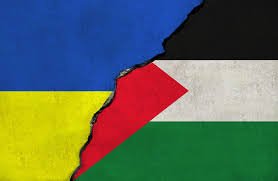
The Gaza and Ukraine wars are not just isolated local tragedies; they signify a world disorder based on humanitarian diplomacy and multilateral relations. These crises underscore the hypocrisy and selective morality of international relations, geopolitics after World War 2 is challenged.
The 2022 Russian invasion of Ukraine severely breached the international law the world has functioned on for decades. The west responded massively, flooding Ukraine with weaponry, sanctioning Russian entities and presenting the Russian invasion as a challenge to the liberal order. But ever since the Gaza Strip eruptions after the Hamas attack on Israel with retaliatory responses from the other side, it has been very apparent the west’s commitment to resolutions is far from enduring.
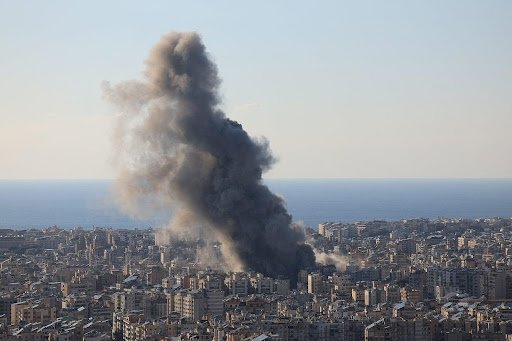
Support for Israel by the United States and some European countries has remained unqualified and steadfast, even as evidence of Israel’s humanitarian devastation and disproportionate violence grows. The response Gaza receives has been filled with ambiguity, complicity, and indifference to calling out violations of law, in contrast to the moral clarity with which Russia’s actions have been condemned.
The Global South has not remained indifferent to this perception of a double standard. Countries across Africa, Latin America, and Asia have pointed to the Western silence and support for Israel, calling it proof of the so-called rules-based order being arbitrary and self-serving.
The more Israel Is condemned, the more the Western language and narratives spin out of control with the rest of the Global South. The bold move South Africa makes to name Israel’s actions as genocide and prosecute it in The International Court of Justice is a case in point. In the meanwhile, these countries have been making their voices heard within the United Nations and other international forums, where their grievances regarding the unilateralism and the international law-dominated approach by the more powerful countries of the world are being heard.
Read More: The Blue Frontier: How the Indian Ocean is Redefining South Asian Geopolitics
The changes being brought about are not mere rhetoric. The diplomatic shifts, which accompany the alteration of the diplomatic order dominated by the Cold War, are unfolding in emergent form.
These fractures have been adroitly exploited by Russia and China. Russia has used the Gaza crisis to divert international condemnation while portraying the West as hypocritical adjudicators of justice. On the other hand, China has portrayed itself as a champion of Palestinian causes, winning some favor in the Arab and Muslim-majority countries while avoiding involvement in either conflict. Both have strengthened their relations with the countries of the Global South through alternative institutions such as BRICS and the Shanghai Cooperation Organization, providing them with diplomatic and economic infrastructure that competes with Western-sponsored institutions.
The transformation of systems into multi-polar ones and the rise of China and Russia as superpower is not the sole point of consideration. It reveals a deeper discontent with the existing structure of international relations, which is perceived as antiquated, unjust, and unrepresentative. While Western countries devote vast amounts of budgetary resources to supporting Ukraine and Israel diplomatically, their influence is declining in countries that consider themselves ignored, pressured, or morally ostracized. Consequently, there is a rapid growth of mini-lateral platforms, alternative trade blocs, and regional security frameworks that operate outside the traditional Western centers of power.
The pressure on Western assets and strategy is particularly telling. Dividing attention on two primary fronts, Eastern Europe and the Middle East, the Indo-Pacific and Sub-Saharan Africa are receiving less attention. This, and the resultant power vacuum, allows China to expand its infrastructure and soft power initiatives, while Russia seeks military and energy partnerships. The diffusion of power is real and irreversible, challenging the previously dominant role of the US and its allies in global agenda-setting.
These dual crises highlight the dysfunction of global institutions. The United Nations is stagnant due to geopolitical deadlock, failing to resolve the Ukraine-Russia conflict and lose Gaza-Israel conflict simultaneously. Russia blocks Security Council resolutions on Ukraine, while the United States vetoes resolutions calling for Gaza ceasefires. The concept of the UN as a neutral arbitrator has collapsed due to political inaction, reinforcing unmet demands for reform toward equitable representation and sovereignty.
Read More: Reimagining South-South Climate Cooperation: From Rhetoric to Structural Justice
The humanitarian consequences are devastating. The ongoing conflict in Ukraine has resulted in the deaths of tens of thousands of people, has created Europe’s worst refugee crisis since the Second World War, and has caused a disruption in global food supplies. Additionally, Gaza’s infrastructure has been utterly dismantled, coupled with a civilian death toll surpassing 60,000.
On a broader scale, the synergistic impact such conflicts stand to have on global food security, population migration, and geopolitical volatility is profound. It is critical to recognize that these conflicts do not exist in a vacuum; rather, they represent a larger network of systemic failures, and are interlinked through multifaceted conflicts and crises.
Western countries are expected to take the lead in global governance, but they seem to be losing their credibility. Moral leadership is perceived as absent and replaced with apparent contradictions and selective policies. Ukraine is unlikely to receive unconditional backing from disillusioned supporting nations after witnessing with disgraced Western Gaza policies. Framing one conflict as a battle for existential democracy, and the other a battle of counter-terrorism, oversimplifies the reality and erodes the universality of the values the West claims to champion.
This moment implies not only decay, but the possibility for renewal as well. Repairing the current breakdown, as former UK Prime Minister Gordon Brown said, requires new multilateralism that is inclusive, credible, and responsive to the demands of the 21st century. A global order that is responsive to the south, enforces order and rules without bias, and establishes capable governance structures to manage climate change, pandemics, and cyber warfare as transnational threats is what the global south requires.
The future can unfold in two different ways. One scenario features rigid, competing spheres of influence centered on transactional diplomacy in place of coordinated action, yielding permanent instability. The second scenario is much more optimistic. States understand that selective multilateralism cannot be the path forward and, in turn, come together to create a values-based world order that is more representative. The outcome will rest on the governance structures in place, as reality suggests that this scenario does not offer a neutral chance—will, leadership, and moral fortitude together drive the decision that will shape our reality.
In summary, both Ukraine and Gaza represent not an isolated crisis but two sides of the same coin and two regions of a balancing global ‘crisis’ in a transforming world. These are manifestations of the shortcomings of the prevailing order and fuel the necessity of an alternative one. If the world continues to engage in cynicism and purposeful division, the next global order is bound to disarray and conflict. If argument is to be taken, these blazes of injustices already exist in the world, and could supplement the active construction of a fairer and all-encompassing international society.
*The views expressed in this article are the author’s own and do not necessarily reflect the editorial policy of TDI.

Tahira Mushtaq
Tahira Mushtaq is a student of International Relations at the University of Sargodha. Her areas of interest include defense, security studies, and foreign policy.