Eye-catching phrases, trending terms, misused concepts, and half-understood deterrence; a recipe for an absolute academic disaster. Deterrence is a debated, discussed, and extensively used concept, and it requires deliberation before execution, at least academically.
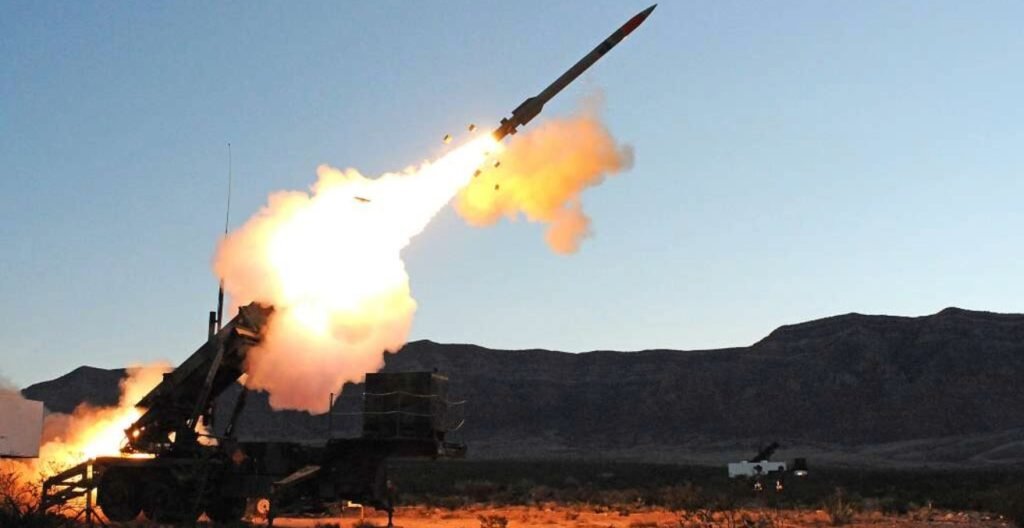
According to Britannica, deterrence is a military strategy in which one power effectively uses the threat of reprisal to preclude an attack from an adversary power. In layman’s language, ‘‘Do Not Do it, I have got a gun in my pocket too.’’ While deterring the enemy from an action, there should be three Cs in line: Credibility, Capability, and Communication. Deterrence is not a bluff; it demands a three Cs bucket list to be ticked off.
Deterrence is part of a large concept of coercion. The formal development of this theory came about after World War II in the light of thinking and utilizing nuclear weapons. There are multiple types of deterrence, some made by experts and some by speakers to create an academic impression. The ones developed by scholars include General, Immediate deterrence, Nuclear Deterrence, and Extended deterrence.
General for the long-term prevention of hostile actions, and Immediate for managing immediate and direct threats. Nuclear deterrence for the use of nuclear weapons to prevent aggression, whereas Extended Deterrence will involve a state’s commitment to defend its allies. The ones made by speakers involve relating anything they are speaking about to deterrence as deterrence by confusion.
Now, to handle the complex concept of deterrence and to use it in the right context, Duffer’s Drift is a great point to start from. The concept of Duffer’s Drift comes from a book named ‘‘Defense of Duffer’s Drift’’ written in 1904 by British Army Officer Ernest Swinton. The book revolves around Lieutenant Backsight, who is tasked to defend Duffer’s Drift, a natural ford of the river.
He dreams about different scenarios until he comes up with a concrete plan to defend the duffer’s drift. This is something that needs to be applied while using a concept as complex as deterrence. To keep on learning, unlearning the concept and its extensions till its application can be justified to the case in hand.
Read More: The Future of Nuclear Defense: Deterrence or Diplomacy?
Extended Conventional Deterrence is an extension of deterrence that needs deliberation. It requires scholars, technical experts, and policy makers to deconstruct and evaluate the validity of this concept. Deterrence is not something one can fool around with. It has a concept that has implications on the ground. Extended Conventional deterrence will be a promise to a state to which it is being extended and a threat to its adversaries.
This can also bring the concept of deterrence under threat as well. The reason is simple: deterrence is prevention, nuclear deterrence has a precedent of Hiroshima and Nagasaki, and extended conventional deterrence in the era of emerging technologies might escalate a conflict rather than preventing it, resulting in the loss of a conventional extension of deterrence.
The purpose is not to discourage, it is to consider, reconsider, and then consider again; in short, the defense of duffer’s drift. Defense in the case of Lieutenant Backsight is a precise example of how pragmatically a problem can be solved. To not go by wit or intuition but to go by careful consideration of facts, ground realities, and the limitations the scenario in hand might have. The majority of researchers take deterrence, play with it, and then do a theatrical academic release.
Deterrence is the star concept of International relations; it ruled at the time of cold war, and it is still appealing, and speakers and not so careful researchers use it to sound tactful and intellectual. The lot is after fancy words and catchy phrases through which they will never be able to defend the duffer’s drift. They have to deconstruct, discuss, read, consider all the possible scenarios, and then, in the end, come up with a piece that can turn the academic world upside down in terms of intellect. Terms in International relations are of significant importance, and papers can be written about the nuances they involve.
Concepts in International relations are not merely for the books or papers; they are a demonstration of a state’s planning, promises, and execution. Defense of Duffer’s Drift should be used while using any concept related to international relations, especially as important as deterrence, in articles, research papers, or even while speaking at a conference. There is an audience that is reading and listening to the concepts being used, and it is the responsibility of the authors and speakers to convey the right knowledge, as unlearning is far more difficult than learning.
The three C’s of the author and speaker can be at stake. Un-careful use of deterrence extension can result in them losing credibility, communication, and capability. It can all be restored, undone once the researcher decides to use a scenario that will justify the use of the concept, then the world of International relations is all theirs to play with. Lieutenant Backsight had dreams to defend the duffer’s drift, and people in academia have papers to defend the extensions of deterrence. In short, use it but use it right.
*The views presented in this article are the author’s own and do not necessarily reflect the views of The Diplomatic Insight.

Shakh e nabat
Shakh e nabat is doing her Master's in International Relations at Quaid I Azam University Islamabad. She is also currently working as a junior research fellow at Maritime Center of Excellence.