Kuala Lumpur reveals itself through distinct districts rather than any single monument. Travelers who move between these areas gain a clearer sense of daily rhythms, local food habits, and the contrast between high-rise clusters and older street grids. Planning short segments with attention to heat, rail links, and meal times helps keep the experience manageable.
Seeing Kuala Lumpur as a City of Districts, Not a Single Landmark
The city center functions as a set of connected zones rather than one unified core. Each area carries its own mix of commercial activity, residential character, and visitor patterns. Bukit Bintang concentrates malls and evening traffic. Chinatown retains compact market lanes and older shopfronts. Kampung Baru keeps lower-rise streets with a residential Malay atmosphere. Brickfields aligns closely with rail lines and South Asian commercial streets.
| District | Primary character | Peak visitor period | Typical movement style |
|---|---|---|---|
| Bukit Bintang | Shopping and nightlife corridors | After 6 PM | Short walks between malls and food streets |
| Chinatown | Heritage market lanes | Late morning to evening | Compact loops on foot |
| Kampung Baru | Residential Malay streets | Meal times | Food stops plus brief walks |
| Brickfields | Transit-linked commercial blocks | Daytime transfers | Rail arrivals and short neighborhood walks |
Visitors who treat the city this way avoid long treks across unrelated blocks and instead match each stop to the district’s natural pace.
Bukit Bintang for Food Streets, Cafés, and the City After Dark
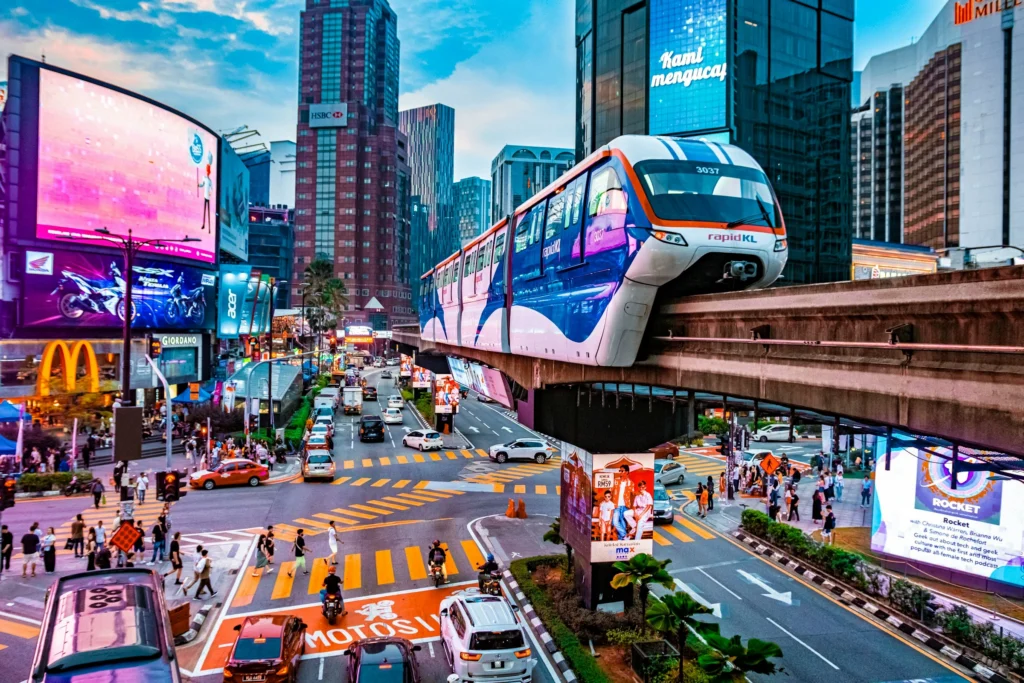
Bukit Bintang serves as the busiest central zone for shopping and late activity. Streets remain active well into the evening, supported by continuous foot traffic between commercial buildings. The district also offers plenty of indoor options for breaks when heat or rain makes outdoor walking less comfortable.
Jalan Alor and the Rhythm of Evening Dining
Jalan Alor comes alive from late afternoon into the evening, when food stalls and restaurants fill the street with tables and steady foot traffic. Grilled seafood, satay, noodles, rice dishes, and fruit are among the common choices.
Rather than treating it as a quick dinner stop, visitors can leave enough time to walk the street, compare stalls, and combine the meal with other evening stops around Bukit Bintang.
Malls, Side Streets, and Local Café Stops
Pavilion Kuala Lumpur provides air-conditioned space for rest or longer café visits. Lot 10 offers quicker seated meals nearby, while side streets around the core support shorter café stops for desserts or drinks.
Combining one outdoor stop with one indoor pause works well in Kuala Lumpur, especially during the hottest part of the day or when afternoon rain arrives suddenly.
Chinatown, Kampung Baru, and Brickfields as Three Cultural Walks
Three older districts offer distinct walking experiences within relatively short distances of central Kuala Lumpur. Each supports a self-guided route that pairs markets, local food, or architecture with short breaks.
Chinatown for Markets, Temples, and Old Shopfronts
Petaling Street forms the main spine for market activity. A practical loop can include the central market lanes, nearby temples, and preserved shophouse blocks.
The route stays compact, allowing visitors to move slowly without crossing large distances. Side streets branching from the main market area reveal older commercial textures that contrast with the high-rise districts nearby.
Kampung Baru for Malay Kitchens and Village Texture
Kampung Baru presents lower-rise residential streets inside the modern skyline. The area is known for Malay food stalls and traditional dishes rather than large retail chains.
A short walk combined with one meal stop captures the contrast between village-scale streets and the towers surrounding them. The neighborhood rewards food-focused wandering more than monument hunting.
Brickfields for Little India, Rail Links, and Colorful Streets
Brickfields sits beside KL Sentral, making it convenient for travelers arriving or moving across the city by rail. Indian restaurants, shops, and street-level commerce define much of the area’s atmosphere.
The linear layout suits brief stops between transfers. Activity remains lively and everyday rather than ceremonial, which makes the district a practical choice for lunch, tea, or a short walk during a longer travel day.
Parks, Public Spaces, and Slower Hours Between Neighborhoods
KLCC Park offers a central green pause beside Suria KLCC. The Lake Symphony adds evening light-and-sound shows, with performances scheduled from 8 PM through 10 PM. Current showtimes should be checked before visiting, as schedules can change.
The park works well as a short break between the KLCC area and other central districts rather than as a full-day destination. Shaded paths, seating, and nearby indoor spaces make it useful when travelers want to slow the pace between busier neighborhoods.
Moving between several districts can become less convenient on arrival or departure day, especially when hotel check-in times do not match the rest of the itinerary. If travelers want to explore Chinatown, Bukit Bintang, or another central area without carrying their bags, they can check luggage storage options at https://qeepl.com/en and continue the day without returning to the hotel first.
Practical Notes on Transport, Heat, Rain, and Walking Distances
Central Kuala Lumpur favors short walking segments separated by rail or ride-hailing transfers. Midday heat and frequent rain make continuous long routes uncomfortable, so it is usually better to combine walking with indoor pauses or public transport.
Bukit Bintang connects well to KLCC through a mix of covered walkways, short outdoor sections, and rail links. Chinatown and Brickfields are easier to combine by public transport, while Kampung Baru sits close enough to central districts for a short transfer.
A few simple habits make neighborhood-based travel easier:
- check current rail schedules before combining districts that rely on transfers;
- allow extra time for rain delays when outdoor food streets are part of the plan;
- reserve midday hours for malls, cafés, museums, or other indoor stops;
- match meal times to district strengths, with evening food streets in Bukit Bintang and daytime options in Brickfields;
- keep one compact walking loop per district instead of attempting multiple long crossings on foot;
- carry water and a small umbrella during longer daytime walks.
These patterns keep movement aligned with local conditions and available transport rather than forcing the city into a rigid sightseeing schedule.
How to Plan a Balanced Day Around Meals and Short Stops
A balanced day works best with one main neighborhood, a second nearby area, and a break in between. For example, start in Brickfields, pause near KLCC during the hottest hours, and finish in Bukit Bintang when Jalan Alor becomes livelier.
Another option is Chinatown in the morning followed by Kampung Baru for dinner. Keeping each part of the day compact makes it easier to adjust for weather, opening hours, and energy levels.

Established in December 2008, The Diplomatic Insight is Pakistan’s premier diplomacy and foreign affairs magazine, available in both digital and print formats.