Karachi (TDI): As reported by Arab News, Pakistani financial experts and business leaders are calling on the government to urgently address high production costs and taxation to maintain the economic momentum gained in 2025.
While the country has achieved significant macroeconomic stability over the past year, analysts argue that high interest rates and energy tariffs continue to hinder foreign direct investment and export growth.
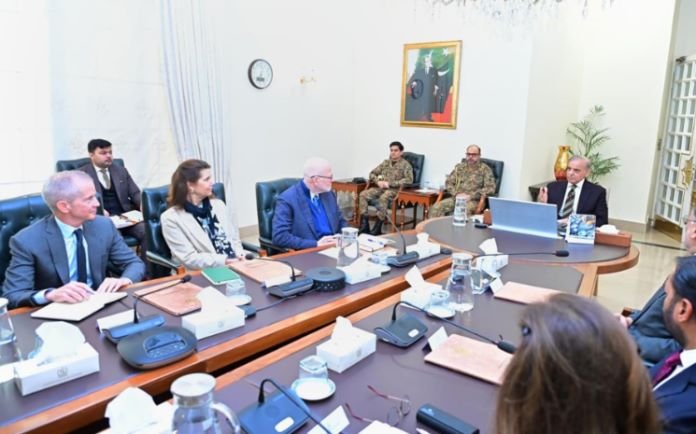
Prime Minister Shehbaz Sharif recently highlighted major successes, noting that inflation has dropped sharply from 29.2% to 4.5% while foreign exchange reserves have surged from $9.2 billion to over $21 billion.
Despite these improvements and a high-performing stock market, economists like Sana Tawfik from Arif Habib Limited warn that deeper reforms are necessary.
Read More: Pakistan Launches First Private-Capital-Funded Skills Impact Bond
Tawkif noted that high energy costs and the overall expense of doing business must be lowered to attract international investors and sustain growth.
Industry leaders specifically point to a lack of regional competitiveness as a major hurdle. Muhammad Rehan Hanif, president of the Karachi Chamber of Commerce and Industry, observed that Pakistan’s 10.5% interest rate remains much higher than the 6% or 7% seen in neighboring countries.
Furthermore, electricity costs about 12 cents per unit in Pakistan, compared to just 9 cents in Bangladesh. Hanif also criticized the poor state of infrastructure in Karachi, explaining that broken roads and inadequate drainage damage the country’s reputation and discourage foreign buyers.
Read More: 53% of Pakistanis See 2026 as a Year of Economic Prosperity: Gallup Survey
The urgency for reform is underscored by a 25% drop in foreign direct investment during the latter half of the year. Hanif believe that the country must transition from an import-reliant economy to an export-driven one to ensure long-term sustainability.
There is a notable gap in productivity, as the domestic population of 250 million produces only $32 billion in exports, a figure lower than the $37 billion sent home by just 7 to 8 million Pakistanis living abroad. Looking toward 2026, the outlook remains cautiously optimistic with a projected growth rate of 3.7%.
However, experts interviewed by Arab News stress that the government must remain committed to IMF benchmarks, privatization and stabilizing energy costs. Without a unified effort to ease business conditions, they warn that the hard-won progress of 2025 could be at risk.

Tayyaba Arif is a student of International Relations, and takes keen interest in conflict reporting and the dynamics of regional and global affairs. She is especially committed to SDG 17, and believes in effective partnerships and promoting cooperative initiatives. She can be reached at tayyabarrif0@gmail.com