

Against the backdrop of the global “carbon neutrality” goal, addressing climate change has become the most pressing need for countries along the Belt and Road to achieve the goals of the Paris Agreement and the UN Sustainable Development Goals (SDGs). On the one hand, the ecological environment of most of the countries along the Belt and Road is relatively fragile and sensitive to the impact of climate change. On the other side, some of the countries along the Belt and Road have a relatively extensive development model, with high energy intensity and carbon emission intensity. Under the general trend of low-carbon transformation, Pakistan has also begun to actively build its own carbon sink and carbon trading system.
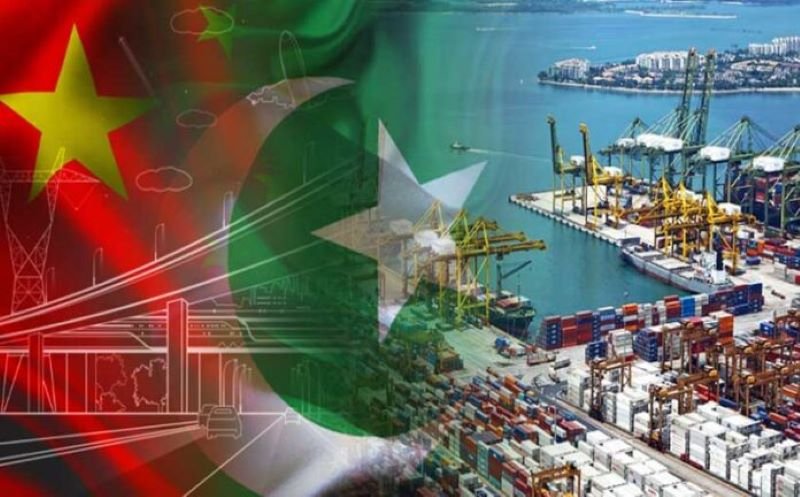
In recent years, the China-Pakistan Economic Corridor (CPEC), as an important part of the development of the “Belt and Road” project, has gradually expanded from traditional infrastructure construction to emerging fields such as green energy and carbon sink trading. As a new model of low-carbon development cooperation, the China-Pakistan Economic Corridor provides a realistic path for cross-border carbon trading cooperation between China and Pakistan.
Pakistan is rich in clean energy resources, with hydropower potential of about 60,000 MW and wind power potential of 50,000 MW, and has great potential for carbon credits. But as of now, the total installed capacity of solar and wind power is only 430 MW and 1845 MW respectively, far from giving full play to the advantages. Against this backdrop, there is great potential for China and Pakistan to develop economic cooperation in carbon sink trading.
China and Pakistan can rely on the China-Pakistan Economic Corridor to promote the construction of a cross-border carbon sink trading platform, realize the connection of carbon market rules and data interconnection, and improve the international trading efficiency of Pakistan’s carbon assets. With the help of China’s mature carbon trading mechanism, Pakistan’s carbon sink projects will be more easily connected to the international market and release ecological value. China’s technical experience in the development of carbon sinks in forestry and agriculture can provide strong support for Pakistan’s ecological restoration and green industries.
Read More: Pakistan, China Pledge Closer Cooperation on CPEC-II
The two sides can also learn from China’s carbon finance model, carry out carbon pledge financing, establish regional carbon funds, and introduce carbon insurance mechanisms to improve the risk protection and financing system. Although Pakistan’s greenhouse gas emissions account for less than 1% of the global total, it has actively engaged in carbon emission management and carbon sink capacity building, demonstrating its firm determination. Pakistan is expected to promote the development of its carbon sink and cross-border carbon trading, and contribute to global climate governance by relying on the China-Pakistan Economic Corridor (CPEC) as an important link of regional cooperation.
According to the report “11 Years of Glory-How Chinese Enterprises Reshape Pakistan’s Power Industry” released by the All Pakistan Chinese Enterprises Association, as of the end of September 2024, China’s cumulative investment in Pakistan’s energy sector reached $13.279 billion dollars. China has invested in and completed the construction of seven coal-fired power plants, five new energy power plants, two hydropower plants and one transmission line. The installed capacity of these projects accounts for 19.07% and 24.19% of the total installed capacity of Pakistan’s power industry, respectively, which greatly alleviates the long-term power shortage in Pakistan.
In the field of thermal power, the Hub coal-fired power plant, with an installed capacity of 1,320 MW, has generated more than 45 billion kWh of electricity, accounting for 7.5% of Pakistan’s total annual power generation, which is equivalent to the stable supply of electricity demand for 4 million households. An article published on the Belt and Road Portal, titled “Chinese Enterprises’ Operation and Maintenance of Qasim Port Coal Unloading Terminal for Seven Years Lights up Thousands of Homes in Pakistan,” also mentioned that the Qasim Port coal-fired power plant has played a role in providing energy security for Pakistan.
Read More: Pakistan Eyes Green Energy, Agri Growth Under CPEC II
As of December 2024, the cumulative coal unloading volume of its operation and maintenance project has exceeded 18 million tons, and the power generation of the coal-fired power plant has exceeded 40 billion kWh. The Qasim Port coal-fired power plant has an average annual power generation of about 9 billion kWh, which can meet the electricity demand of 4 million households in the central and northern regions of Pakistan. The power plant adopts supercritical units independently designed and manufactured by China, which has higher power generation efficiency and can effectively reduce costs.
The China-Pakistan Economic Corridor has also promoted the optimization of Pakistan’s energy structure, making Pakistan’s energy supply develop in the direction of diversification and cleanliness. In June 2022, the Karot Hydropower Station was put into full commercial operation, with a total installed capacity of 720,000 kilowatts and an average annual power generation of about 3.2 billion kilowatt-hours, which can meet the electricity demand of 5 million local people. As of June 2023, the Karot Hydropower Station has been operating safely for one year, with a cumulative power generation of 3.64 billion kWh, equivalent to saving about 1.59 million tons of standard coal and reducing carbon dioxide emissions by about 3.98 million tons.
In May 2025, the Karot Hydropower Station passed the 2025 annual power generation capacity test at full capacity under the witness of the Central Power Purchasing Agency of Pakistan, the State Grid, and the State Grid Dispatching Supervision. The four generator units were fully loaded to 720 MW and operated continuously for 6 hours. The technical indicators of the power generation and transformation equipment were all within the normal range, indicating that the hydropower station will continue to play a huge role in the field of energy structure optimization in Pakistan in the future.
In addition, in August 2024, the first unit of the Suki Kinari Hydropower Station on the Kunhar River in Khyber Pakhtunkhwa Province in northwestern Pakistan was connected to the grid for power generation. The official website of China Energy Engineering Group and the Pakistan Water and Power Development Authority (WAPDA) made it clear in the announcement that the total installed capacity of the power station is 884 MW, and it can provide 3.2 billion kWh of clean power every year after it is put into operation, which can meet the electricity demand of more than 1 million households.
Read More: Extending CPEC into Afghanistan: China’s Role in Regional Normalization
A series of green and low-carbon development cooperation projects between Pakistan and China have brought positive changes to the lives of Pakistani people. Hydropower and wind power projects built by Chinese enterprises have been put into operation one after another, helping Pakistan obtain clean and cheap electricity. New energy vehicles produced in China are widely praised in the Pakistani market. Cooperation projects such as Pakistan Remote Sensing Satellite-1 and the China-Pakistan Earth Science Research Center have helped Pakistan better cope with the challenges of climate change.
In recent years, Pakistan has vigorously promoted the transformation of its energy structure, and the cooperation between China and Pakistan in the field of new energy projects such as solar energy has also achieved outstanding results. In 2024 alone, Pakistan imported more than 16 GW of photovoltaics from China. In addition, according to data from the General Administration of Customs, from January to June 2024, China exported about 12.52GW of battery components to Pakistan, making Pakistan the second largest component export market for China.
In June 2025, Renewables First, a Pakistani energy and environmental think tank, released a report analyzing that China has become a global powerhouse in clean energy manufacturing and is providing most of the world with key tools to combat climate change – renewable energy technologies. The technology has triggered a large-scale energy transformation in Pakistan. In just five years, Pakistan has introduced more than 39 gigawatts of solar panels, almost all of which came from China. The installed photovoltaic capacity exceeds three-quarters of Pakistan’s total installed power generation capacity.
The prospects for carbon sink trading cooperation under the framework of the China-Pakistan Economic Corridor are broad. According to Pakistan’s latest nationally determined contribution plan, the country plans to increase the proportion of renewable energy power generation to 60% by 2030, while achieving the goal of reducing total greenhouse gas emissions by 50% compared with the baseline. The goal of reducing carbon emissions provides more room for cooperation in carbon sink trading.
In the future, the two sides can further expand the types of carbon sink projects, and explore project cooperation in wetland carbon sinks and marine carbon sinks in addition to forest carbon sinks. In the energy sector, investment in clean energy projects such as solar, wind and hydropower will be increased to raise the proportion of clean energy in the energy structure, thereby generating more carbon emission reductions for carbon sink trading.
The cooperation between Pakistan and China in the field of carbon sink can effectively provide new opportunities for the green development of both sides. By promoting carbon asset trading and standard alignment, Pakistan can better participate in the international carbon market and enhance the economic value of ecological resources. The cooperation between the two sides will also drive local employment and infrastructure improvement, and promote the development of green industries. Under the framework of the “dual carbon” goal and the “China-Pakistan Economic Corridor”, the China-Pakistan carbon sink cooperation is expected to achieve a win-win situation for ecological protection and economic benefits.

Pengling Li,Qian zhu, Yilin Jin
Pengling Li, Qian Zhu, and Yilin Jin are scholars at Southwest University of Political Science and Law, China.

