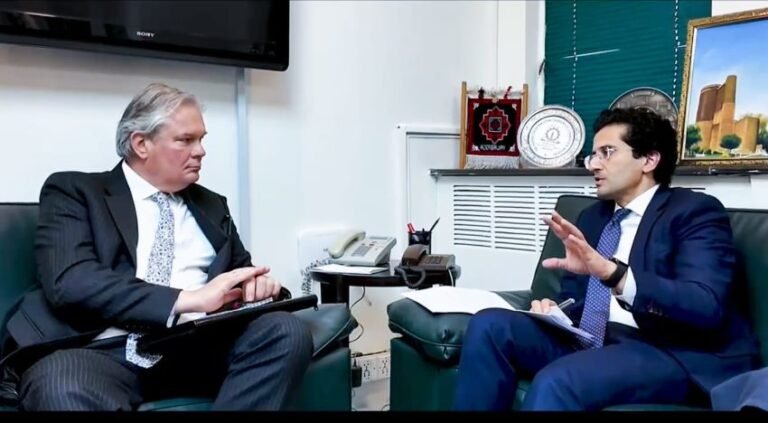
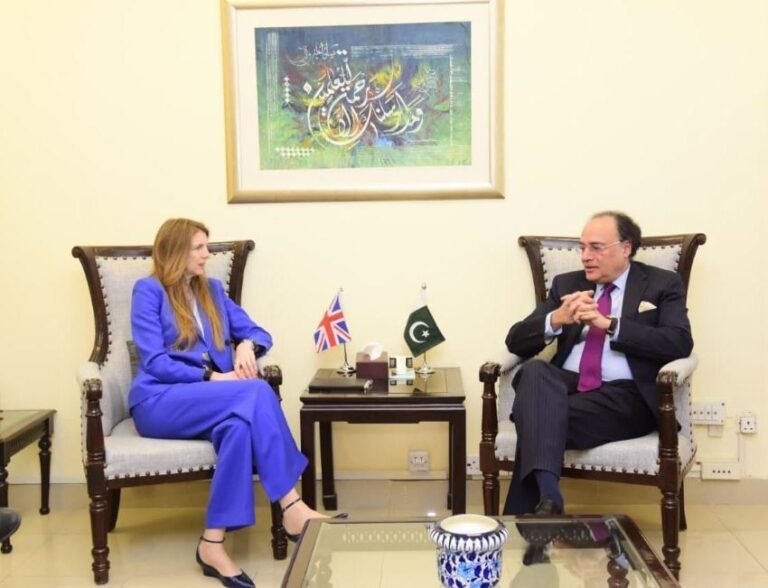
This conversation is part of a series by The Diplomatic Insight and our digital platform DiploTV, through which we engage with esteemed leaders from diplomatic missions, international organizations, and global development institutions. The series aims to highlight individuals and initiatives advancing international cooperation, scientific diplomacy, climate resilience, gender equality, and transformative partnerships shaping the future of global development.
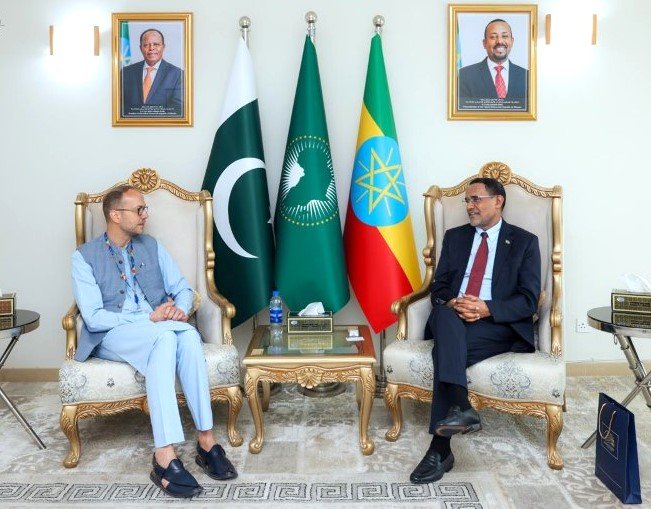
We are pleased to present this exclusive interview with the Ambassador of Libya to Pakistan, His Excellency Moamer Abdalmotlab.
TDI: Excellency, could you please share your journey in diplomacy and how it has shaped your approach as Libya’s Ambassador to Pakistan? What were your first impressions of Pakistan, and how has your experience been representing Libya here so far?
My diplomatic experience has not been merely a career path but a journey of understanding people before states, relationships before interests, and trust before agreements. I have learned that true diplomacy is not measured by the number of meetings, but by the depth of impact and the sustainability of outcomes.
When I assumed my duties as Libya’s representative in Pakistan, my main concern was to be an ambassador for the nation, and a representative of the people. Mutual respect, clarity of vision, and realistic achievement became the pillars of this role.
I understood from the very beginning that diplomatic achievement does not lie in slogans, but by translating good intentions into actionable projects and building trust every day; whether in the fields of education, health, technical cooperation, or in building bridges of human connection between the two nations.
My experience in Pakistan has deepened my conviction that diplomacy is not merely the art of managing conflict, but the art of creating opportunities, and that the greatest legacy an ambassador leaves behind is not simply the signature on an agreement, but an institutional framework that endures. Therefore, I have ensured that every step is built on the foundation of continuity, not on personal connections.
And today, with complete reassurance, I believe that whoever succeeds me will not start from scratch but from a solid foundation of trust, understanding, and mutual respect. Libya’s diplomatic vision will continue and develop as such, for it has now become an institutional vision, not an individual one.
The relationship between Libya and Pakistan is deep-rooted; built not on fleeting interests but on mutual respect, bonds of faith, and a spirit of real cooperation. Today, I can confidently say that this relationship is experiencing a phase of quiet maturity and stab.
TDI: Libya and Pakistan share a long-standing bond rooted in mutual respect, faith, and cooperation. How do you assess the current state of relations between the two countries?
The current state of relations between the our countries is marked by positive balance; it is neither burdened by disputes nor constrained by sensitivities, but guided by a shared desire to develop areas of cooperation in a way that serves the interests of both peoples. The relationship has moved from the logic of traditional courtesies to a path of practical, gradual, and sustainable work.
What is reassuring is that this relationship does not rely on temporary political circumstances, but is based on a mutual conviction that the partnership between Libya and Pakistan is a partnership of the future, not of the moment. This is what allows us to look toward the coming phase with confidence, calm, and hope.
I can say with complete certainty that the foundation laid today will ensure that our successors will continue this approach, not deviate from it, and that this relationship will continue to rise steadily, not with a temporary surge.

TDI: What have been the key milestones in Libya–Pakistan ties over the past few years?
Relations between Libya and Pakistan have witnessed a quiet but profound transformation in recent years, which can be described as a shift from traditional diplomatic presence to a phase of comprehensive institutional establishment.
As for milestones, the most notable have been the construction of the new embassy building and ambassador ‘s residency; not merely as administrative facilities, but as a fully integrated sovereign base reflecting the stability and firm establishment of Libyan presence on the ground.
The completion of appointing specialized technical attachés in vital departments is another one; a step that had not previously been realized in an institutional manner, creating, for the first time, real executive hands capable of translating the diplomatic vision into practical cooperation programs and projects with the relevant Pakistani authorities.
The transition in the relationship from protocol formalities to real cooperation in the fields of education, health, training, and technical exchange has also been notable.
These things, taken together, were not isolated actions, but part of a comprehensive vision to rebuild Libyan representation on sustainable foundations, not mere circumstantiality. We can confidently say that what has been achieved recently has not only laid the groundwork for a better phase, but has also established the foundations for a long-term partnership capable of expansion and growth.
TDI: In what sectors do you see the greatest potential for future collaboration — trade, energy, education, or technology?
If we take a long-term strategic view of the prospects for cooperation between Libya and Pakistan, we find that the opportunities are not concentrated in a single sector, but rather extend across a comprehensive range of vital sectors in which Libya possesses the resources, and Pakistan possesses the expertise and implementation capabilities.
At the forefront is the energy sector in all its forms: from oil and gas to solar and wind power. Libya is has vast energy resources that require advanced technical and operational capabilities to maximize their utility, while Pakistan possesses great expertise in operation, maintenance, engineering, and renewable energy. I believe this makes the energy sector a potential core sector for future partnership.
The reconstruction sector also stands out as a broad area for integration, as Libya needs significant engineering, implementation, and technical expertise, and Pakistan has demonstrated high efficiency in construction, infrastructure, and project management. This opens the door to real partnerships based on achievements, not just promises.

Likewise, in the health sector also, significant opportunities emerge in training, hospital management, and the transfer of medical expertise. In the economic and investment sphere, Libya appears as a promising market with its wealth and resources, while Pakistan possesses human and industrial capital to engage in productive projects with mutual returns.
Then I believe the education and training sector is very promising as it creates a long-term impact and cultivates a new generation of Libyan talent in partnership with Pakistani institutions.
The field of advanced security and military training is also something of strategic importance. Pakistan possesses considerable expertise in this area, and Libya needs to rebuild its capabilities in a way that balances professionalism and stability.
The bottom line here again is that Libya possesses resources and wealth, while Pakistan possesses expertise and operational capabilities. The convergence of these two elements is not merely an exchange of interests, but rather the establishment of an equitable partnership that yields economic and strategic benefits for both nations.
TDI: Libya is rebuilding its economy and institutions with a strong focus on stability and growth. How can Pakistan contribute to this process through trade, investment, or technical expertise?
Rebuilding Libya today is based on a clear equation; stability as the foundation, growth as the goal, and institutions as the means. In this context, Pakistan has a real opportunity to be an active partner in this pivotal stage, not only in a supporting role but also as a long-term development and investment partner.
In the area of trade, Pakistan can contribute by expanding trade in food, pharmaceutical, building materials, and light manufacturing, which would meet the needs of the Libyan market and simultaneously open up promising markets for Pakistani products.
As for investment, Libya today represents a vast environment for promising investments in energy, infrastructure, housing, services, and agriculture. Here, Pakistani businessmen can enter into real productive partnerships based on mutual benefit, not just export.
As for technical expertise and institution building, Pakistan possesses significant experience in management, engineering, technology, operations, and workforce training; that Libya needs in its transition from reconstruction to sustainable development. Transferring this expertise will help Libya accelerate the building of its institutions according to modern standards.
The essence of this partnership lies not in temporary support, but in an integrated model where Libya comes with its resources and Pakistan comes with its human and technical expertise. If the will and planning are combined, it will create a successful cooperation model in both southern Mediterranean and south Asia.
TDI: Are there any specific initiatives or agreements in progress to enhance bilateral economic cooperation?
Yes, I can confidently say that the path of economic cooperation between Libya and Pakistan is no longer merely a matter of intentions. It has already entered the planning and study phase and will begin to be gradually activated through practical, multi-track initiatives.
There is currently a set of understandings among the relevant Libyan institutions under preparation and being directed for implementation upon completion. These cover multiple fields, alongside efforts to activate the mechanisms of joint committees between authorities in both countries, in a way that ensures a transition from the level of coordination to that of effective implementation.
Also, several initiatives are being prepared to link the public and private sectors, with the aim of opening the door to Pakistani investments in the Libyan market, particularly in the infrastructure, energy, pharmaceutical, and construction materials sectors that offer direct economic returns for both parties.

What is encouraging here is that this shift is taking place today in an atmosphere of mutual political trust, relative stability, and a clear economic vision for Libya, which makes these agreements and initiatives feasible rather than merely ceremonial titles.
The upcoming phase will witness the transition of economic cooperation from the stage of planning and preparation on the Libyan side to the stage of serious proposals and agreements. This reflects on the maturity of the relationship between the two countries and its evolution into a comprehensive development partnership.
TDI: Many Pakistani professionals have historically worked in Libya. Do you see opportunities for renewed collaboration in workforce mobility or capacity building?
Absolutely. Opportunities for renewed cooperation in workforce mobility and capacity building between Libya and Pakistan not only exist but have already entered the practical phase after years of stagnation.
Regular visa issuance has resumed, and we now have an active labor attaché and a consular section that handles visa procedures daily for all applicants within Libya, whether for skilled workers or various professional specializations. This in itself represents a clear message of confidence in the resumption of this vital process.
Furthermore, major Pakistani companies are already operating in Libya across multiple sectors and continue to seek Pakistani labor. Cooperation is no longer theoretical but is now linked to the needs of the Libyan market and real projects on the ground. What we aspire to do in the next phase is not just the movement of labor, but a shift towards partnerships in capacity building through training, skills transfer, and aligning labor with the sector-specific needs.
In short, this path is witnessing a conscious and deliberate return, serving Libya’s interests by meeting its technical needs, and providing Pakistan with broad economic and humanitarian opportunities within a balanced and sustainable partnership
TDI: Libya is strategically located in North Africa and the Mediterranean, while Pakistan plays a key role in South Asia. How can both countries complement each other in regional and international forums?
Libya’s location at the heart of North Africa and on the shores of the Mediterranean, and Pakistan as a pivotal power in this region, South Asia, provides the two countries with a rare opportunity to create political and diplomatic integration that transcends regional boundaries, based on role sharing rather than competition.
In regional and international forums, this integration can be manifested through coordinating positions, exchanging support on issues of sovereignty, and strengthening joint presence in matters of stability, development, and international peace. Pakistan has maintained and continues to maintain a firm and clear stance in supporting Libya’s stability and territorial integrity, and in rejecting any projects aimed at division or undermining sovereignty. This is a stance we highly value because it is principle-driven rather than motivated by interests.
With its political influence and long-standing experience in multilateral engagement, Pakistan can serve as a supportive voice for Libya in international organizations, in matters related to consolidating legitimacy, supporting the political process, and affirming the option of a united state.
Libya, in turn, represents a strategic gateway for Pakistan in North Africa, the Mediterranean, and the Arab world, enhancing its economic and political presence in a highly significant geopolitical space.
TDI: How do you view Libya’s engagement with organizations like the OIC and the African Union in advancing shared development and peace agendas?
Libya views its active participation in multilateral frameworks, foremost among them the Organization of Islamic Cooperation (OIC) and the African Union (AU), as a key lever to advance agendas of peace, development, and stability; which is bigger than just a ceremonial presence.
Within the OIC, Libya is part of a system where religious and humanitarian ties interact with developmental interests, providing opportunities to expand cooperation in areas such as relief, sustainable development, capacity building, and strengthening solidarity among member states in addressing common challenges.

At the level of the African Union, Libya sees its role as natural and integrated with its African depth, particularly on issues of peace and security, regional development, combating irregular migration, and supporting stability in neighboring countries. Libya’s participation here is not only as a recipient but as a responsible partner in crafting solutions.
We believe that activating these regional partnerships contributes to transforming peace from temporary settlements into lasting stability, and fragmented development projects into integrated programs that serve the people of the region. This presence also reflects Libya’s gradual return to exercising its natural role as an active state within its Islamic and African surroundings.
As a country, we see these organizations as platforms for building shared hope, not merely arenas for rhetoric, and strive to ensure that Libya’s participation is effective, balanced, and based on partnership rather than alignment.
TDI: What lessons from Libya’s journey toward stability and reconstruction might be valuable for countries facing similar transitions?
There are a few. The Libyan experience has shown that political division, no matter how prolonged, is by nature temporary and superficial, whereas the unity of the people is deeply rooted in history, consciousness, and shared identity. Libyans — in the east, west, and south — are unanimous that the unity of Libya and its territory is a red line that cannot be compromised. This is the solid foundation on which the restoration of the state and resolution of conflict can rely, no matter how complex the political scenario.
Also we see that any peace making process not based on nationally and internationally agreed legitimacy remains fragile. Multiple centers of decision-making hinder state building, waste resources, and prolong conflict.
Our experience also demonstrates that national reconciliation is not a slogan but a sovereign framework for security. Addressing the social, psychological, and legal impacts of conflict is as important as security arrangements. If reconciliation is missing, the conflict is reproduced in different forms, even under new banners.
The interests of external actors are by nature shifting, while the national interest is the only constant. No settlement can endure unless it originates from within the state, no matter what guarantees the international community provides, even if it is sponsored by the United Nations.
Then we see that economy cannot recover in an environment of uncontrolled weapons,
and investment cannot take root without unified national security institutions. Libya’s experience also tells you that resources without governance turn from a blessing into a source of conflict. Poor resource distribution deepens division instead of filling it.
As for reconstruction, we see that building the nation must always precede building infrastructure. In this sense, the destruction of people is more dangerous than the destruction of buildings. While education, health, and capacity-building are the safest investments in the post-conflict phase.
To sum up, the Libyan experience tells the world that political division is temporary, no matter how intense, but the unity of people is enduring, no matter how much time passes, and the unity of Libya and its territory will remain the solid foundation upon which peace is built, not an exception to be gambled on.
TDI: Cultural understanding forms the heart of diplomacy. How is the Libyan Embassy working to promote people-to-people ties and cultural exchange between Libya and Pakistan?
Cultural understanding indeed forms the essence of modern diplomacy, serving as the deepest bridge for building trust between nations before governments. In this context, the Libyan Embassy in Pakistan seeks to be an active platform for soft diplomacy and a living bridge for human and civilizational communication between the Libyan and Pakistani nations.
The embassy operates from the firm conviction that the relationship between Libya and Pakistan is not one of fleeting interests, but one with deep human, educational, and historical roots. It works to interpret this conviction into practical programs that enhance people to people relation and present a true image of Libya, a country rich in history, vibrant in the present, and confidently looking toward the future.

The embassy seeks to present an organized, national, and institutional project for cultural diplomacy to the host country, which includes several stages like supporting cultural and artistic exchanges between creatives and cultural institutions in both countries.
Based on the Libyan Ministry of Foreign Affairs’ 2026 vision, all Libyan embassies should enhance and activate modern diplomatic work, including promoting Libya’s image, history, literature, arts, heritage, authenticity, music, cuisine, and culture.
People-to-people ties are also cemented by integrating universities and research centers in Libya and Pakistan through sustainable cultural and academic cooperation projects. For example, the embassy has highlighted the initiative of the National University of Sciences and Technology and its readiness to provide educational services across all its specialties.
This initiative is still under review by the Libyan Ministry of Higher Education, along with proposed student exchange programs between the two countries.
The Embassy also encourages reciprocal translation of intellectual and literary works between Arabic, Urdu, and English.
We pay special attention to people-to-people diplomacy by maintaining an active presence at Pakistani national cultural events and supporting youth and student initiatives in Libya that deepen values of dialogue and understanding of nations worldwide.
It can be said with confidence that cultural work between Libya and Pakistan will move from a stage of intentions to institutional planning, establishing a long-term cultural partnership. This partnership will not rely only on occasional events but on sustainable programs that have a deep impact on building mutual awareness and enhancing Libya’s positive image in the Asian region.
The Libyan Embassy views culture as the most genuine and enduring language in international relations. In full support and coordination with the Libyan Ministry of Culture, it works to ensure that soft diplomacy serves as a permanent bridge for friendship, and trust-building between the two friendly nations.
TDI: As Libya continues its path toward stability and modernization, what are the key priorities for your country in the next decade?
Libya’s vision for the coming decade is based on stability first, development second, and balanced openness third, with a firm belief that high level exchanges, intensified political dialogue, and expanded economic and cultural partnerships are key to moving from a phase of recovery to a modern state that is actively engaged regionally and internationally.
Today, Libya’s evolving role is seen as a return to its natural position, given its geographical, political, and economic assets, making it a pivotal actor in its regional and international environment, not merely a field of interactions.

TDI: How do you see Libya’s evolving role in Africa, the Arab world, and the broader international community?
Libya is gradually reclaiming its role as a central state in North Africa and a bridge to Africa through supporting peace and stability efforts across deserts and coasts, by contributing to regional security, migration management, and solving cross-border development issues, and also by positively engaging within the frameworks of the African Union to promote African solutions to African problems.
Libya operates from the conviction that Africa’s stability is Libya’s stability, and vice versa.
In its Arab neighborhood, Libya continues to strengthen its presence based on supporting Arab unity, sovereignty, and non-interference in internal affairs, contributing to Arab national security, energy, and reconstruction agendas, and intensifying coordination within the Arab League, reflecting Libya’s responsibility toward the nation’s collective challenges.
We believe that Arab stability is an interconnected system that cannot be fragmented.
At the international level, Libya’s role is shifting from crisis management to building balanced partnerships based on mutual interests, positively engaging in international peace and security efforts, and working closely with the United Nations to support political processes, rebuild institutions, and achieve development.
Libya aims to be a source of stability, not concern, and a trusted partner, not a field of competition.
Our country seeks to move from a position of challenge to a position of initiative, partnership, and positive influence in its regional and international environment.
TDI: A Message to Our Readers and the People of Pakistan?
From my limited political experience, I will say the laws of history and the experiences of nations — regardless of their power and influence — inevitably pass through phases of challenge, natural cycles, temporary decline, and eventual recovery.
Nations then regain initiative and influence; these are periods of testing, during which priorities are rearranged, institutions’ resilience is measured, leadership capacity is assessed, and nations’ awareness is evaluated.
The challenge is not a permanent weakness but more of a filtering phase for choices, a test of the will of the people, and a gateway from experience to maturity.
So Libya’s transition from managing challenges to creating initiatives places it on the same natural path that major nations have followed before reclaiming their regional and international roles with strength and balance.
Challenges do not diminish the stature of nations; they reveal their true mettle. Those who understand their experiences well are able to shape their future.
I pray that Allah Almighty prospers my country, bestows stability upon it, and grants your country continued growth and brilliance.

Established in December 2008, The Diplomatic Insight is Pakistan’s premier diplomacy and foreign affairs magazine, available in both digital and print formats.